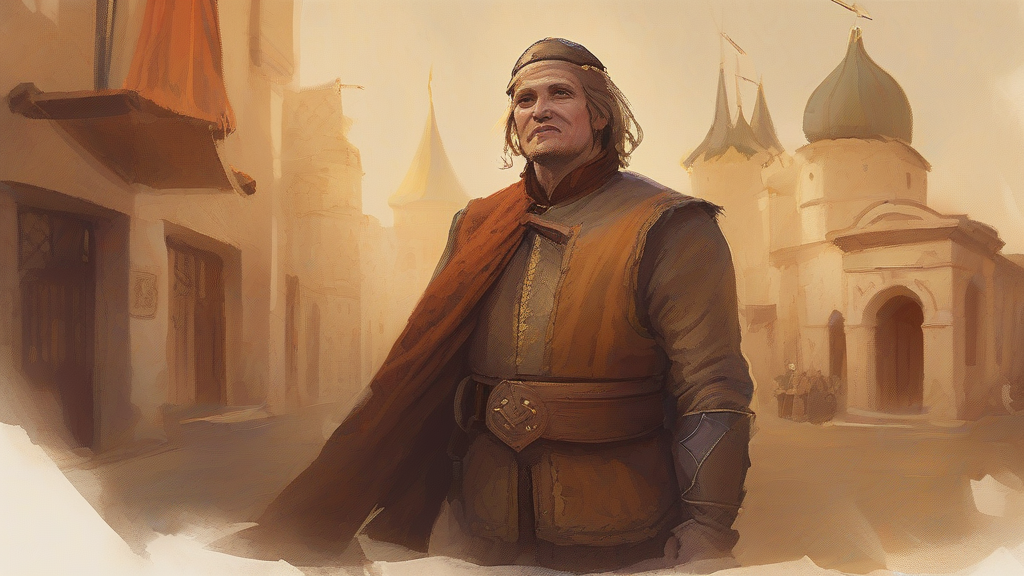
What does boyard mean?
A boyard was a member of the upper ranks of the feudal nobility in Russia and several other Eastern European lands, including Bulgaria, Wallachia, and Moldavia. From medieval times through the seventeenth century, boyards formed a powerful hereditary aristocracy: they owned vast estates worked by serfs, staffed the courts and councils of princes and tsars, and often wielded political influence that rivaled that of the ruler himself. In Russia their dominance ended when Peter the Great reorganized the nobility on new lines in the early eighteenth century, though boyard families remained prominent landowners for generations afterward. In English, 'boyard' is essentially an older or variant spelling of the standard word 'boyar' and today appears mainly in historical and literary contexts. The word carries connotations of wealth, privilege, and entrenched power, and it remains useful shorthand for the old landed aristocracies of Eastern Europe whose influence shaped the region's history for centuries.
nounA boyard is a member of the old aristocratic landowning class in Russia and other Slavic countries before Peter the Great's reforms; it is chiefly a variant spelling of 'boyar'.
- A member of the highest rank of feudal nobility in Russia, Bulgaria, Wallachia, Moldavia, and other Slavic lands, especially from medieval times until the reforms of Peter the Great.
- The word used as a variant spelling of 'boyar', particularly in older English texts.
"The wealthiest boyards of Muscovy advised the tsar and held vast estates along the Volga."
"Under Ivan the Terrible, many a proud boyard lost his estates — or his head."
"In the principalities of Moldavia and Wallachia, the boyards dominated politics for centuries."
"The young tsar distrusted the old boyard families who had opposed his reforms."
Standard pluralization; in some historical texts the Russian-style plural 'boyare' also appears.
"The boyards assembled in the Kremlin to advise the tsar."
Before Peter the Great modernized Russia, the boyards were so powerful they could rival the tsar himself — until he forcibly shaved their beards to break their pride.
Reviewed by Deb Chak, Editor. AI-assisted content curated by RJS Tech Solutions LLP.
Etymology of boyard
The word entered European languages from Russian 'boyarin' (plural 'boyare'), the title of a high-ranking nobleman in Muscovy. Its ultimate origin is debated among scholars, but it spread through Polish as 'bojar' and through other Slavic languages into Western usage by the sixteenth and seventeenth centuries, as travelers and diplomats wrote about the Russian court. The form 'boyard' reflects this borrowing path and coexists in older English texts alongside 'boyar'. Cognate forms such as Romanian 'boier' show how far the title reached across Eastern Europe.
Related word forms
How boyard is actually used
The standard modern spelling is 'boyar'; 'boyard' appears mostly in historical or literary texts. The word is formal and almost always encountered in historical writing about Eastern Europe.
Easily confused with boyard
'Boyar' is the standard spelling of the Russian noble; 'boyard' is a less common variant spelling with identical meaning.
A bard is a poet or minstrel, unrelated to the Slavic aristocratic boyard.