
What does brachet mean?
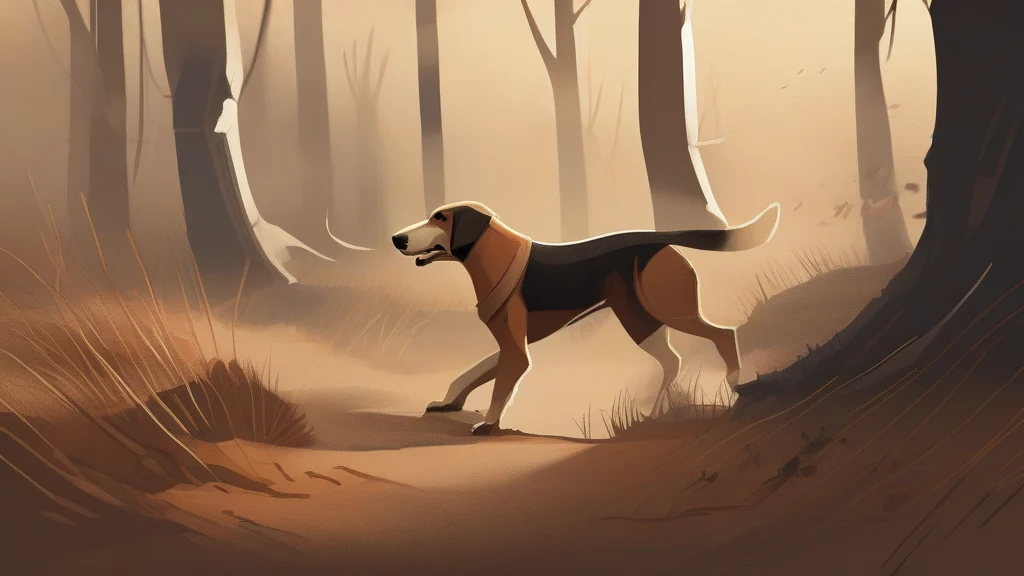
A brachet is a small hound that hunts by scent, a term drawn from the vocabulary of medieval and early modern British hunting. In practice it denoted a smaller kind of hunting dog — often a young or lesser hound, sometimes specifically a female — set to find and follow the trail of deer or other game, working alongside the swifter running hounds of the chase. The word appears in Chaucer, who describes hounds great and small, including 'brachettes,' and Shakespeare uses it in The Two Gentlemen of Verona when Valentine lists the qualities he admires in his page. It derives through Old French from Germanic roots shared with the related word brach, meaning a bitch hound. Today brachet survives almost exclusively as a literary and historical term, encountered by modern readers in annotated editions of medieval poetry and drama rather than in everyday speech, making it a charming relic of England's aristocratic hunting past.
nounA hound that hunts by scent; specifically a small hunting dog or bitch hound used in medieval and early modern Britain.
- A small hound or scent-hunting dog, especially one used for tracking game in medieval hunting.
"The huntsman loosed the brachet into the undergrowth, where it quickly picked up the scent of the deer."
"The brachet cast about the thicket until it found the trail of the wounded stag."
"In the illuminated manuscript, a slender brachet sits obediently at the nobleman's feet."
Regular pluralization; occasionally rendered 'brachettes' in archaic or Chaucerian spellings.
"A dozen brachets were slipped from the leash once the hart broke cover."
Chaucer's huntsmen chased their quarry with 'brachettes' — a word so old it predates modern English spelling itself, and one Shakespeare still put on stage in The Two Gentlemen of Verona.
Reviewed by Deb Chak, Editor. AI-assisted content curated by RJS Tech Solutions LLP.
Etymology of brachet
Brachet entered Middle English from Old French brachet, a diminutive of brac, meaning a hound that hunts by scent. Old French brac itself traces back through Vulgar Latin forms to Germanic origins, cognate with words such as Old High German bracko. The same root gives English brach, the related term for a mature bitch hound, and French braque. Brachet was current in English from the medieval period through at least the sixteenth century before fading into purely historical use.
How brachet is actually used
Now almost entirely historical or literary, appearing mainly in discussions of medieval hunting, Chaucer, and Shakespeare. In medieval usage, a brachet was often distinguished from larger running hounds as a smaller dog worked on a leash or slip. Modern readers will encounter it chiefly in annotated editions of older texts.
Easily confused with brachet
A brach is the adult bitch hound itself, while a brachet is typically its smaller or younger offspring — a diminutive form of the same root.