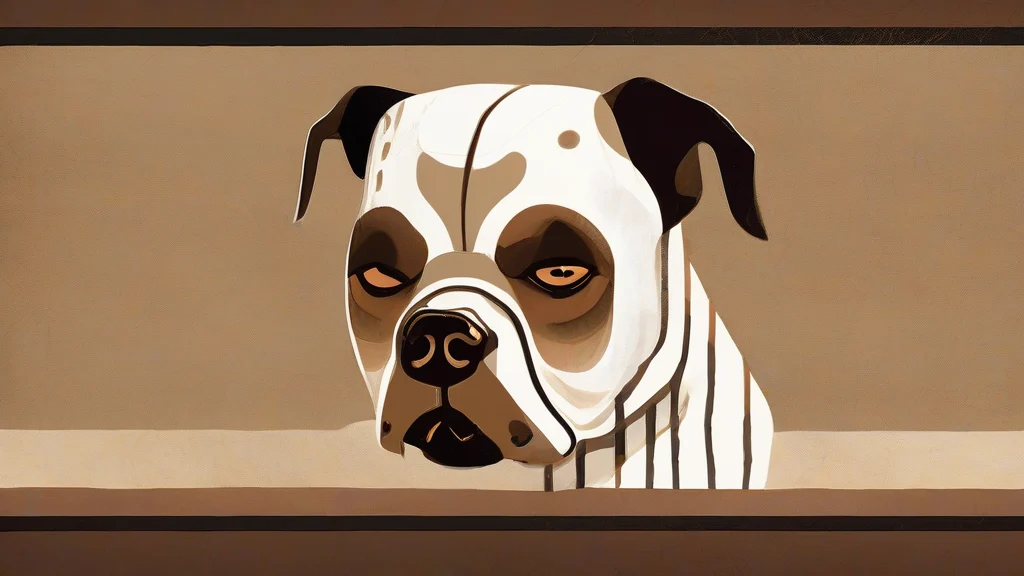
What does brachycephaly mean?
Brachycephaly is the anatomical condition of having a head that is unusually short and broad in proportion to its length. It is quantified using the cephalic index — the ratio of skull width to skull length — with readings of 81 percent or above classifying a head as brachycephalic. The term appears most often in three settings: physical anthropology, where it was historically used to categorise human populations; paediatric medicine, where mild forms are occasionally detected on prenatal ultrasound; and veterinary practice, where deliberately bred short-skulled breeds such as pugs, bulldogs, and Persian cats experience breathing, dental, and eye problems associated with their compressed facial structure. The word derives from Greek roots meaning 'short' and 'head'. Its natural opposite is dolichocephaly, describing an elongated skull. Though technical in register, brachycephaly has become more familiar to general readers through growing public debate over the welfare of flat-faced pets.
nounThe condition of having a skull that is abnormally short and broad relative to its length, especially in humans or certain dog breeds. It is measured by the cephalic index, with a ratio of breadth to length of 0.81 or higher.
- An anatomical condition in which the skull is disproportionately short and broad, defined cephalically as an index of 0.81 or greater; commonly discussed in human cranial development and in dog and cat breeding.
"Veterinarians warn that brachycephaly in breeds like pugs and bulldogs can lead to serious breathing difficulties."
"Ultrasound scans sometimes reveal mild brachycephaly in the fetus, prompting closer monitoring."
"Kennel club guidelines now discourage breeding practices that intensify brachycephaly in French bulldogs."
Rarely used in the plural; the condition is normally treated as uncountable.
"Different degrees of brachycephaly were recorded across the study population."
Pugs, bulldogs, and Persian cats owe their flat faces to brachycephaly — a trait we bred for that now sends many of them to the vet.
Reviewed by Deb Chak, Editor. AI-assisted content curated by RJS Tech Solutions LLP.
Etymology of brachycephaly
Brachycephaly combines the Greek 'brachys', meaning short, with 'kephalē', meaning head, joined via the combining vowel -o-. The adjective brachycephalic entered scientific English in the nineteenth century alongside related terms such as dolichocephalic as anthropologists sought systematic ways to classify skull shapes. Cognates built on 'kephalē' include cephalic, cephalopod, and encephalitis, all preserving the Greek root for head.
Related word forms
How brachycephaly is actually used
A technical term used chiefly in medicine, anthropology, and veterinary science; it carries no strong connotation in itself but often appears in discussions of health problems linked to flat-faced dog breeds.
Easily confused with brachycephaly
Dolichocephaly is the opposite condition — an abnormally long, narrow skull — whereas brachycephaly refers to a short, broad one.
Microcephaly describes an abnormally small head overall (a neurological condition), while brachycephaly concerns only the proportion of width to length.