What does bracken mean?
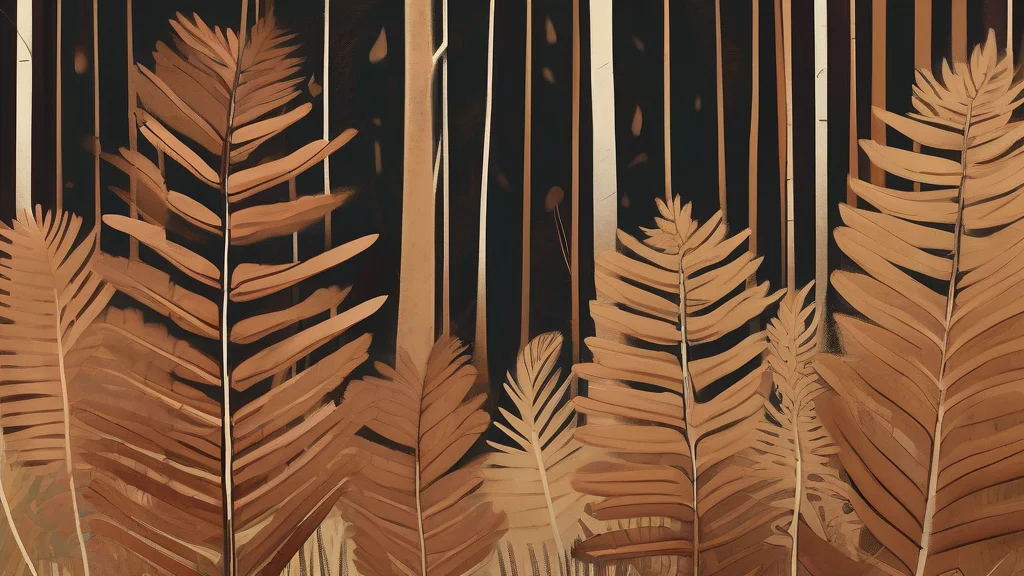
Bracken is a large, coarse fern belonging to the genus Pteridium, most familiarly Pteridium aquilinum, which spreads aggressively across moorlands, heaths, and open woodlands throughout temperate regions of the world. Its broad, triangular fronds unfurl in spring as vivid green shoots and turn a striking coppery brown by late summer, giving bracken-covered hills their distinctive seasonal character. The word functions primarily as an uncountable mass noun describing both the plant itself and expanses of ferny ground, and it appears most often in British English, where it is strongly associated with rural and upland scenery. Bracken has long had practical uses as animal bedding, fuel, and mulch, though it is also regarded as a troublesome invasive weed by farmers because it crowds out grazing land and contains compounds considered toxic to livestock. Evocative and firmly rooted in the vocabulary of the countryside, bracken is a useful word for anyone writing about landscape, nature, or rural life.
nounA large, coarse fern of the genus Pteridium, especially Pteridium aquilinum, with broad triangular fronds that grows widely on moorland, heath, and open woodland.
- A large, coarse fern of the genus Pteridium, especially Pteridium aquilinum, common on moorland, heath, and open woodland.
- An area or expanse covered with such ferns; dense ferny vegetation.
"The hillside was carpeted with waist-high bracken that turned coppery gold in autumn."
"Sheep grazed reluctantly among the bracken that crowded the lower slopes."
"By late summer, the bracken had grown so tall it swallowed the footpath entirely."
Bracken is almost always used as an uncountable mass noun; it does not normally take a plural form. When referring to individual plants, one says "plants of bracken" or "fronds of bracken" rather than "brackens."
"The moor was blanketed in bracken for as far as the eye could see."
Bracken is one of the most widespread plants on Earth, yet every part of it contains a carcinogen called ptalquiloside — and it still covers vast stretches of British hillsides.
Reviewed by Deb Chak, Editor. AI-assisted content curated by RJS Tech Solutions LLP.
Etymology of bracken
The word "bracken" entered Middle English from Scandinavian sources, likely via Old Norse, and is related to the Danish word "bräken." It shares a root with "brake," an older English word meaning a thicket of ferns, which survives in place names and literary usage. The plant name has been in continuous use in Britain since medieval times, reflecting how deeply the fern is woven into the region's rural vocabulary.
How bracken is actually used
Primarily used in British English, where it evokes upland and moorland landscapes; in American English the term "bracken fern" is more usual. The word carries a slightly literary or rural register rather than everyday conversational use.
Easily confused with bracken
"Blacken" is a verb meaning to make or become black, while "bracken" is a noun referring to a type of coarse fern.
"Brakes" as a plural noun most commonly means stopping devices, but "brake" can also mean a clump of ferns or the fern itself, making it easy to confuse with "bracken."