What does brainsick mean?
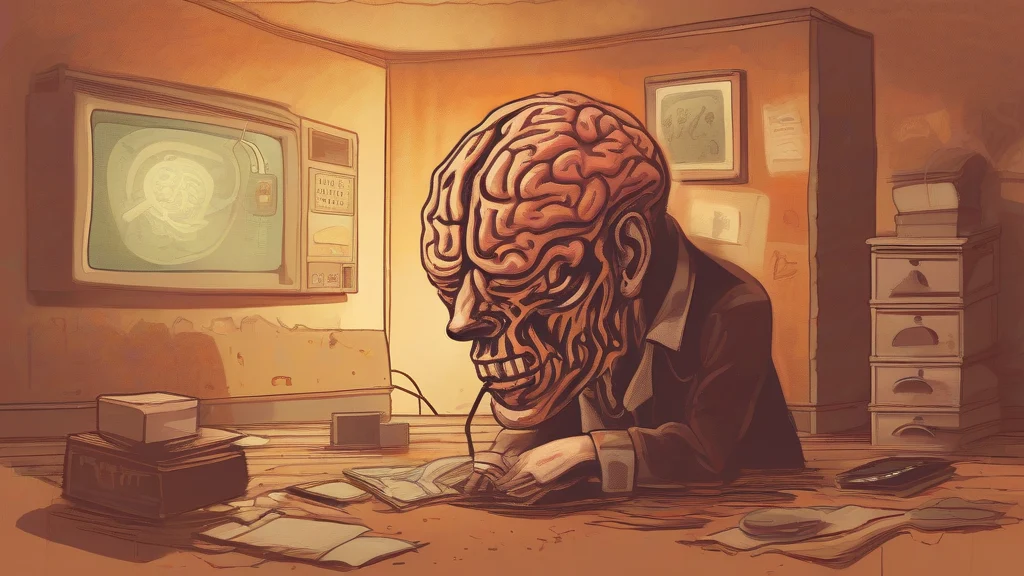
"Brainsick" is a literary adjective meaning insane, mad, or mentally deranged. Formed from the familiar English nouns "brain" and "sick", it literally suggests a mind that is unwell, and it has been used since the sixteenth century to describe people whose reason has given way, as well as the wild, irrational acts and schemes such minds produce. Today it survives chiefly in literary and historical contexts — it appears in Shakespeare's plays as an insult for the unhinged — and it sounds archaic or deliberately ornate in ordinary conversation. Unlike clinical terms such as "mentally ill", "brainsick" carries an emotive, often dramatic flavor, evoking the passionate madness of tragedy rather than a medical diagnosis. Writers reach for it when they want a compact, vivid word for lunacy, whether describing a character driven mad by grief or condemning a plan so reckless it could only come from a disordered mind. Its relatives include the equally evocative compounds "homesick", "heartsick", and "lovesick".
Insane, mad, or mentally deranged.
"The brainsick tyrant ordered the city burned on a whim."
Chiefly literary or archaic; often applied figuratively to reckless ideas or behavior as well as to people.
(Of actions, plans, or ideas) wildly irrational; characteristic of madness.
"He hatched a brainsick plot to sail around the world in a rowboat."
A figurative extension of the primary sense.
Shakespeare's era loved this word — "brainsick" appears in his plays as a go-to insult for anyone acting out of their mind.
Reviewed by Deb Chak, Editor. AI-assisted content curated by RJS Tech Solutions LLP.
Etymology of brainsick
"Brainsick" is a native English compound formed from "brain" and "sick", first attested in the sixteenth century. It belongs to a productive pattern of English compounds using "-sick" to denote affliction, alongside "homesick", "seasick", "heartsick", and "lovesick". The word was current in Elizabethan drama, appearing in Shakespeare's plays, though it has since fallen largely out of everyday use.
How brainsick is actually used
Literary and somewhat archaic in modern usage; it carries a strong, often poetic connotation of madness rather than a clinical one. It can describe both a person and their behavior or schemes.
Easily confused with brainsick
"Brainless" means stupid or lacking intelligence, while "brainsick" means insane or mentally deranged.