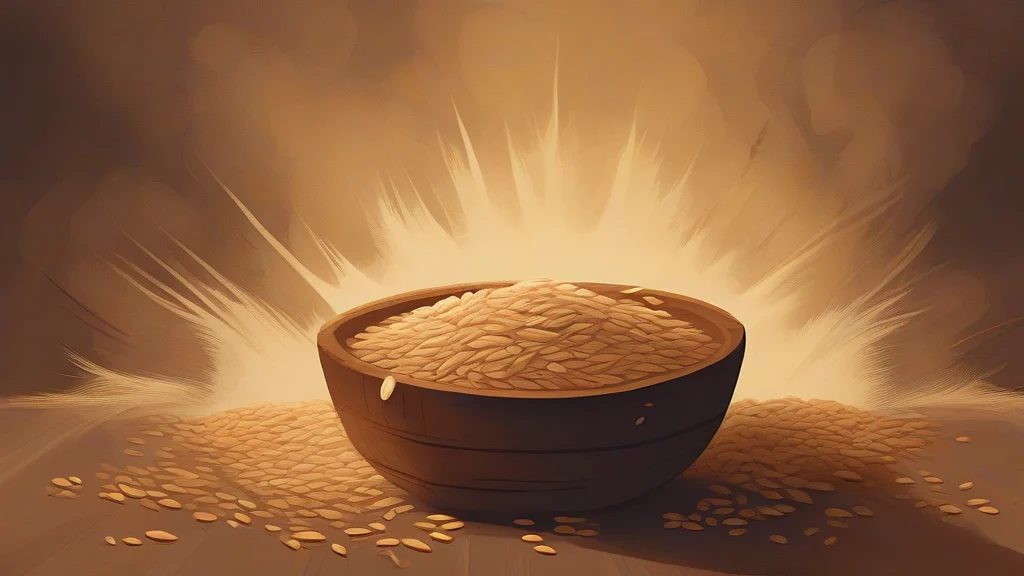
What does bran mean?
Bran is the tough outer layer of a cereal grain such as wheat, rice, or oats, stripped away when the grain is milled into refined flour. Once regarded as little more than waste — fit mainly for livestock — it has undergone a striking reversal in reputation: modern nutrition recognises bran as one of the richest natural sources of dietary fibre, along with B vitamins and minerals. Today it turns up in breakfast cereals, muffins, breads, and sprinkled over yoghurt, and phrases like 'oat bran' and 'bran flakes' are fixtures of the grocery aisle. The word itself is uncountable in ordinary use and appears almost exclusively in food and agricultural contexts. Its story — from discarded byproduct to celebrated health food — makes it a quietly remarkable word for anyone interested in how diets, and language, change over time.
nounThe broken outer husks of cereal grain, especially wheat or oats, separated from the flour during milling and valued chiefly as a rich source of dietary fibre.
- The outer layers of a cereal grain, removed during milling and used especially as a source of dietary fibre in foods such as cereals, muffins, and breads.
- Such material as used for animal feed or other non-food purposes.
"She stirred a spoonful of bran into her morning porridge for extra fibre."
"Oat bran is prized for its soluble fibre, which can help lower cholesterol."
"The farmer mixed bran into the cattle feed during the winter months."
Rarely used; bran is normally treated as an uncountable mass noun. The plural appears chiefly in technical or commercial contexts comparing different types of bran.
"The bakery stocks several brans, including wheat, oat, and rice."
For centuries bran was swept aside as lowly animal feed — until nutritionists discovered it was the healthiest part of the grain all along.
Reviewed by Deb Chak, Editor. AI-assisted content curated by RJS Tech Solutions LLP.
Etymology of bran
Bran entered Middle English around the thirteenth century, borrowed from Old French 'bren' or 'bran', meaning chaff or refuse. The French word's own origins are uncertain, though some scholars have suggested a Celtic source. It has always referred to the coarse outer husk of grain, and its figurative use for something worthless gave English the phrase 'to separate the grain from the bran'.
Related word forms
How bran is actually used
Bran is an uncountable noun in everyday use, though it occasionally takes plural agreement when referring to different varieties ('wheat and oat brans'). It carries wholesome, health-food connotations in modern usage, often appearing in discussions of diet and digestion.
Easily confused with bran
Brand means a trademark or a mark burned onto something, whereas bran is the fibrous outer layer of a cereal grain — they differ by only one letter.
A barn is a farm building for storing crops or housing livestock, while bran is the husk of the grain itself.