What does branchline mean?
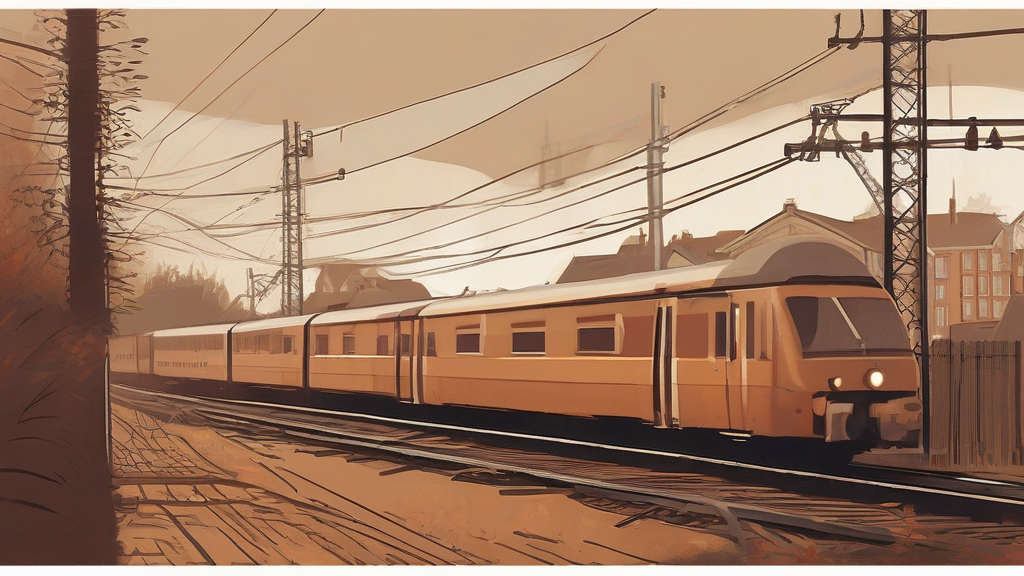
A branchline is a secondary railway line that diverges from a main line, typically connecting smaller towns, villages, or rural areas to the wider rail network. Usually single-tracked and lightly trafficked, branchlines were historically worked by modest local trains and small stations. The word is most strongly associated with British railway history: during the 1960s thousands of branchlines were closed under the restructuring known as the Beeching cuts, giving the term enduring nostalgic resonance. Today it also evokes the heritage rail movement, since many preserved tourist railways operate on former branchlines. Beyond its literal sense, the word can be applied figuratively to any minor subsidiary route or channel. It is generally written as two words ('branch line') in official contexts, though the solid form is widely accepted, especially among enthusiasts.
A secondary railway line that branches off a main line, serving smaller towns or rural areas.
"The branchline was served by just three trains a day in each direction."
Often written 'branch line'; the compound is chiefly used in British English.
Figuratively, any minor or subsidiary route, service, or channel branching off a principal one.
"The airline's regional routes were little more than branchlines feeding its main hub."
Standard plural; both spellings ('branchlines' and 'branch lines') are accepted.
"Dozens of rural branchlines were axed in the closures of the 1960s."
Britain's beloved heritage railways — from the North Yorkshire Moors Railway to countless preserved lines — are almost all resurrected branchlines that Beeching's axe left for dead.
Reviewed by Deb Chak, Editor. AI-assisted content curated by RJS Tech Solutions LLP.
Etymology of branchline
Branchline is a straightforward compound of the noun 'branch' — ultimately from Late Latin 'branca', meaning a paw or limb — and 'line', from Latin 'linea', a linen thread or string. Both elements entered English via Old French, and the compound arose naturally in the nineteenth century as railway networks expanded and engineers needed a term for secondary routes diverging from trunk lines. Its development parallels that of other railway compounds such as 'mainline' and 'sidings', and it remains closely tied to the vocabulary of rail transport rather than general English use.
How branchline is actually used
The spelling 'branch line' (two words) is more common in formal and official usage, while 'branchline' appears frequently in enthusiast writing and historical contexts. The term carries strong nostalgic connotations in Britain, where many branchlines were closed following the Beeching cuts of the 1960s; several have since been reopened as heritage railways. In American English the concept exists but the two-word form is more usual.
Easily confused with branchline
A sideline is an activity pursued in addition to one's main occupation, whereas a branchline is a minor railway route diverging from a main line.