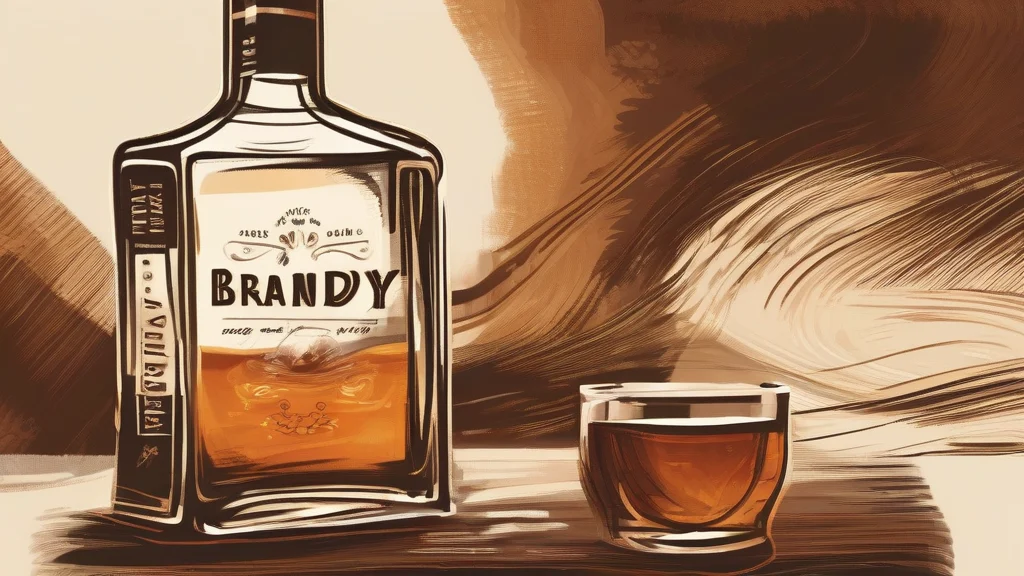
What does brandy mean?
Brandy is a strong alcoholic spirit made by distilling wine or other fermented fruit liquids, then typically aging the result in wooden casks, which lends it a warm amber colour and mellow flavour. The name derives from the Dutch 'brandewijn', meaning 'burnt wine', a reference to the heat involved in distillation; the shortened form entered English in the seventeenth century. In everyday usage, brandy most often appears as a noun for the drink itself or for a serving of it, as in 'a glass of brandy after dinner'. It also works as an ingredient in cooking, notably in sauces, desserts, and festive dishes such as Christmas pudding, and it forms fixed pairings like 'brandy snifter', 'brandy and soda', and 'brandy butter'. Well-known varieties include Cognac and Armagnac, both of which are French brandies protected by regional rules. Connotations tend toward comfort, celebration, and tradition, giving the word a slightly old-fashioned elegance that persists in modern usage.
A strong spirit distilled from wine or fermented fruit juice, typically aged in wooden casks.
"He ordered a brandy at the end of the meal."
Often used uncountably for the substance ('a splash of brandy') and countably for a serving ('two brandies').
A glass or measure of brandy served as a drink.
"She nursed a brandy while the others finished their coffee."
Used when referring to multiple servings, glasses, or types of brandy.
"The bar stocked several fine French brandies."
The word 'brandy' comes from the Dutch 'brandewijn' — literally 'burnt wine', a nod to the heat of distillation.
Reviewed by Deb Chak, Editor. AI-assisted content curated by RJS Tech Solutions LLP.
Etymology of brandy
The word brandy comes from the Dutch 'brandewijn', meaning 'burnt' or 'distilled' wine, so called because distillation involves heating the liquid. The term was clipped to 'brandy' when it passed into English in the early seventeenth century. A related older English form, 'brandywine', preserves the fuller Dutch phrase. The underlying idea — wine transformed by fire — reflects the historical practice of distilling wine both to preserve it and to concentrate its strength.
Related word forms
How brandy is actually used
Brandy is generally a neutral to slightly formal register term; it carries connotations of tradition, warmth, and after-dinner refinement. It also functions attributively (as in 'brandy snifter' or 'brandy sauce').
Easily confused with brandy
Cognac is a specific type of brandy that must be produced in the Cognac region of France under strict regulations, whereas brandy is the general category of spirits distilled from wine or fermented fruit.