
What does brass mean?
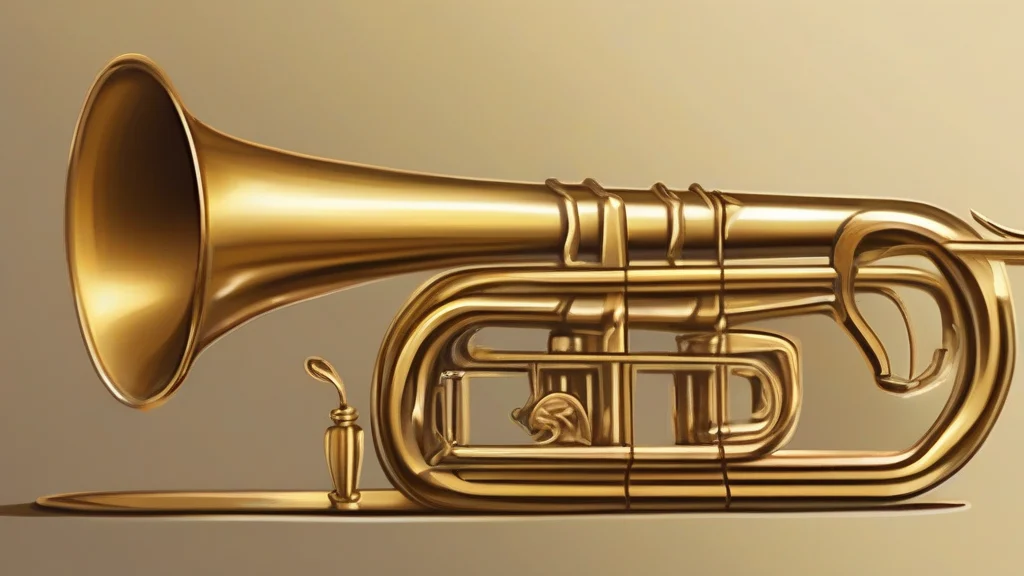
Brass is a bright yellow metal alloy made primarily of copper and zinc, prized for centuries for its workability, durability, and attractive lustre. It appears everywhere from musical instruments — the trumpet, trombone, and tuba of a 'brass section' — to household fixtures such as doorknobs, candlesticks, and bed frames, which are traditionally polished until they gleam. Beyond its literal sense, brass has developed rich figurative meanings: in British English it can mean money, as when someone says they lack 'the brass' to afford something, and in both British and American usage 'the brass' denotes high-ranking officials or executives. The phrase 'bold as brass' describes shameless confidence, reflecting the metal's loud, showy shine. Its derivative adjective 'brassy' likewise suggests something gaudy, loud, or ostentatious. Durable, versatile, and deeply woven into everyday idiom, brass remains one of the most familiar and culturally resonant metals.
A yellow alloy of copper and zinc, used for making musical instruments, ornaments, fittings, and hardware.
"The ship's railings were fitted with polished brass."
Often used uncountably for the material itself; countably for individual objects.
The brass section of an orchestra or band.
"The brass swelled behind the strings during the finale."
(Informal) High-ranking officials or executives; also, chiefly British, money or bold self-confidence.
"The decision came down from the top brass at headquarters."
'Top brass' is well-established in military and business contexts; 'brass' meaning money is chiefly British and informal.
Used mainly for multiple individual brass objects or fittings rather than for the material itself.
"The museum displayed an array of ornate brasses from Victorian fireplaces."
Brass isn't just a metal — in British slang it means cold, hard cash, as in 'the brass to buy it'.
Reviewed by Deb Chak, Editor. AI-assisted content curated by RJS Tech Solutions LLP.
Etymology of brass
The word 'brass' comes from Old English 'bræs', meaning copper or bronze, though its ultimate origin before Germanic is uncertain. It has been in use since at least the early medieval period and originally referred more broadly to copper alloys before narrowing to specifically denote copper-zinc alloys. Related forms include the adjective 'brazen', meaning made of brass or, figuratively, shameless.
Related word forms
How brass is actually used
In British English, 'brass' can informally mean money (e.g. 'haven't got the brass'), while 'brass neck' or 'bold as brass' refers to shameless audacity. In military or corporate contexts, 'the brass' refers to top officials. The adjective 'brassy' often carries a negative connotation of being loud or showy.
Easily confused with brass
Bronze is an alloy of copper and tin, whereas brass is an alloy of copper and zinc.