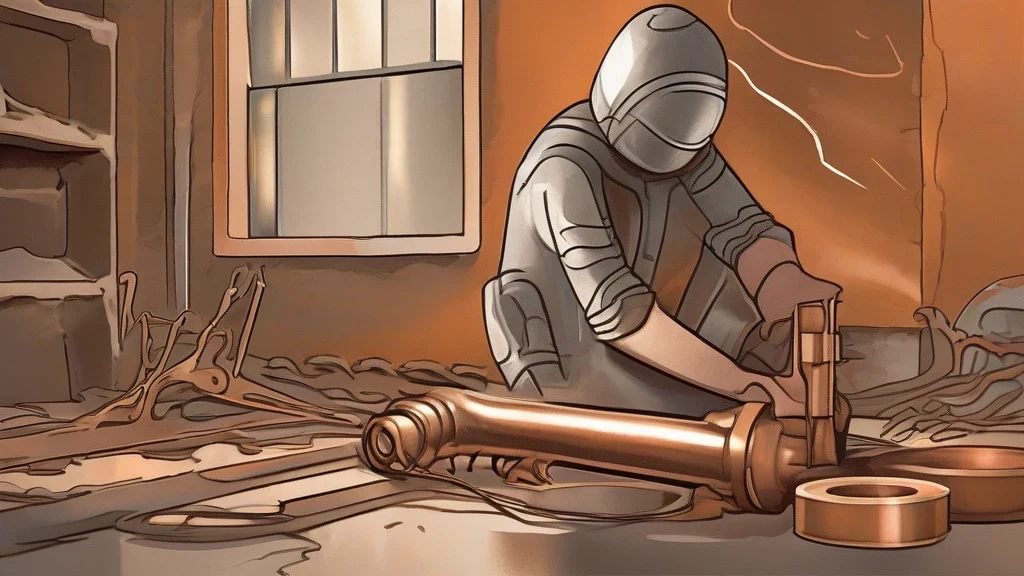
What does brazed mean?
Brazed is the past tense and past participle of braze, a metal-joining technique in which two or more metal parts are united by melting a filler alloy between them. The key feature of brazing is that only the filler metal melts — typically a copper-zinc (brass) or silver-based alloy heated above 450°C — while the base metals themselves remain solid, preserving their shape and strength. This distinguishes it from welding, where the parent metals fuse, and from soldering, which uses lower temperatures and softer alloys. Brazing produces strong, clean joints and works well with dissimilar metals and thin sections, making it indispensable in plumbing, refrigeration, toolmaking, and bicycle frame construction. The word appears almost exclusively in technical and trade contexts, usually in phrases such as 'brazed joint' or 'brazed connection'. It derives ultimately from the French braser, meaning to burn or harden by fire, sharing ancestry with the culinary word braise.
verb (past tense and past participle of 'braze')Joined pieces of metal together using a filler metal, such as a copper-zinc alloy, that is melted and flowed into the joint at high temperature without melting the base metals themselves.
- Past tense and past participle of braze: joined (metal pieces) by heating with a filler alloy that melts above about 450°C but below the melting point of the base metals.
"The plumber brazed the copper pipes together to form a leak-proof seal."
"The machinist carefully brazed the brass fittings onto the steel tubing."
"Because the frame was brazed rather than welded, the thin steel tubes retained their full strength."
Brazing can join dissimilar metals like steel to copper — something welding often can't do easily — which is why it's been the go-to technique for plumbers and bicycle frame builders for generations.
Reviewed by Deb Chak, Editor. AI-assisted content curated by RJS Tech Solutions LLP.
Etymology of brazed
Brazed comes from braze, borrowed into English from the French verb braser, meaning to burn or harden by exposure to fire, which itself derives from braise, meaning hot coals or embers. The English culinary term braise — cooking slowly in a covered pot — descends from the same French root, making the two words genuine cousins despite their very different modern domains. Braze has been used in English metalworking since roughly the 16th to 17th centuries.
Related word forms
How brazed is actually used
A technical term used mainly in metalworking, plumbing, HVAC, and engineering contexts; rarely heard in casual conversation. Distinguished from soldering by its higher working temperature and from welding by the fact that the base metals are not melted.
Easily confused with brazed
'Blazed' means burned brightly or fired a gun, whereas 'brazed' refers specifically to joining metal parts with molten filler metal.
'Braised' means cooked slowly in liquid, while 'brazed' is a metalworking technique for joining metal pieces.