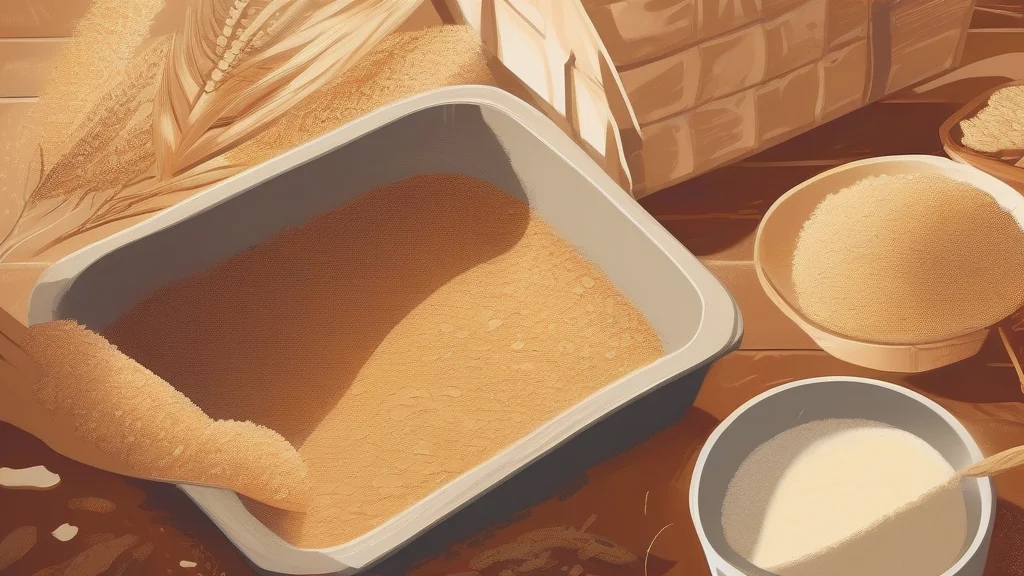
What does breading mean?
Breading refers to a protective, flavour-bearing layer of breadcrumbs — often combined with flour, seasoning, or grated cheese — applied to food before it is cooked, typically by pan-frying or deep-frying. The word also denotes the process itself: dredging food through flour, dipping it in beaten egg, and pressing on crumbs to build a crust that turns crisp and golden in hot fat. Breading serves several purposes at once: it adds texture, seals in moisture, prevents delicate foods from sticking to the pan, and carries seasonings directly onto the surface. It is central to countless beloved dishes, from breaded cutlets and schnitzels to fried chicken and fish sticks. Cooks speak of a 'breading station' — the orderly arrangement of flour, egg, and crumb trays — and of 'double breading' for an extra-thick crust. Though humble in origin, breading is a cornerstone technique of home and professional kitchens worldwide.
nounA layer of breadcrumbs, flour, or similar coating applied to food before cooking, especially frying. The process of covering food with such a coating.
- A coating of breadcrumbs or similar material applied to food before cooking.
- The act or process of applying such a coating.
"The breading on the fried chicken was perfectly crisp and golden."
"Shake off the excess breading before lowering the cutlets into the oil."
"The kitchen set up a breading station with three trays: flour, beaten egg, and seasoned crumbs."
Rarely used in the plural; 'breading' is normally treated as an uncountable noun referring to the coating material or process.
"Different breadings suit different dishes — coarse panko for shrimp, fine crumbs for croquettes."
Double breading — dipping food in egg and crumbs twice — is the restaurant trick behind that extra-thick crunch on chicken-fried steak.
Reviewed by Deb Chak, Editor. AI-assisted content curated by RJS Tech Solutions LLP.
Etymology of breading
Breading is formed simply from the noun 'bread' plus the suffix '-ing', denoting a material or action associated with that noun. 'Bread' itself descends from Old English 'brēad', a Germanic word whose deeper origins are uncertain but which is cognate with words in other Germanic languages. As a culinary term, 'breading' developed naturally as cooks needed a name for both the crumb coating and the act of applying it.
Related word forms
How breading is actually used
Primarily a culinary term used in cooking contexts; uncountable when referring to the substance or process. Commonly heard in professional kitchens and home cooking alike.
Easily confused with breading
Brooding means thinking deeply or gloomily (or sitting on eggs), while breading refers to coating food with crumbs or the coating itself.