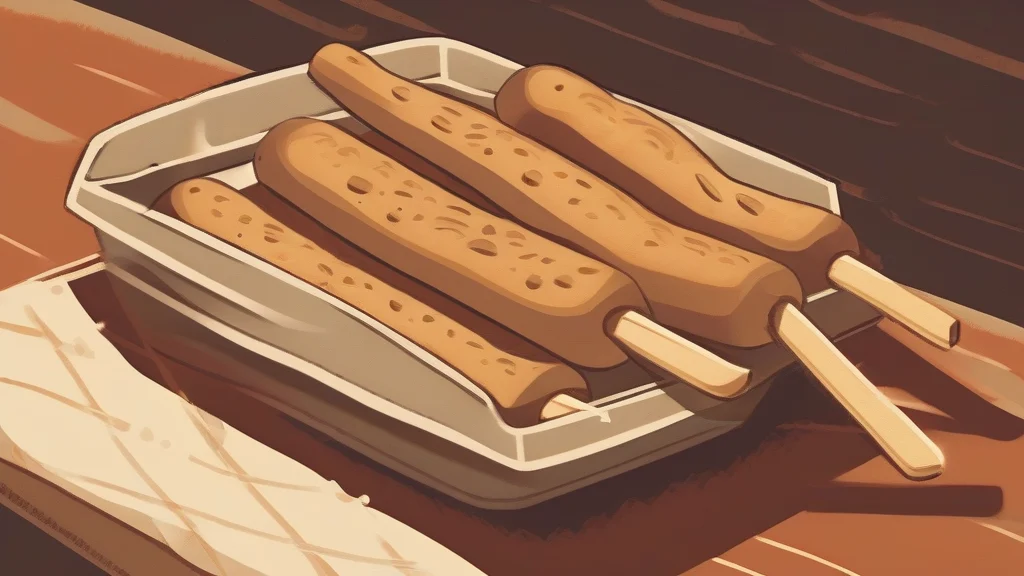
What does breadstick mean?
A breadstick is a long, slender piece of baked bread dough, typically eaten by hand as an appetizer or side dish. Breadsticks range from the crisp, pencil-thin grissini of northern Italy to the soft, pillowy versions popularized by American restaurants, where they are often flavored with garlic and herbs and paired with marinara sauce or olive oil for dipping. Served in baskets at tables or alongside soups and salads, breadsticks occupy a familiar place in casual dining across Europe and North America. The word is a straightforward English compound of 'bread' and 'stick', and its most famous variant, grissini, is said to have originated in Turin in the seventeenth century, allegedly created for a frail young duke who needed an easily digestible alternative to ordinary bread. Whether crisp or soft, breadsticks remain a beloved staple of the shared table.
nounA long, thin stick of crisp bread, typically served as an accompaniment to a meal; the term especially refers to the grissini of Italy or softer breadsticks common in American restaurants.
- A long, slender stick of crisp or soft baked bread dough, served as a snack or meal accompaniment.
"She nibbled on a breadstick while waiting for her pasta to arrive."
"The waiter brought a basket of warm breadsticks to the table."
"He dipped the crisp breadstick into the olive oil and balsamic vinegar."
Regular plural formed by adding -s. The plural is far more common than the singular in practice, since breadsticks are usually served several at a time.
"She ordered two bowls of soup and a plate of breadsticks."
Italy's famous grissini were supposedly invented in the 17th century when a Turin baker baked thin bread sticks for a sickly young duke whose digestion couldn't handle regular loaves.
Reviewed by Deb Chak, Editor. AI-assisted content curated by RJS Tech Solutions LLP.
Etymology of breadstick
The word breadstick is a transparent English compound formed from 'bread', a word of Germanic origin found throughout the Germanic language family, and 'stick', from Old English 'sticca', meaning a slender rod or twig. As a compound it arose naturally in English once the food itself became familiar outside continental Europe. Its most celebrated exemplar, the Italian grissino (plural grissini), is traditionally credited to seventeenth-century Turin, where a baker is said to have created thin, dry bread sticks for the digestive complaints of a young member of the House of Savoy.
How breadstick is actually used
A common, informal-to-neutral culinary term used in everyday dining contexts. In Italian cuisine the crisp variety is known as grissini (from Turin/Piedmont); in American restaurants, notably pizzerias, breadsticks are often softer and may be brushed with garlic butter and served with dipping sauces.
Easily confused with breadstick
A baguette is a long loaf of French bread with a crisp crust and soft interior, whereas a breadstick is a slim individual stick of bread meant to be eaten by hand.