What does breechcloth mean?
A breechcloth is a minimal garment made of a single strip of cloth or animal hide drawn up between the legs and held in place by a belt or band at the waist, thereby covering the loins. It has served as basic attire in many parts of the world, but in English usage the word is most closely associated with the traditional dress of Indigenous peoples of North America, for whom breechcloths of deerskin or woven fiber were everyday wear in warm weather and were frequently decorated with beads, quillwork, paint, or fringe for ceremonial occasions. The term appears chiefly in historical, ethnographic, and museum writing, and it remains the standard scholarly label for this garment type; "loincloth" is a broader synonym that also covers similar garments from other cultures. A close variant form, "breechclout," predates "breechcloth" and is still encountered. The word is formal to neutral in register, and its spelling reflects "breech," the anatomical term for the hindquarters, not the unrelated word "breach."
nounA breechcloth is a simple garment consisting of a strip of cloth or hide passed between the legs and secured at the waist by a belt, covering the loins. It was traditionally worn by many Indigenous peoples of North America and by various other cultures worldwide.
- A strip of cloth or leather worn between the legs and fastened at the waist to cover the loins, especially as traditional dress among Indigenous peoples of North America.
"The museum exhibit displayed a beautifully beaded breechcloth worn by a Lenape man in the eighteenth century."
"In hot weather, warriors often wore nothing but a breechcloth and moccasins."
"He described in his memoir how he traded a wool blanket for a fringed buckskin breechcloth at the trading post."
The standard plural simply adds -s. Some writers use "breeches of cloth" constructions, but "breechcloths" is the normal plural form.
"The collection includes several beaded breechcloths from Plains nations."
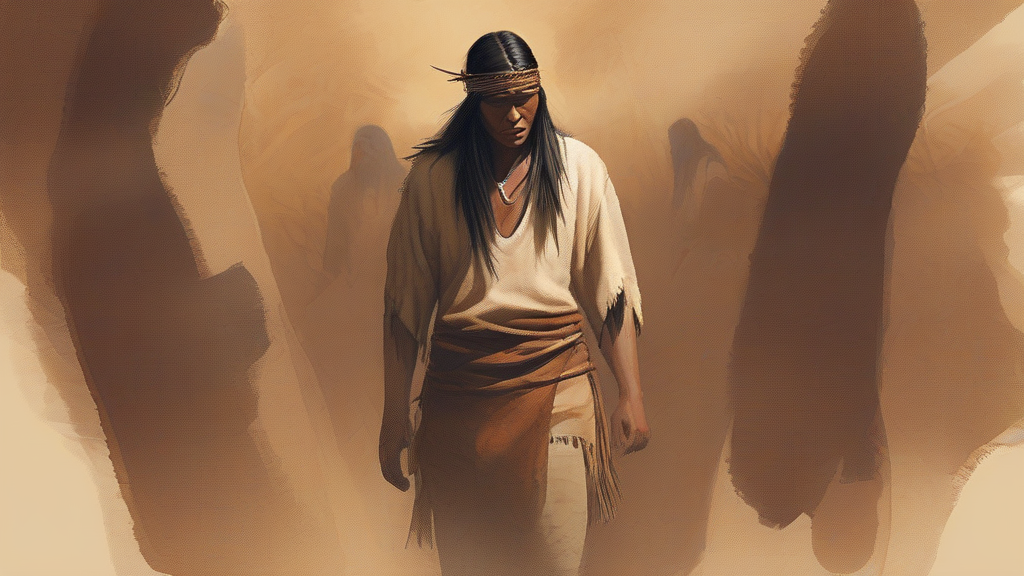
For centuries across much of North America, an entire outfit could hang from a single strip of deerskin — and it was often the most elaborately beadwork-decorated garment a man owned.
Reviewed by Deb Chak, Editor. AI-assisted content curated by RJS Tech Solutions LLP.
Etymology of breechcloth
The compound joins "breech," an Old English word ("brēc") for the hindquarters or trousers covering them, with "cloth." The older form "breechclout," using "clout" in its sense of a piece of cloth, dates to the early seventeenth century, and "breechcloth" arose later as an alternative. The element "breech" shares Germanic roots with words such as "britches" and is related to, though distinct in meaning from, "breach," which comes from a different Old French source.
Related word forms
How breechcloth is actually used
The term carries historical and anthropological connotations, appearing most often in writing about Indigenous cultures of North America, colonial-era accounts, and museum contexts. It is neutral rather than offensive, though modern writers discussing contemporary Indigenous dress should note that breechcloths are largely ceremonial or historical garments today. The variant "breechclout" is older but still current.
Easily confused with breechcloth
"Breach" means a break, violation, or gap, while "breech" refers to the hind or lower part of the body (or a firearm's rear), and "breechcloth" is the garment worn over the loins.
"Breeches" are knee-length trousers covering both legs, whereas a breechcloth is only a narrow strip of cloth between the legs.