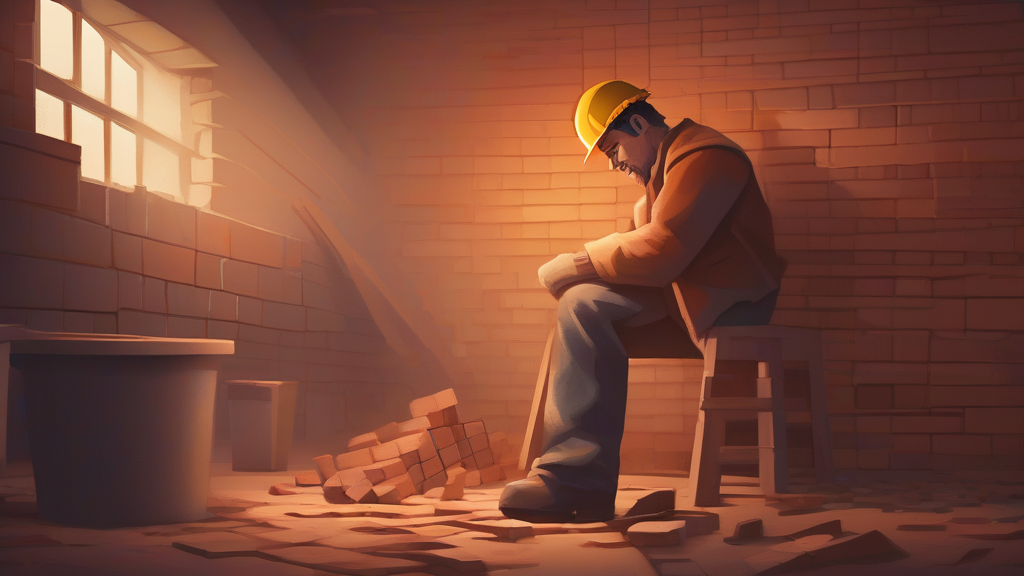
What does brickie mean?
Brickie is an informal British and Australian term for a bricklayer — a tradesperson who constructs walls and other structures by laying bricks with mortar. Formed from 'brick' plus the familiar '-ie' suffix that signals colloquial warmth or mateship, the word belongs to the same family of friendly occupational nicknames as 'postie' (postman) and 'sparky' (electrician). It appears frequently in everyday speech, local journalism, and building-site banter across the UK and Australia, where it is entirely unremarkable and carries no stigma; indeed, many people who do the work prefer it to the more formal 'bricklayer'. A related phrase, 'the brickie's mate', refers to the assistant who mixes mortar and ferries materials on site. Because the term is regional and casual, writers aiming for a formal international register should use 'bricklayer', but in conversation about British or Australian construction work, 'brickie' is the natural, idiomatic choice.
nounA bricklayer — a person whose trade is building with bricks.
- A bricklayer; a worker who builds structures from bricks.
"Our neighbour's a brickie by trade, and he built the extension himself over one summer."
"The foreman sent the brickie up the scaffold to finish the gable end."
"After years as a brickie in Manchester, he emigrated to Perth and set up his own firm."
Regular plural, formed by adding -s; used only of people, not of bricks themselves.
"The firm employs six brickies and twice as many labourers."
In Australia and Britain you'll never hear 'bricklayer' on a building site — the man laying your walls is simply the brickie, and his apprentice is affectionately known as the brickie's mate.
Reviewed by Deb Chak, Editor. AI-assisted content curated by RJS Tech Solutions LLP.
Etymology of brickie
Brickie is formed by adding the colloquial diminutive suffix '-ie' to 'brick', yielding a friendly name for someone whose trade involves bricks. The base word 'brick' entered Middle English in the medieval period, most likely borrowed from Middle Dutch or Middle Low German forms used in the Flemish brick-making trade. The '-ie' suffix itself reflects a long English habit of clipping and softening nouns into informal variants, the same pattern that produced 'postie' and 'aussie'. Brickie emerged in twentieth-century British vernacular and was carried to Australia, where it remains standard informal usage today.
Related word forms
How brickie is actually used
Informal and colloquial, chiefly British and Australian English; the neutral term is 'bricklayer'. The word carries no pejorative force and is often used with working-class pride. The derived form 'brickies' serves as the plural.
Easily confused with brickie
Brickle is an archaic/dialectal adjective meaning brittle, whereas brickie is a noun meaning a bricklayer.
A brickbat is literally a piece of brick or figuratively a hostile remark, while a brickie is a person who lays bricks.