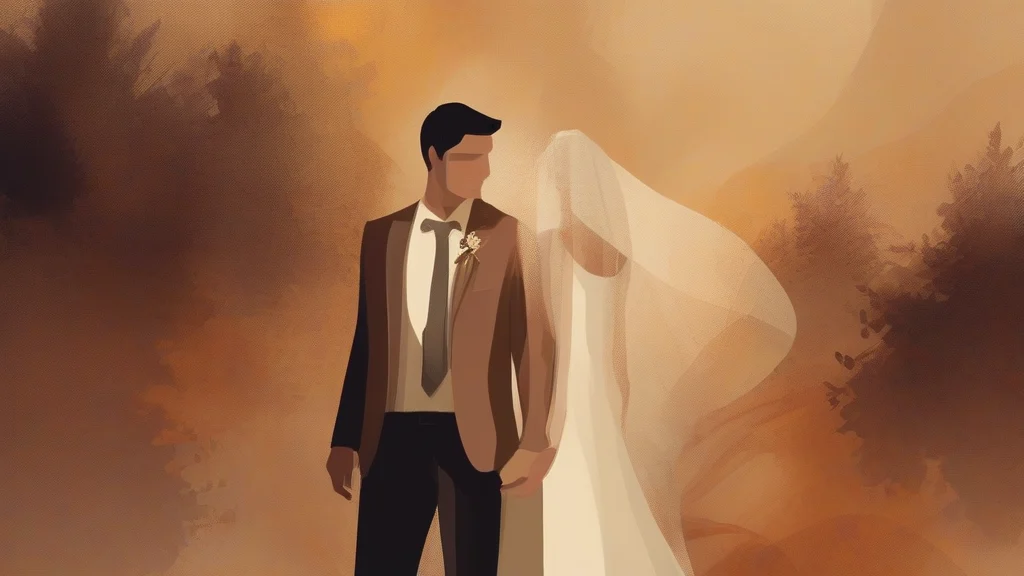
What does bridegroom mean?
A bridegroom is a man who is about to be married or has just been married, especially on his wedding day. The word pairs naturally with "bride" — the corresponding term for the woman being married — and appears frequently in phrases such as "the bride and bridegroom." Although it is the historically full form of the word, modern usage has largely shifted toward the shorter "groom," leaving "bridegroom" with a slightly formal, traditional flavor. It remains entirely standard, however, in wedding invitations, religious ceremonies, legal documents, and literary writing, where its fuller sound suits the solemnity of the occasion. The word's history is more interesting than its plain meaning suggests: the ending "-groom" has no connection to horses or personal grooming. It descends from an Old English word for a man or male servant, so a bridegroom was originally simply a "man of the bride." For writers and readers alike, choosing "bridegroom" signals a deliberate, elevated register appropriate to weddings and their rituals.
nounA man on or just before his wedding day; the person who is getting married.
- A man on his wedding day or immediately before it; the man who is getting married.
"The bridegroom looked visibly nervous as the processional music began."
"The bridegroom waited at the altar as the guests took their seats."
"In many traditions the bridegroom arrives at the ceremony separately from the bridal party."
Standard regular plural; used when referring to multiple men marrying, e.g. in statistics or joint ceremonies.
"The survey found that most bridegrooms were older than their brides."
Despite appearances, the second half of "bridegroom" originally had nothing to do with horses or grooming — it comes from an Old English word meaning simply "man."
Reviewed by Deb Chak, Editor. AI-assisted content curated by RJS Tech Solutions LLP.
Etymology of bridegroom
"Bridegroom" comes from Old English "brȳdguma," a compound of "brȳd" (bride) and "guma" (man). Middle English speakers altered the second element by association with the unrelated word "grom," meaning boy or servant (later, a man who tends horses), producing the modern form "-groom." Cognates appear in other Germanic languages, such as Old Norse "brúðgumi" and German "Bräutigam."
How bridegroom is actually used
"Bridegroom" carries a somewhat formal or traditional register; in everyday speech most English speakers now say simply "groom," reserving "bridegroom" for ceremonial, literary, or legal contexts. It remains standard in wedding invitations, religious services, and formal announcements.
Easily confused with bridegroom
"Groom" is the everyday shortened form of "bridegroom" (and can also mean a man who tends horses), while "bridegroom" is the fuller, more formal term for a man about to be married.
"Grooming" refers to caring for one's appearance or, in a negative sense, manipulating someone — it has no connection to marriage.