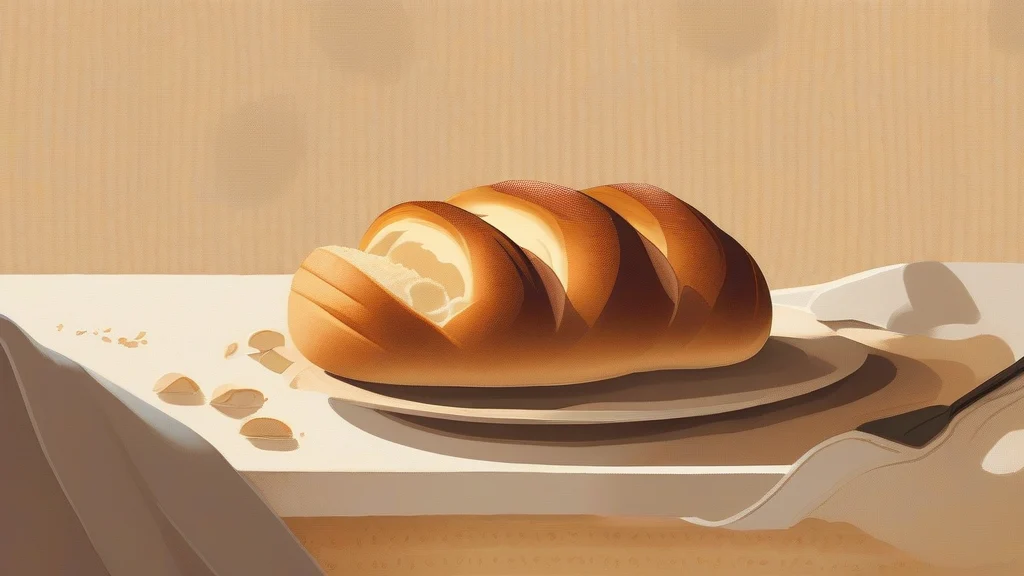
What does brioche mean?
Brioche is a soft, pillowy bread of French origin, distinguished by an unusually high proportion of butter and eggs folded into its dough. This enrichment gives brioche a tender, almost pastry-like crumb and a subtle sweetness that sets it apart from everyday loaves. Traditionally shaped into fluted tins or braided forms, it is enjoyed at breakfast or as a dessert, often served with jam, transformed into French toast, or used to cradle gourmet burgers in modern kitchens. The word also appears in the craft world, where 'brioche knitting' names a technique producing plush, ribbed fabric reminiscent of the bread. Borrowed from French in the nineteenth century, the term carries connotations of indulgence and refinement — brioche is a treat rather than a staple. Whether on a café menu or a knitting pattern, the word evokes richness, comfort, and a touch of French elegance.
A soft, sweet French yeast bread made with a very high proportion of butter and eggs, typically baked in a fluted tin and eaten plain, toasted, or as a dessert.
"For Sunday brunch she baked a golden brioche and served it with salted butter."
Usually uncountable when referring to the substance ('a slice of brioche'), countable when referring to whole loaves ('two brioches').
A thick, lofty knitted fabric produced by the brioche stitch technique, so named for its resemblance to the bread.
"The pattern calls for two-colour brioche worked in the round."
Used chiefly in knitting contexts, usually attributively ('brioche stitch', 'brioche knitting').
The plural applies only when referring to multiple whole loaves or individual rolls; the bread in general remains uncountable.
"The baker pulled six small brioches from the oven just before dawn."
Marie Antoinette never said "Let them eat cake" — the original French line was likely about brioche, the butter-laden bread of the wealthy.
Reviewed by Deb Chak, Editor. AI-assisted content curated by RJS Tech Solutions LLP.
Etymology of brioche
Brioche entered English from French in the nineteenth century, though the word itself is attested in French from at least the seventeenth century. Its ultimate origin is uncertain; one common suggestion links it to Old Norman 'brier', meaning a long roll, possibly influenced by the verb 'broyer' (to knead), but no etymology is firmly established. The word has since given rise to related terms such as 'briochette', a small individual brioche.
Related word forms
How brioche is actually used
In culinary contexts, 'brioche' is uncountable when referring to the bread in general ('a slice of brioche') but countable when referring to whole loaves ('two brioches'). In knitting, it almost always appears attributively as part of 'brioche stitch' or 'brioche knitting'.
Easily confused with brioche
Brioche is the bread; 'brioche stitch' is a knitting technique named for its puffy resemblance to the bread.