
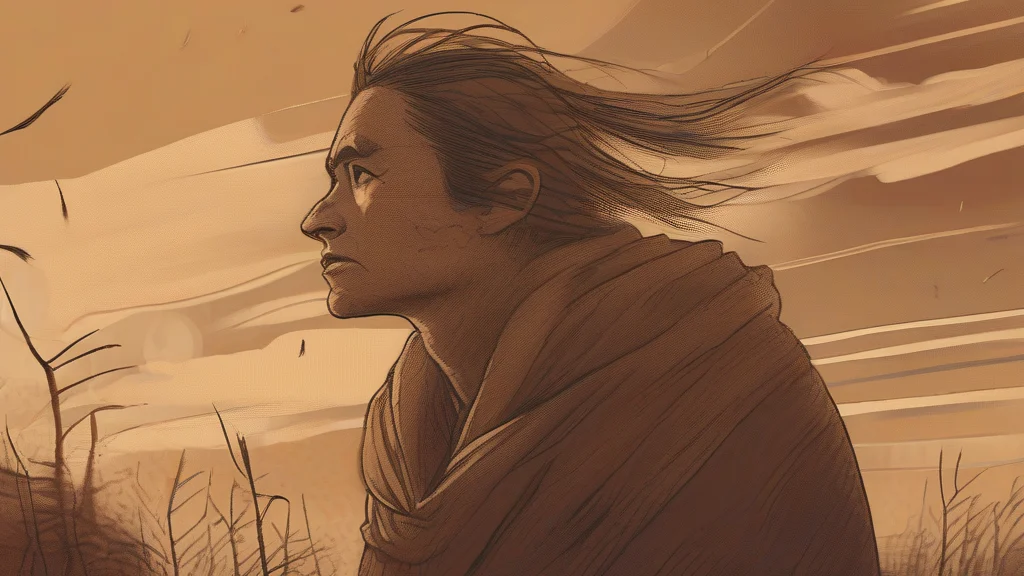
What does bristled mean?
"Bristled" is the past tense and past participle of the verb "bristle," which has both a literal and a figurative meaning. Literally, it describes hair, fur, or similar filaments standing erect or stiffening, as when a frightened or aggressive animal raises its hackles — a dog may bristle before it growls. Figuratively, and most commonly today, it describes a person reacting with sudden indignation or offended pride: someone who "bristled at the criticism" showed visible irritation in response to it. A third sense applies to objects densely covered with projecting things, as when a city skyline "bristles with cranes." The word derives ultimately from Old English and Old Norse roots referring to stiff, coarse hairs. Its enduring usefulness lies in how vividly it captures an involuntary physical reaction to provocation.
verbPast tense and past participle of "bristle": to stand up stiffly like bristles, or to react with obvious anger, indignation, or irritation.
- (of hair, fur, or bristle-like things) to stand erect or stiffen, as an animal's hackles rise in fear or aggression.
- (of a person) to react with sudden anger, indignation, or offended pride.
- (of a surface or object) to be densely covered or furnished with projecting items, as in "a roof bristled with antennae."
"She bristled at the suggestion that her work was anything less than thorough."
"The dog bristled and growled when the stranger approached the gate."
"He bristled at the implication that he had been careless with the accounts."
When you bristle, your hair literally wants to stand on end — the angry reaction we all know was first described as an animal raising its hackles.
Reviewed by Deb Chak, Editor. AI-assisted content curated by RJS Tech Solutions LLP.
Etymology of bristled
The verb derives from the noun "bristle," a stiff, coarse hair, which comes from Old English "byrst" and is related to Old Norse "burst," sharing a Germanic root also seen in the Latin "bustum" family via Proto-Indo-European. The literal sense of hair standing on end developed naturally from the noun, and by extension the figurative sense of a person's temper rising appeared in English several centuries ago. Cognate forms appear across the Germanic languages, such as German "Borste" (a bristle).
Related word forms
How bristled is actually used
Most common in narrative and journalistic writing rather than casual speech. The figurative sense (reacting with indignation) usually takes the preposition "at," as in "bristled at the remark," though it can also take "with" when describing the emotion displayed. It typically describes a brief, visible reaction rather than sustained anger.
Easily confused with bristled
"Whistled" means made a high-pitched sound through the lips or a whistle, while "bristled" means stood up stiffly or reacted with irritation.