What does brontosaurus mean?
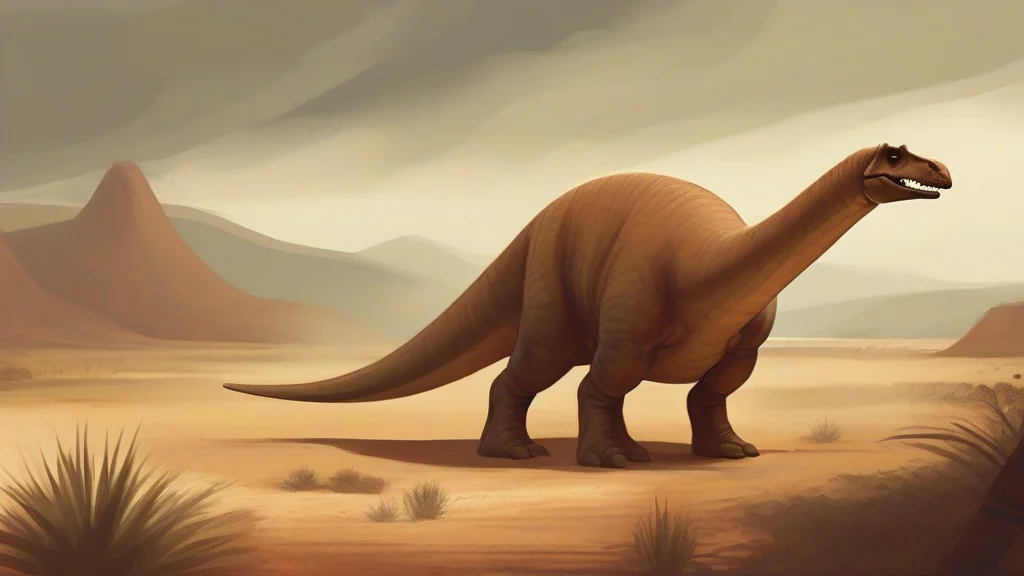
Brontosaurus is a noun denoting one of the most iconic dinosaurs: a colossal, plant-eating sauropod that lived during the late Jurassic period, roughly 150 million years ago. With its enormously long neck and tail, small head, and elephantine body supported by four pillar-like legs, it has become a fixture of popular imagination, museum displays, and children's books. The name itself derives from Greek roots meaning "thunder lizard," chosen to suggest the sound its footsteps might make. Although twentieth-century scientists concluded the original specimen belonged to the already-named genus Apatosaurus — rendering "brontosaurus" technically redundant — a 2015 study argued the two were distinct after all, restoring the beloved name to scientific respectability. Beyond palaeontology, "brontosaurus" is used figuratively and often affectionately for anything enormous and slow-moving. Its cultural resonance makes it one of the few dinosaur names recognised by virtually every English speaker, regardless of age or background.
A very large extinct herbivorous dinosaur of the late Jurassic period, belonging to the group of sauropods, having a long neck, long tail, massive quadrupedal body, and relatively small head.
"Visitors gasped at the life-size brontosaurus model towering over the exhibition floor."
Often used loosely to mean any giant sauropod; strictly refers to a specific genus.
(Informal, figurative) An extremely large, heavy, or slow-moving person or thing.
"The old freight train rumbled past like a brontosaurus on rails."
Usually humorous or mildly derogatory depending on tone; always informal.
Both forms are accepted; the unmarked form is common in palaeontological writing, while 'brontosauruses' is more natural in everyday speech.
"Fossil hunters uncovered the remains of three brontosauruses at the site."
"Brontosaurus" means "thunder lizard" — a name so evocative it survived being scientifically declared invalid in 1903, then reinstated over a century later.
Reviewed by Deb Chak, Editor. AI-assisted content curated by RJS Tech Solutions LLP.
Etymology of brontosaurus
The word "brontosaurus" was coined in the late nineteenth century by American palaeontologist Othniel Charles Marsh, who named the genus in 1879. It combines two ancient Greek elements: brontē, meaning "thunder," and sauros, meaning "lizard" — hence "thunder lizard." The Greek sauros root also appears in other dinosaur names such as tyrannosaurus, stegosaurus, and allosaurus, while brontē survives in medical vocabulary such as bronchitis (inflamed bronchi). In 1903 the genus was reclassified as a species of Apatosaurus, though the name remained popular and was formally revived following research published in 2015.
How brontosaurus is actually used
The word carries a slightly playful, nostalgic connotation in modern English, often evoking childhood fascination with dinosaurs. It is frequently treated as a plural-invariable term when referring to multiple animals ('a herd of brontosaurus'), though 'brontosauruses' is also acceptable. The name was long regarded as a synonym of Apatosaurus but has been revived by some researchers since the 2010s.
Easily confused with brontosaurus
Brontosaurus and apatosaurus were long considered the same genus, but many palaeontologists now treat them as distinct sauropod genera; 'apatosaurus' has historically been the preferred scientific name.