What does brooded mean?
"Brooded" is the past tense of the verb "brood," and its dominant modern meaning is psychological: to dwell on a worry, grievance, or sad thought repeatedly and silently. Someone who brooded over a slight spent hours turning it over in mind, usually without reaching any resolution — the word implies a moody, inward, and often unproductive quality of thought that sets it apart from calmer terms like "pondered" or "considered." The word's older sense is literal and agricultural: a hen broods her eggs, sitting on them to keep them warm until they hatch, and this sense survives mainly in descriptions of poultry and nature writing. There is also a literary figurative use in which darkness, silence, or an atmosphere is said to have brooded over a landscape, suggesting a heavy, watchful presence. Derived forms such as "brooding" and "brooder" are common in both everyday speech and fiction.
verbPast tense of "brood": to think deeply and at length about something, especially in an anxious, melancholy, or obsessive way; also, of a bird, to sit on eggs in order to hatch them.
- (of a person) to think anxiously, moodily, or obsessively about something, often silently and for a long time.
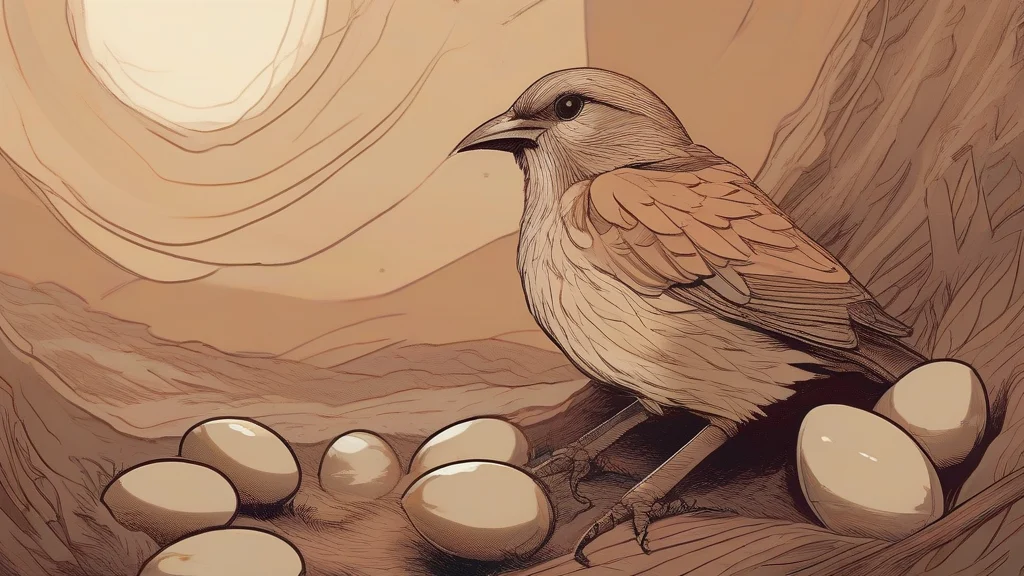
- (of a bird) to sit on eggs in order to hatch them by body warmth.
- (of silence, darkness, or a place) to hang over or envelop something oppressively, as if deep in thought.
"She brooded over the harsh review for days, replaying every word."
"He brooded for weeks over the friendship that had quietly fallen apart."
"The owl sat brooding over her eggs until dusk settled over the barn."
Before it meant dark thoughts, brooding meant keeping warm — the word's first job was describing a hen sitting patiently on her eggs.
Reviewed by Deb Chak, Editor. AI-assisted content curated by RJS Tech Solutions LLP.
Etymology of brooded
The verb "brood" comes from Old English "brōd" (a chick or embryo) and the related verb "brōdan," meaning to sit on eggs or incubate, tracing back through Proto-Germanic roots shared with Dutch and German cognates such as Dutch "broed." The sense of warming and nurturing eggs came first, appearing in early English texts, while the psychological sense of dwelling anxiously on one's thoughts developed later by metaphor — the mind hovering over a single idea much as a bird covers her clutch. The noun "brood," meaning a family of young birds or offspring generally, grew from the same root, which also gave English the verb "breed."
Related word forms
How brooded is actually used
"Brooded" carries a distinctly negative or melancholy connotation when applied to people: unlike neutral synonyms such as "pondered," it implies unhappiness, resentment, or unhealthy fixation. It typically appears intransitively with the prepositions "over" or "on" ("brooded over the insult"). The figurative sense describing gloomy skies or silent rooms is literary rather than conversational.