What does broody mean?
Broody is an adjective with two well-established senses. Its original meaning, dating back centuries in farm life, describes a hen that is determined to sit on and hatch her eggs — such birds stop laying and stubbornly occupy the nest. By extension, and now more commonly, broody describes people, faces, or atmospheres that are darkly pensive, moody, or quietly sullen: someone lost in gloomy thought may be said to be in a broody mood. The word derives from brood, from Old English brōd, joined with the adjectival suffix -y, making it a cousin of the verb breed. In tone it ranges from neutral to informal; in literature a 'broody' character often suggests attractive melancholy, while in everyday use it can simply mean grumpy or withdrawn. Its derivatives include the adverb broodily and the noun broodiness.
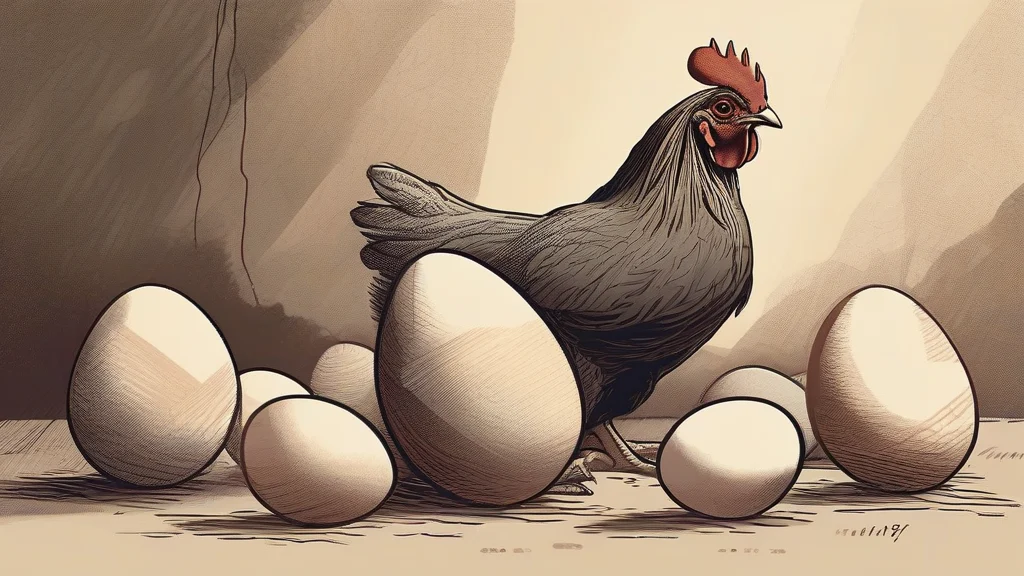
(Of a hen) inclined to sit on eggs in order to hatch them.
"Once the Buff Orpington went broody, she had to be gently removed from the nest each morning."
Chiefly used by poultry keepers; especially common in British English.
(Of a person, expression, or atmosphere) darkly thoughtful, moody, or sullen; given to brooding.
"He gave her a long, broody stare before finally answering."
A broody hen will happily sit on eggs for weeks — even eggs that aren't hers — which is why farmers once kept a 'broody' around as living incubators.
Reviewed by Deb Chak, Editor. AI-assisted content curated by RJS Tech Solutions LLP.
Etymology of broody
Broody was formed in English from the noun brood plus the adjectival suffix -y. Brood itself comes from Old English brōd, meaning offspring or that which is hatched, from a Germanic root related to heat and hatching — the same root that gave us the verb breed. The literal sense referring to hens eager to incubate eggs appeared first, with the figurative sense describing moody, pensive humans developing later by natural association with the act of brooding over thoughts.
Related word forms
How broody is actually used
Both senses are informal to neutral in register; the hen sense is common among poultry keepers, especially in British usage, while the emotional sense appears widely in fiction and everyday speech. The emotional sense often carries a mildly romantic or atmospheric connotation in literary contexts (e.g., 'broody hero'), but can also suggest mere sulking.
Easily confused with broody
"Brooding" describes the act of dwelling on dark thoughts (or a bird incubating eggs), while "broody" describes a temperament or state of being disposed to such gloom or, for a hen, to sitting on eggs.
"Moody" refers to unpredictable swings between moods, whereas "broody" implies a settled, lingering pensiveness or sullenness.