What does brough mean?
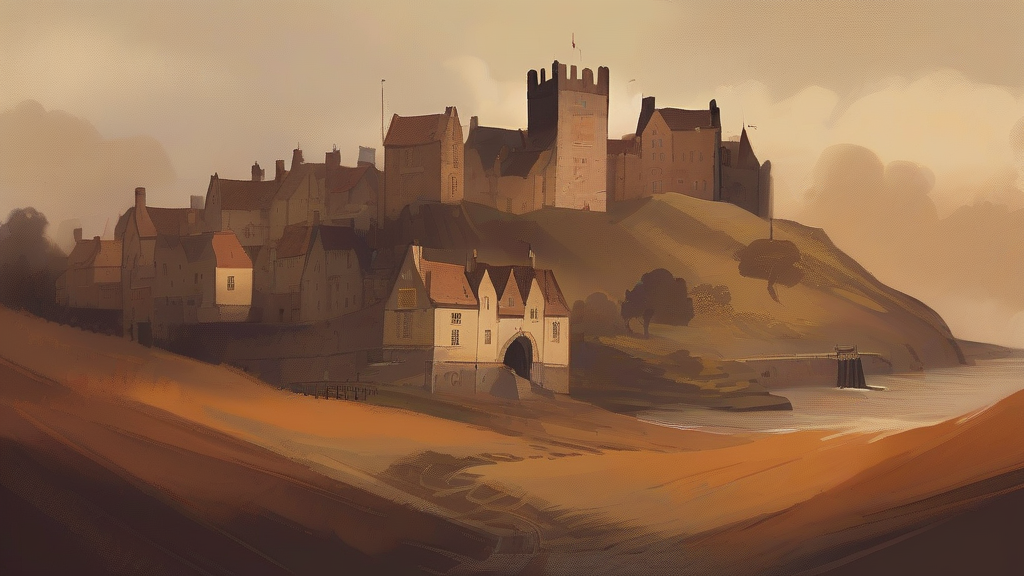
Brough is a place name found at several locations in northern England, most notably a village in Cumbria beneath the North Pennines and a small town on the north bank of the Humber estuary in the East Riding of Yorkshire. Although it appears to be an ordinary word, Brough is properly a proper noun, and it carries no independent meaning outside these geographic references. Its interest lies chiefly in history: the Cumbrian village occupies the site of Verterae, a Roman fort on the old road from York to Carlisle, while the Yorkshire town grew up around another early stronghold. Linguistically, Brough descends from the Old English and Old Norse element for a fortified place, making it a cousin of words like borough and burgh — though centuries of local pronunciation have softened the ending into a simple f-sound. For travellers, historians, and crossword enthusiasts alike, Brough is a reminder that many unassuming English village names preserve echoes of Roman roads, Viking settlements, and medieval defences hidden in plain sight.
nounBrough is primarily a proper noun: the name of several villages and places in northern England, notably Brough in Cumbria and Brough in the East Riding of Yorkshire. The Yorkshire name derives from the Old English/Old Norse word for a fortified settlement.
- A village in Cumbria, England, near the M6 motorway at the foot of the North Pennines.
- A town in the East Riding of Yorkshire, England, on the Humber estuary.
- (Historical, rare) A fortified settlement or hillfort, from the Old English/Norse element reflected in the place names themselves.
"They stopped for the night at an inn in Brough before crossing the Pennines."
"The Roman fort of Verterae stood at what is now the village of Brough in Cumbria."
"Ferries once ran from Brough across the Humber on their way to Hull."
Brough looks like it should rhyme with 'plough', but this quiet Cumbrian village keeps a secret: its name is a living relic of the Old Norse word for a fortress.
Reviewed by Deb Chak, Editor. AI-assisted content curated by RJS Tech Solutions LLP.
Etymology of brough
The name Brough derives from the Old English burh and its Old Norse counterpart borg, both meaning a fortified place or stronghold, which also yield the modern words borough and burgh. It was applied to settlements built on or near early fortifications — in Cumbria's case the Roman fort of Verterae, in Yorkshire an earlier defensive site. Over time regional pronunciation reduced the final consonant to an f-sound, distinguishing it from its better-known relatives borough and Edinburgh.
How brough is actually used
Brough functions almost exclusively as a proper noun naming specific places in northern England; it does not appear as an ordinary vocabulary word in modern English. Pronunciation varies by locality: the Cumbrian and Yorkshire villages are typically /brʌf/, while related Scottish names retain a guttural fricative. When used generically in historical or archaeological writing about placenames, it refers to that Old English/Old Norse fortification element.
Easily confused with brough
Borough is a common noun meaning a town or administrative district, while Brough (pronounced differently, often /brʌf/) is a place name derived from the same ancient root.
Bough means a main branch of a tree and is pronounced /baʊ/, whereas Brough is a place name pronounced /brʌf/.