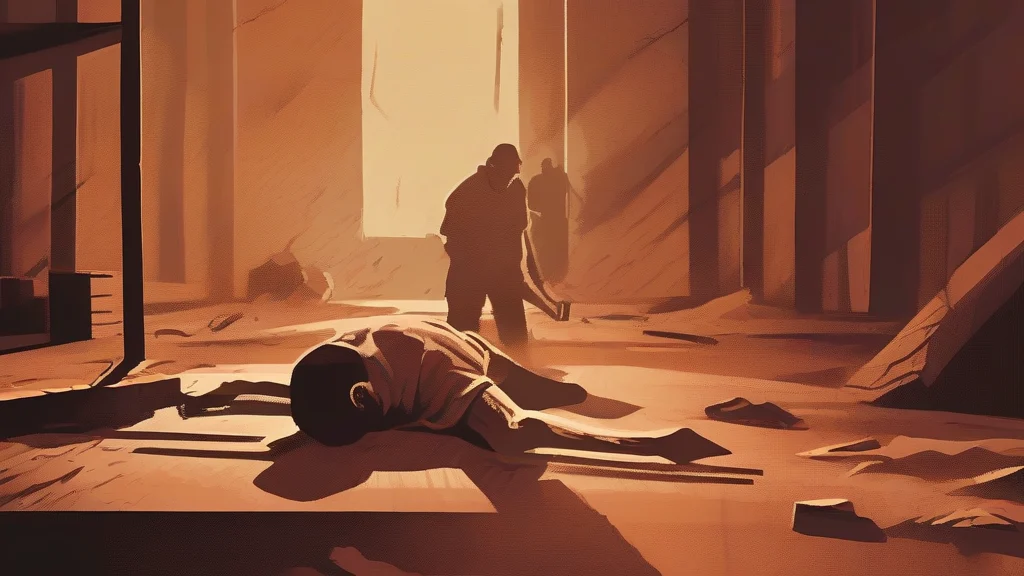
What does brutalization mean?
Brutalization is a formal noun referring to the process by which a person becomes brutal, cruel, or emotionally hardened, most often through prolonged exposure to violence, suffering, or degradation. The word carries two closely related senses: it can describe an internal transformation, as when soldiers grow numb to killing through repeated combat, or an external imposition, as when captives are subjected to systematic mistreatment. Both senses share a strongly negative connotation, and the term appears most often in serious contexts — histories of warfare, studies of prisons and policing, human rights reports, and sociological analyses of violence. Common collocations include phrases such as 'the brutalization of war' or 'the brutalization of prisoners', where 'of' identifies the person or group affected. Related words include the verb brutalize and the adjective brutal. Brutalization is a useful analytical term because it captures not merely isolated acts of cruelty but the cumulative erosion of compassion and moral sensitivity that cruelty can produce over time.
The process or result of making someone brutal, cruel, or insensitive, especially through exposure to violence.
"The novel depicts the brutalization of a boy growing up amid urban gang violence."
Often followed by 'of' + the affected person or group.
The act of treating a person or group with extreme cruelty or violence.
"International observers documented the brutalization of civilians during the occupation."
Rarely used in the plural; the word normally functions as an uncountable mass noun denoting a general process.
"The memoir recounts the many brutalizations he endured before escaping."
Brutalization describes how cruelty spreads: soldiers and witnesses of violence often become numb to it — the word names that chilling transformation.
Reviewed by Deb Chak, Editor. AI-assisted content curated by RJS Tech Solutions LLP.
Etymology of brutalization
Brutalization derives from the verb brutalize, formed from the adjective brutal, which entered English in the early 15th century from French brut or directly from Latin brutus, meaning 'heavy, dull, stupid, or irrational'. Latin brutus was also the source of English brute. The suffix -ize, ultimately from Greek -izein, formed the verb, and the noun suffix -ation produced brutalization. Cognate forms across Romance languages, such as French brutaliser, reflect the same Latin root. The word belongs to the family of English terms built on the notion of the 'dumb beast', contrasting human rationality with animal insensibility.
Related word forms
How brutalization is actually used
Formal register; common in academic writing on sociology, criminology, history, and human rights. Strongly negative connotation. Frequently used with 'of' to specify who or what undergoes the process (e.g. 'the brutalization of children').
Easily confused with brutalization
Brutality is an instance or quality of cruel, violent behavior, while brutalization is the process by which someone becomes brutal or is subjected to such treatment.