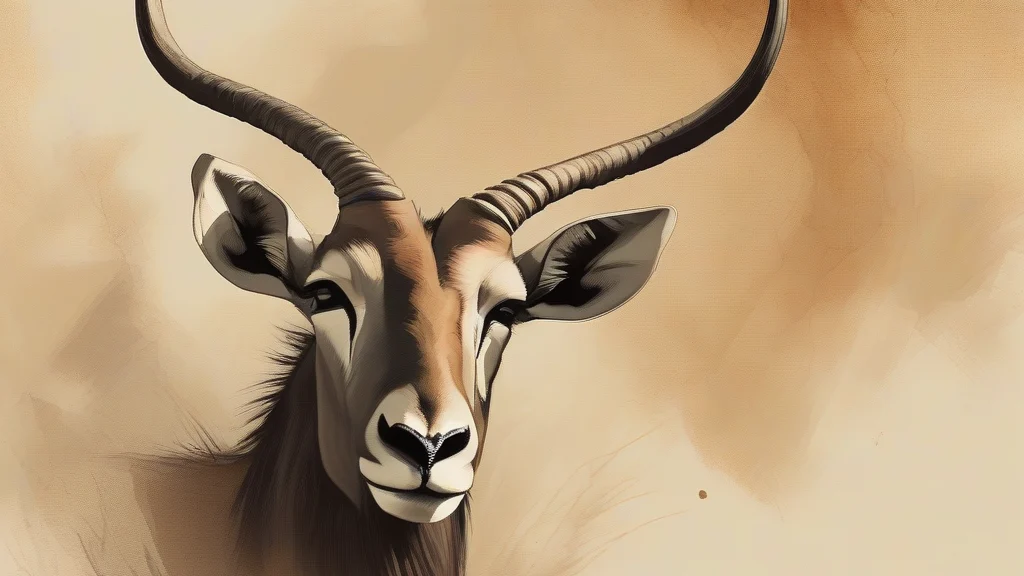
What does bubal mean?
A bubal is an antelope belonging to the hartebeest group of Africa, and the term is best known through the phrase "bubal hartebeest" (Alcelaphus buselaphus), a large grazing animal distinguished by its elongated face, sloping hindquarters, and ridged, ringed horns. Hartebeests take their English name from the Afrikaans "hard," meaning tough or hardy, reflecting the endurance these animals display on dry savannas. The bubal form itself was native to North Africa, where it roamed grasslands until overhunting drove it to extinction in the early twentieth century, making it one of the few large African mammals lost entirely within recorded history. Today the word survives mainly in scientific literature, conservation history, and accounts of extinct fauna. It carries no figurative connotations; it is a precise zoological term rather than an everyday vocabulary item, valued for its specificity in discussions of African wildlife and biodiversity loss.
nounA bubal is a large African antelope of the hartebeest group (Alcelaphus buselaphus), especially the subspecies known as the bubal hartebeest, characterized by long legs, a sloping back, and lyre-shaped horns.
- An African antelope of the hartebeest genus Alcelaphus, particularly the extinct North African subspecies Alcelaphus buselaphus buselaphus, the bubal hartebeest.
"The last known bubal hartebeest died in the early twentieth century, marking the loss of a once widespread North African antelope."
"Rock paintings in the Sahara depict hunters pursuing the bubal across what were then grassy plains."
"Naturalists distinguish the bubal from other hartebeests by the shape of its horns and its former range north of the Sahara."
The plural follows standard English formation; herds are usually referred to simply as hartebeests.
"Early travelers reported seeing herds of bubals grazing on the plains south of the Atlas Mountains."
The bubal hartebeest was hunted so relentlessly in North Africa that by the twentieth century it had vanished entirely — the word now outlives the animal.
Reviewed by Deb Chak, Editor. AI-assisted content curated by RJS Tech Solutions LLP.
Etymology of bubal
"Bubal" derives ultimately from ancient Greek "boubalos," a term applied to a kind of gazelle or antelope, which passed into Latin as "bubalus." The same Latin word gave rise to "buffalo," making the two names distant siblings rather than synonyms. The English form entered natural-history usage through scientific Latin, where it was adopted as part of the species name for the hartebeest. Its cognates therefore trace the long journey of a single classical animal-name through Greek, Latin, and modern European languages.
How bubal is actually used
"Bubal" is a rare, chiefly technical or historical term used in zoology and natural-history writing; it appears most often as part of the compound "bubal hartebeest," referring to a subspecies declared extinct in the twentieth century.
Easily confused with bubal
"Bubble" refers to a thin sphere of liquid enclosing air, while "bubal" is the name of an African antelope.