
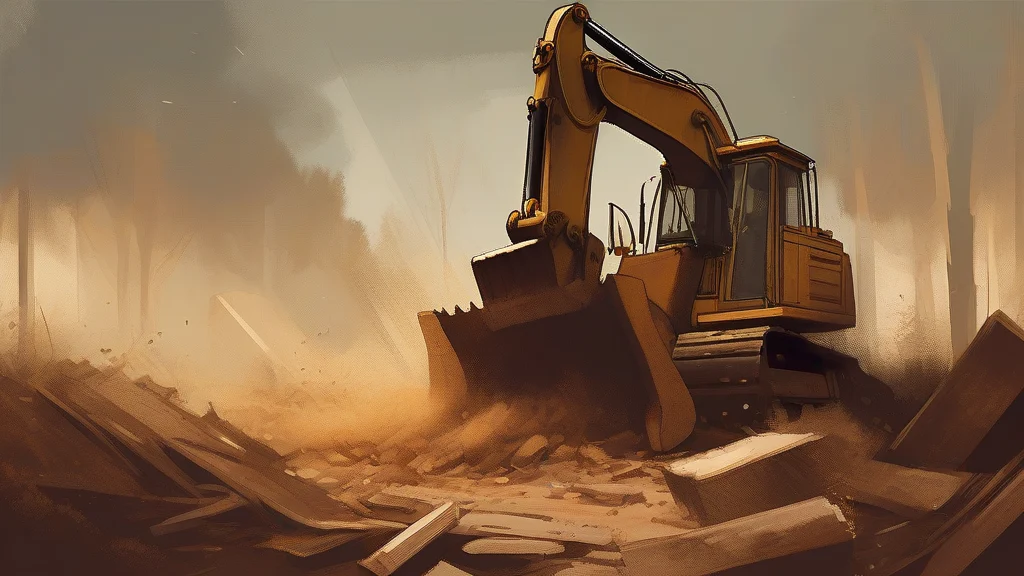
What does bulldozing mean?
Bulldozing refers both to the physical act of demolishing or clearing land and structures using a bulldozer, and, by metaphorical extension, to coercing people through sheer force of pressure. In its literal sense it appears constantly in coverage of construction, urban redevelopment, and deforestation: crews bulldoze forests, warehouses, and neighbourhoods to make way for new projects. Figuratively, calling an organisation's behaviour 'bulldozing' implies it has ridden roughshod over dissent, consultation, or consent—an accusation common in political and corporate reporting. The word's tone is almost always critical, suggesting impatience, insensitivity, or contempt for obstacles and objections alike. It derives from the verb 'bulldoze', itself born of nineteenth-century American slang, and remains one of the most vivid words available for describing force that refuses to take no for an answer.
To clear or demolish something using a bulldozer; figuratively, to force one's way past resistance or coerce others through overwhelming pressure.
"They spent weeks bulldozing the site before construction could begin."
The action or process of bulldozing, especially large-scale clearing or demolition work.
"The bulldozing of the old market sparked protests across the city."
Before it meant demolition, 'bulldoze' meant a beating so brutal it was called a 'dose' strong enough for a bull—and only later did the machine borrow its name from the violence.
Reviewed by Deb Chak, Editor. AI-assisted content curated by RJS Tech Solutions LLP.
Etymology of bulldozing
Bulldozing comes from the verb 'bulldoze', which emerged in the United States during the 1870s. The original sense was not mechanical at all: bull-dozers were vigilantes who flogged victims with a 'dose' of whipping deemed fit for a bull—that is, far stronger than an ordinary dose of medicine, connecting the term to 'dose' from Greek 'dosis' (a giving). By around 1880 the word had shifted to mean intimidation generally, and when the tracked earth-moving machine appeared in the early twentieth century, it took its name from this association with irresistible force.
Related word forms
How bulldozing is actually used
Both literal and figurative senses are common in journalism and everyday speech; the figurative use carries a strongly negative connotation of disregard for others' views or rights. The word is informal-to-neutral rather than technical; construction industry writing may prefer more precise terms like 'clearing', 'grading', or 'demolition' depending on the task.
Easily confused with bulldozing
Bullying is persistent intimidation over time by any means, while bulldozing specifically implies overwhelming force or pressure—literal demolition or figurative steamrolling—to get one's way.
A 'bulldozer' is the machine itself, whereas 'bulldozing' describes either the action performed with that machine or, figuratively, forceful coercion.