What does bullfinch mean?
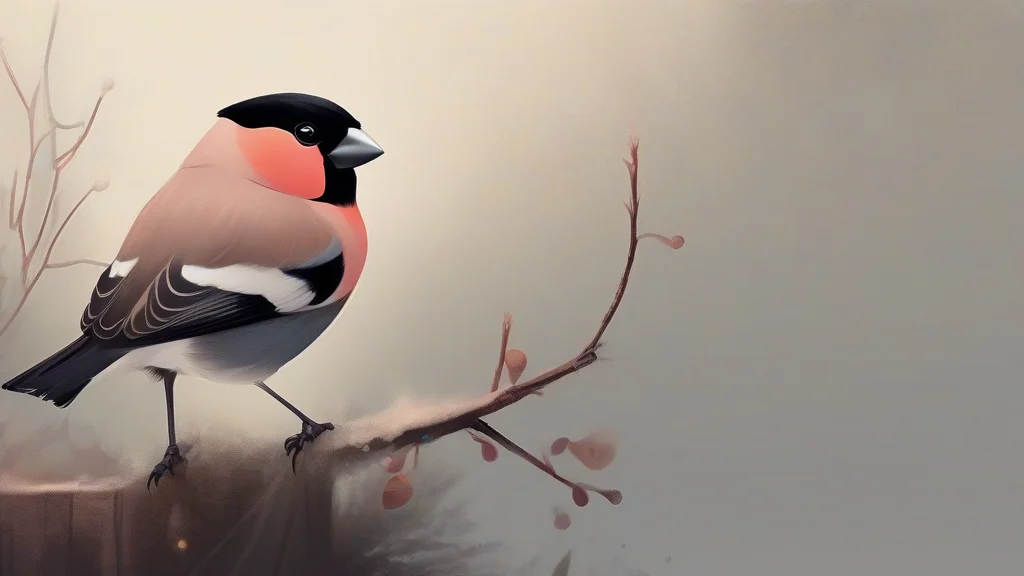
A bullfinch is a stocky, short-tailed finch of the genus Pyrrhula, best known through the Eurasian bullfinch (Pyrrhula pyrrhula), a quiet resident of woodlands, hedgerows, and gardens across Europe and temperate Asia. The adult male is unmistakable: a glossy black cap, pale grey back, brilliant white rump, and a soft rose-pink breast, while females wear a subtler brownish-grey version of the same pattern. Bullfinches feed mainly on seeds, buds, and shoots, and they were historically persecuted by fruit growers for stripping blossom buds from orchard trees. The name dates to Middle English, combining 'bull' — likely a nod to the bird's heavyset build or its low, mellow whistle — with 'finch'. Though inconspicuous in behaviour, the bird holds cultural charm abroad, appearing in Japanese art as a symbol of good fortune. For birdwatchers and nature writers alike, 'bullfinch' evokes a flash of pink and white at the edge of winter woods.
nounA stocky Eurasian finch (Pyrrhula pyrrhula) in which the male has a black cap, grey back, white rump, and pinkish-red breast; the name is also applied to related species such as the North American pine grosbeak in older usage.
- The Eurasian bullfinch (Pyrrhula pyrrhula), a stocky songbird of woods and gardens with a distinctive white rump and, in the male, a pink-red breast.
- By extension, any bird of the genus Pyrrhula or closely related finches sometimes called bullfinches, such as certain Asian Pyrrhula species.
"A male bullfinch, its breast glowing soft pink against the snow, stripped the buds from the apple tree."
"We watched a pair of bullfinches slip quietly through the hedgerow, their white rumps flashing as they flew."
"In Japanese woodblock prints, the bullfinch fluttering among plum blossoms is a traditional emblem of loyalty and good luck."
Regular plural; both singular and plural take the same verb agreement rules as any count noun.
"Several bullfinches were feeding quietly among the blackthorn."
The bullfinch was once so notorious for raiding fruit-tree buds that gardeners put bounties on it — yet in Japanese art it's a beloved symbol of good fortune, perched beside plum blossoms.
Reviewed by Deb Chak, Editor. AI-assisted content curated by RJS Tech Solutions LLP.
Etymology of bullfinch
Bullfinch derives from Middle English 'bullefynch', a straightforward compound of 'bull' and 'finch', first attested in the late medieval period. The 'bull' element most likely refers either to the bird's thickset, bull-necked appearance or to its low, mournful whistled call, though early naturalists disagreed on which. The second element, 'finch', comes from Old English 'finc', cognate with German 'Fink'. Related English names such as chaffinch, hawfinch, and greenfinch share this ancient Germanic root.
How bullfinch is actually used
The word carries no figurative or extended sense; it is used almost exclusively in ornithological and nature-writing contexts. In Britain it is a familiar garden bird, so references there often carry a warm, affectionate connotation, whereas in North America the term is less commonly encountered. Plural is regular: bullfinches.
Easily confused with bullfinch
The chaffinch is a different, more common finch with a double white wing bar and a chestnut-and-blue-grey face, whereas the male bullfinch is recognised by its black cap, white rump, and plain pink breast.