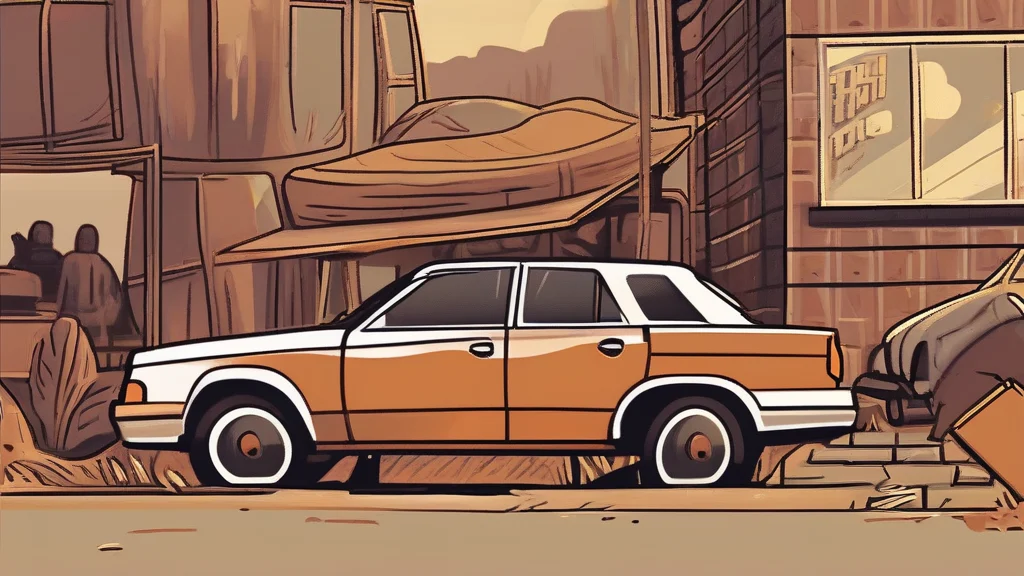
What does bumper mean?
A bumper is a horizontal bar mounted on the front and rear of a vehicle, designed to absorb the shock of minor collisions and protect the bodywork. The word is most familiar from motoring contexts — bumper damage, bumper stickers, and bumper-to-bumper traffic are everyday phrases — but it carries a second, more cheerful meaning as an informal adjective describing anything exceptionally large or plentiful, especially harvests, profits, or attendance figures. This usage is particularly common in British English, where a 'bumper year' signals outstanding success. Historically, the word's origins lie in drinking culture: in the seventeenth century a 'bumper' meant a glass filled to the brim for a toast, derived from the verb 'to bump'. Over time the sense shifted from brimming cups to cushioning bars, the common thread being contact and impact. Today the word is neutral in tone, practical in its automotive sense and warmly positive in its figurative one.
A bar attached to the front or rear of a vehicle to absorb impact in minor collisions.
"The mechanic ordered a replacement front bumper."
Exceptionally large or abundant; filling or exceeding what is usual.
"The airline reported a bumper summer season."
Chiefly British and informal, typically used attributively before nouns like 'crop', 'year', or 'crowd'.
Standard plural, used when referring to multiple vehicle bumpers or historical drinking vessels.
"Both cars had their bumpers crushed in the collision."
The word 'bumper' began life as a full glass of alcohol — to drink a bumper was to drain your cup to the very brim in a toast.
Reviewed by Deb Chak, Editor. AI-assisted content curated by RJS Tech Solutions LLP.
Etymology of bumper
The word 'bumper' derives from the verb 'bump', meaning to strike or knock, combined with the agent suffix '-er', first appearing in English in the seventeenth century. Its earliest recorded sense referred to a cup or glass filled to the brim, drunk as a toast — a 'bumper' being a drink so large it seemed to 'bump' against the rim. The automotive sense developed in the early twentieth century with the rise of the motor car, extending the idea of absorbing a blow. The adjective sense meaning unusually large grew from the notion of something filled to overflowing.
How bumper is actually used
The vehicle sense is standard worldwide, though Americans often use the term 'fender' loosely for body panels near the wheels, while British speakers reserve 'fender' for the wheel-arch cover. The adjectival sense ('a bumper year') is chiefly British and informal.
Easily confused with bumper
'Bumpier' is the comparative of the adjective 'bumpy' (having many bumps), whereas 'bumper' is a noun for a vehicle's protective bar or, informally, an adjective meaning exceptionally large.