
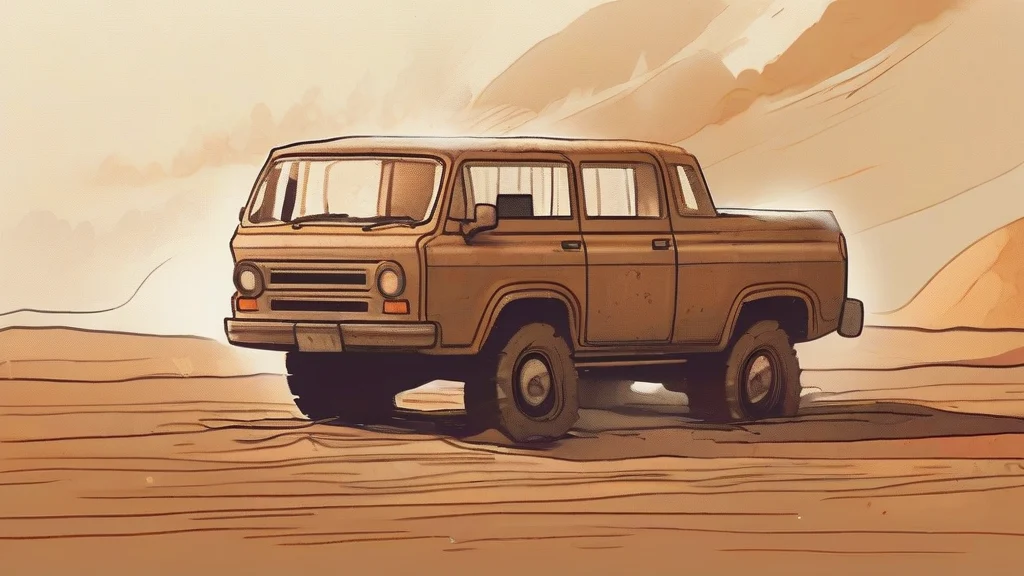
What does bumpier mean?
Bumpier is the comparative form of the adjective 'bumpy', describing a rougher or less even quality than something else — a road with more potholes, a flight with more turbulence, or a ride with more jolts. Its most familiar use is physical: travellers compare routes, tracks, and journeys by which is bumpier. The word also extends figuratively to describe processes, careers, relationships, or markets that encounter more obstacles and instability than others, as in 'their transition to remote work was bumpier than planned'. Connotations are generally neutral to mildly negative, suggesting discomfort or difficulty rather than danger. Because it is simply an inflected form of a common everyday word, 'bumpier' requires no special register and works equally well in casual conversation and general prose. It pairs naturally with nouns like road, ride, journey, flight, and patch.
adjectiveThe comparative form of the adjective 'bumpy', meaning having a rougher or more uneven surface than something else; marked by more jolts or irregularities.
- Having a rougher or more uneven surface than another thing (comparative of 'bumpy').
- Figuratively, involving more difficulties, setbacks, or instability than something else (e.g. a bumpier relationship).
"After the storm washed out the gravel road, our drive home was far bumpier than usual."
"The flight got noticeably bumpier as we crossed the mountain range."
"Their first year of marriage was much bumpier than they had expected."
Airlines sometimes warn passengers to expect a 'bumpier' flight — and turbulence really does make it one.
Reviewed by Deb Chak, Editor. AI-assisted content curated by RJS Tech Solutions LLP.
Etymology of bumpier
'Bumpier' derives from 'bumpy', formed from the verb and noun 'bump' plus the adjectival suffix '-y'. The word 'bump' itself first appeared in English around the late sixteenth and early seventeenth century, likely as an imitative or onomatopoeic coinage for a dull blow or jolt, though some scholars have suggested a possible Scandinavian connection. The suffix '-y' turned it into an adjective describing surfaces that cause such jolts, and the standard comparative '-ier' produced 'bumpier'. No widely known cognates share this root beyond its own derivatives.
Related word forms
How bumpier is actually used
'Bumpier' is the standard comparative form of 'bumpy' and is used both literally (roads, rides, terrain) and figuratively (a 'bumpier' career path or relationship). It appears mainly in informal and neutral registers; formal writing often prefers 'less smooth' or 'more turbulent'.
Easily confused with bumpier
'Bumper' is a noun for a protective part of a vehicle or an adjective meaning unusually large, while 'bumpier' is the comparative adjective meaning rougher in surface.