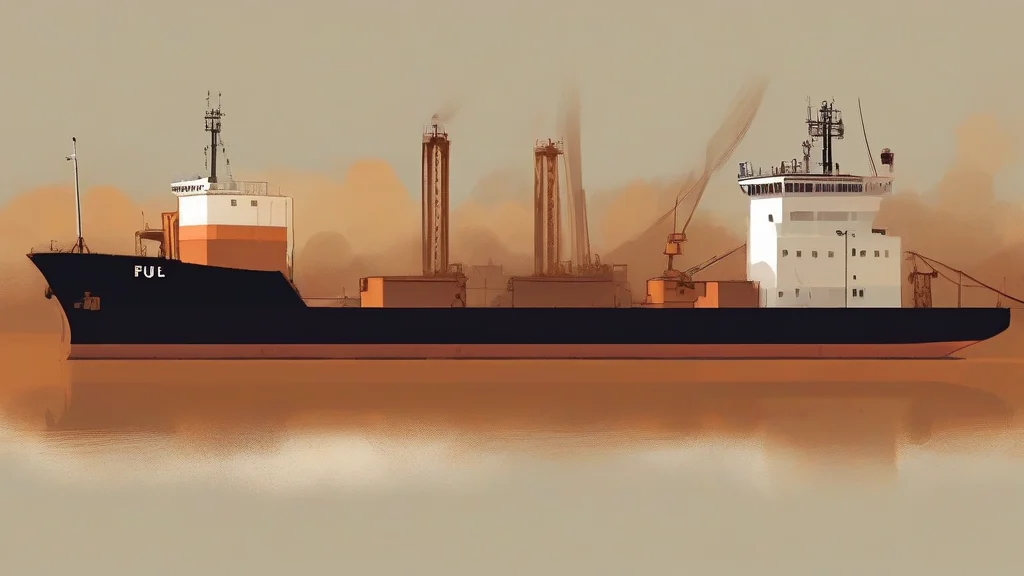
What does bunkering mean?
Bunkering refers to the process of supplying a ship with the fuel it needs for its voyage, most often carried out while the vessel is berthed in port or anchored offshore. It is a cornerstone of global shipping: without reliable bunkering operations at major hubs such as Singapore, Rotterdam, and Fujairah, international trade by sea would grind to a halt. The term derives from 'bunker', originally the coal storage compartments on steamships, which later came to denote fuel tanks on diesel-powered vessels. Today bunkering encompasses not only traditional heavy fuel oil but also marine gasoil, liquefied natural gas, and other emerging low-emission fuels. Because it involves large quantities of hazardous material transferred between vessels or from shore facilities, bunkering is closely regulated, and spills or quality disputes can carry serious financial and environmental consequences. The word appears almost exclusively in technical, legal, and trade contexts.
The act or business of supplying ships with fuel oil or other marine fuels, typically carried out in port or at anchor.
"The port authority invested heavily in new bunkering infrastructure to serve LNG-fuelled vessels."
Used mainly in maritime, shipping, insurance, and energy-sector language; in everyday English it is uncommon outside these fields.
Present participle/gerund of 'bunker': to supply a ship or other vehicle with fuel, or to store fuel or supplies in a bunker.
"The vessel was bunkering alongside the quay when the spill was discovered."
As a verb form, 'bunkering' describes the ongoing process of taking on fuel rather than the completed action.
Rotterdam, Singapore, and Fujairah exist as global giants largely because ships need somewhere to fill up — bunkering quietly moves hundreds of millions of tonnes of fuel every year.
Reviewed by Deb Chak, Editor. AI-assisted content curated by RJS Tech Solutions LLP.
Etymology of bunkering
Bunkering comes from the noun 'bunker', a Scottish term for a chest or compartment for storing grain, adopted in the nineteenth century for the coal compartments of steamships. As ships shifted from coal to liquid fuels, 'bunker' broadened to mean any shipboard fuel tank, and the verbal activity of filling them became 'bunkering'. The word is thus rooted in practical maritime usage rather than classical languages; related forms include the verb 'bunker' and its past form 'bunkered', along with the informal idiom 'bunker down'.
Related word forms
How bunkering is actually used
Bunkering is chiefly a technical and commercial term used in maritime, shipping, and energy-industry contexts; it is rarely heard in everyday conversation. It functions both as a noun naming the industry activity and as a gerund of the verb 'to bunker' (to supply fuel). In informal use, phrases like 'bunker down' are unrelated to the maritime sense.
Easily confused with bunkering
Bunking means sleeping in a bunk or sharing quarters, whereas bunkering refers to supplying a ship with fuel.
To bunker down is to take shelter or settle in defensively, while bunkering as an industry term means loading fuel onto a vessel.