What does burbot mean?
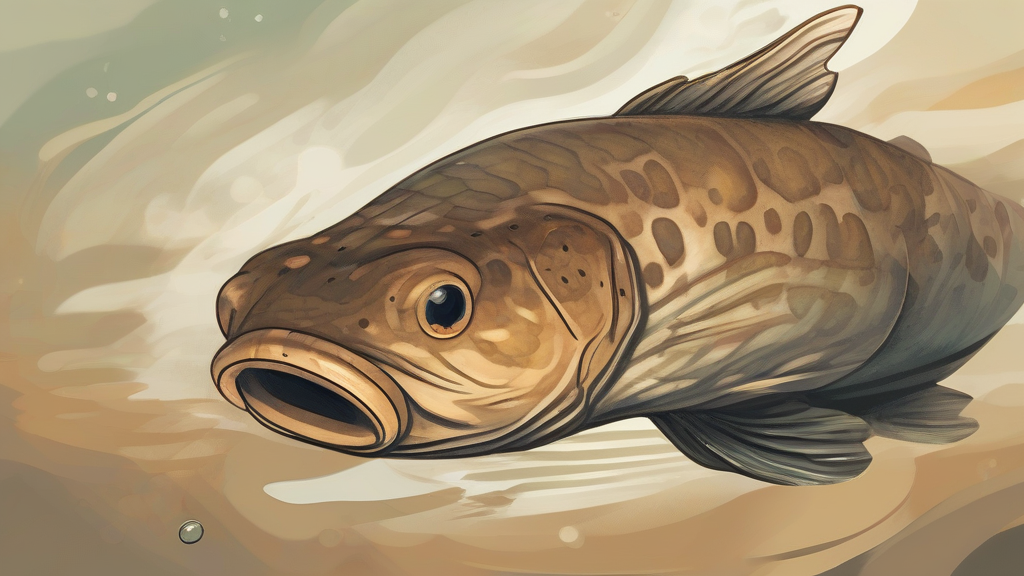
The burbot (Lota lota) is an elongated, mottled brown freshwater fish and the only member of the cod family that lives entirely in fresh water. Native to cold rivers and lakes across northern Europe, Siberia, and North America, it is a nocturnal predator that hides among rocks and weeds by day and hunts small fish and invertebrates at night. Unusually for a northern species, it spawns in midwinter, often beneath the ice. The word appears mainly in angling, natural-history, and culinary contexts: the fish's firm flesh is eaten in Scandinavia and central Europe, and its liver has been prized as rich in oils. Folk names such as eel pout reflect its slippery, eel-like tail. Though obscure in everyday conversation, the term is precise and well established wherever the fish is fished, studied, or served.
nounA large, elongated freshwater fish (Lota lota) of the cod family, found in cold rivers and lakes across northern North America and Eurasia; it is the only exclusively freshwater member of the cod family.
- The fish Lota lota, a long-bodied, mottled freshwater gadid of northern lakes and rivers, valued for its liver and firm white flesh.
"Anglers on Lake Superior sometimes land a burbot after nightfall, when the fish leaves the deep water to hunt."
"The burbot lurks among rocks and submerged timber by day and prowls for prey after dark."
"Because burbot spawn beneath the ice in January and February, ice anglers target them in the dead of winter."
The plural is typically 'burbot' (unchanged), treating the name like many game-fish names; the regularized plural 'burbots' also occurs.
"The lake holds good numbers of burbot in its deeper basins."
The burbot is the cod's only freshwater cousin — a cold-loving, night-hunting fish that spawns under the ice in midwinter, when most other fish barely move.
Reviewed by Deb Chak, Editor. AI-assisted content curated by RJS Tech Solutions LLP.
Etymology of burbot
English 'burbot' was borrowed in the early modern period from forms such as medieval Latin burbota or Old French borbote, terms applied to this freshwater cod. The ultimate origin of the root is uncertain, though it may be connected to words for bearded or rough fishes. The word has remained stable in form since its adoption into English.
How burbot is actually used
Mostly used by anglers, ichthyologists, and cooks in northern regions where the fish occurs; elsewhere it is rare outside dictionaries and nature writing. The name is applied to one species worldwide, so usage does not vary much regionally, though local folk names such as eel pout or lawyer persist in parts of North America.
Easily confused with burbot
A turbot is a flat marine fish prized for food, whereas a burbot is an elongated freshwater fish of the cod family — the two names are unrelated despite sounding alike.