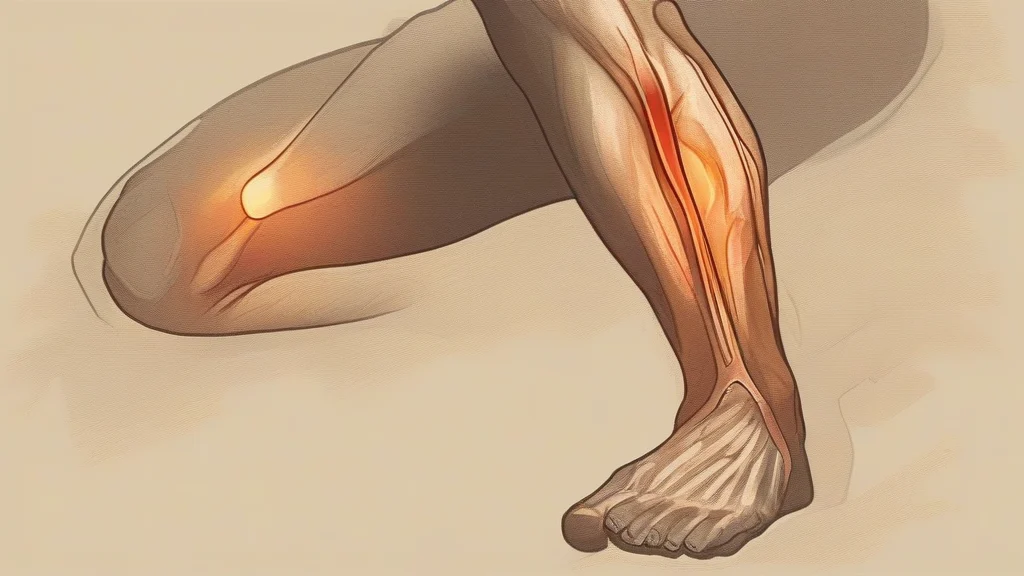
What does bursitis mean?
Bursitis is the medical term for inflammation of a bursa — one of the small, fluid-filled sacs that act as cushions between bones, tendons, and muscles around the joints. When a bursa becomes irritated through repeated motion, prolonged pressure, injury, or infection, it swells and causes pain, stiffness, and reduced mobility, most commonly at the shoulder, hip, elbow, or knee. The condition is frequently linked to overuse: athletes, manual labourers, and people whose work involves repetitive movements are especially prone to it. Bursitis is closely related to, but distinct from, tendinitis and arthritis, which affect different structures. Treatment usually involves rest, ice, anti-inflammatory drugs, or corticosteroid injections, and most cases resolve without surgery. The word derives from the Latin bursa, meaning a purse or hide, reflecting the sac-like shape of the structure involved.
nounInflammation of a bursa, one of the fluid-filled sacs that cushion friction between bones, tendons, and muscles around the joints, causing pain, swelling, and stiffness.
- Inflammation of a bursa, typically causing pain, swelling, and restricted movement at a joint.
"After years of laying carpet on his knees, the veteran installer developed bursitis in both elbows and knees."
"The tennis player's season was cut short by severe bursitis in her serving shoulder."
"Doctors recommended rest and anti-inflammatory medication to treat the mild bursitis in his heel."
Rarely used; in most contexts the plural is simply avoided by referring to multiple cases or locations individually.
"The rheumatology textbook catalogued several distinct forms of bursitides affecting the lower limb."
The word 'bursitis' literally means 'inflammation of a leather bag' — because the ancient Greeks named these joint cushions after animal hides.
Reviewed by Deb Chak, Editor. AI-assisted content curated by RJS Tech Solutions LLP.
Etymology of bursitis
Bursitis comes from New Latin, combining 'bursa' — a fluid-filled anatomical sac — with the suffix '-itis', denoting inflammation. The term 'bursa' traces back to the Greek 'byrsa', meaning hide or leather, which entered Latin as 'bursa' meaning a purse or bag. The same Greek root ultimately gave English the word 'purse'. The suffix '-itis' is likewise Greek in origin, so the whole compound reflects classical medical naming conventions adopted into modern scientific Latin.
Related word forms
How bursitis is actually used
A clinical term used in medicine and sports contexts; understood widely but rarely part of everyday casual speech. Often discussed alongside tendinitis when describing repetitive-strain injuries.
Easily confused with bursitis
Tendinitis is inflammation of a tendon itself, whereas bursitis is inflammation of the fluid-filled bursa sac adjacent to it.
Arthritis is inflammation within a joint's cartilage or lining, while bursitis affects the cushioning sac outside the joint space.