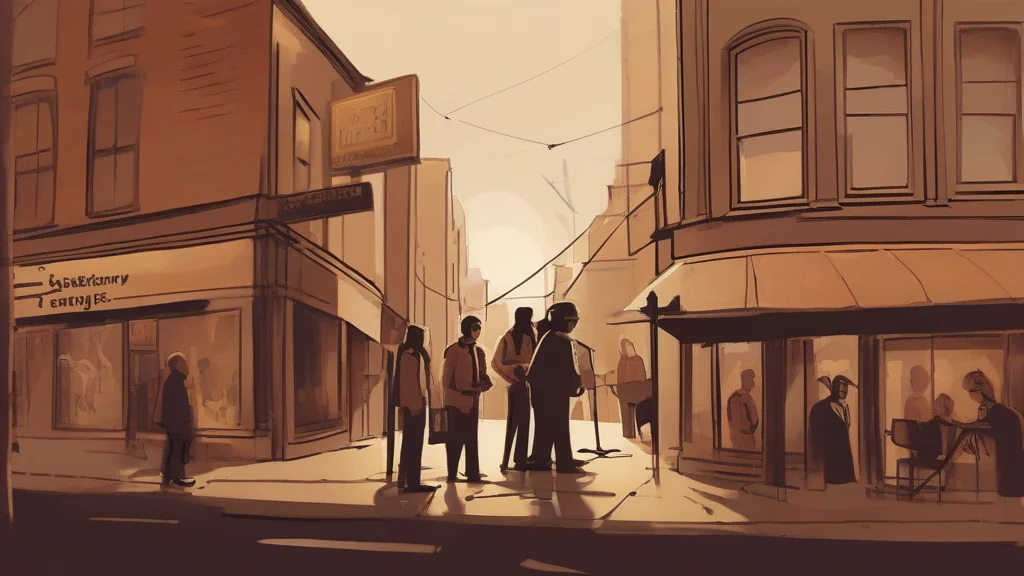
What does busked mean?
To busk is to perform music or other entertainment in a public place — a pavement, subway passage, or park — in the hope that appreciative passers-by will drop money into a hat or instrument case. 'Busked' is simply its past form: the musician who busked last Saturday entertained an improvised audience rather than a booked one. The word sits firmly in informal register, most at home in British English, where buskers are a familiar feature of cities like London and Dublin, though it is widely understood elsewhere. Far from carrying a stigma, busking has become associated with scrappy artistic independence; several major pop stars, including Ed Sheeran, began by busking on the streets. The related noun 'busker' names the performer, and 'busking' the activity itself. For anyone writing about street culture, live music, or humble beginnings, 'busked' captures a vivid image of art offered directly to the public, unmediated and unpaid except by goodwill.
verb (past tense and past participle)Past tense of 'busk': to perform music or entertain passers-by in a public place for voluntary donations.
- To perform music or other entertainment in a public space, soliciting voluntary donations from passers-by.
"She busked outside Covent Garden every weekend until she saved enough for a new guitar."
"The violinist busked beneath the arches of the bridge, drawing a small crowd with her renditions of folk tunes."
"They spent their gap year busking through Europe, funding each train ticket with whatever the day's hat collected."
Ed Sheeran famously busked as a teenager — even recording a song about sleeping rough after gigging — before street performance turned him into a stadium act.
Reviewed by Deb Chak, Editor. AI-assisted content curated by RJS Tech Solutions LLP.
Etymology of busked
The verb 'busk' entered English in the mid-nineteenth century, borrowed from French 'busquer', which itself traces back through Italian 'buscare' ('to seek, procure') ultimately to Spanish 'buscar', meaning 'to seek'. The sense shifted from 'seeking' to 'seeking alms or an audience,' giving rise to the modern idea of performing publicly for donations. Its Romance-language roots make it a relative of the everyday Spanish word 'buscar'.
Related word forms
How busked is actually used
Informal register, common in British English where street performance culture is especially visible; understood in American English though 'street performing' is often used instead. Carries generally positive connotations of grassroots, entrepreneurial musicianship.
Easily confused with busked
'Busked' means performing in public for donations, while 'basked' means relaxed or luxuriated in warmth or pleasant conditions.