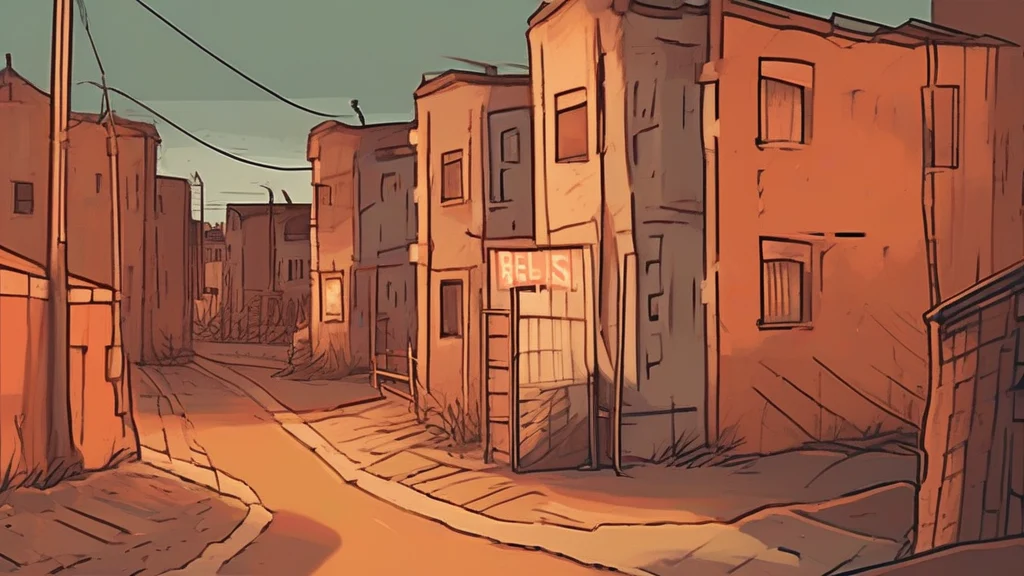
What does bustee mean?
A bustee is a settlement or urban quarter, most commonly used in Indian English to describe a low-income or informal neighbourhood on the margins of a city. Borrowed into English during the colonial era from Hindi and Urdu, the word originally referred to any settled place or village, but over time it narrowed in everyday usage to denote densely populated areas of modest housing. Writers and officials once applied it broadly to the working-class districts that grew up around colonial city centres, and today it persists in journalism and social-policy writing about cities such as Kolkata and Dhaka, often alongside the more neutral term "basti". Because it is strongly associated with poverty and informal settlement, careful writers use it descriptively rather than pejoratively. Though rare outside South Asia, the word offers an interesting window into how language records urban history: behind its anglicized spelling lies a plain Hindi word for home.
nounA settlement or quarter of a town or city, especially one inhabited by poorer communities; in modern usage often applied to informal or low-income urban neighbourhoods.
- An urban settlement or neighbourhood, especially a poor or informal one.
- (Historical, broader) Any village or settled quarter.
"The charity runs a clinic serving several bustees on the edge of Kolkata."
"Thousands of families in the riverside bustee were relocated after the floods."
"Nineteenth-century travel accounts described the crowded bustees surrounding the colonial city centre."
Regular plural; typically refers to multiple settlements or neighbourhoods within a region.
"Several bustees ring the older parts of the city."
Long before 'slum' became the common English label, colonial-era writers were calling India's poorest neighbourhoods 'bustees' — an anglicized spelling of a Hindi word that simply means home.
Reviewed by Deb Chak, Editor. AI-assisted content curated by RJS Tech Solutions LLP.
Etymology of bustee
Bustee is an anglicized spelling of Hindi and Urdu basti, meaning a settlement, village, or quarter, derived from the verb meaning to settle or dwell. The word entered English during the period of British rule in India, appearing in nineteenth-century administrative and travel writing about urban settlements. Its close relative "basti" remains the standard romanization in modern usage, and both forms survive chiefly in South Asian English.
How bustee is actually used
The word is largely confined to South Asian English and appears mainly in journalistic, administrative, and historical writing about India and Bangladesh. In contemporary usage it frequently carries connotations of poverty and informality, so it should be used with sensitivity. The spelling "basti" is now more common than "bustee".
Easily confused with bustee
"Bustee" is a noun meaning a settlement or urban quarter, while "busty" is an adjective describing a woman with a large bosom.
"Basti" is the standard romanization of the original Hindi/Urdu word, whereas "bustee" is an older anglicized spelling of the same term.