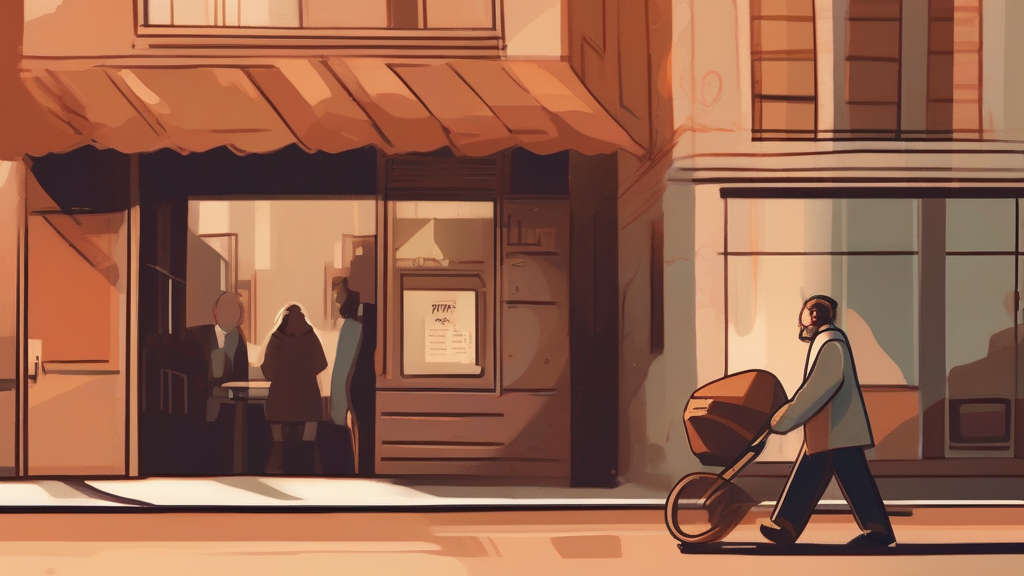
What does bustler mean?
A bustler is a person given to bustling — that is, someone who moves about or works in a brisk, energetic, and often noisy fashion. The word is an agent noun built directly from the verb 'to bustle', which describes hurried, purposeful movement, combined with the common '-er' ending used to denote someone who performs an action. In practice, calling someone a bustler suggests they are always in motion: clearing tasks, organising others, and generally radiating industry. The term sits in an informal register and can be either complimentary, implying admirable energy and drive, or gently mocking, suggesting someone whose busyness is more conspicuous than productive. It belongs to the same family as 'hustler', which shares a similar sense of restless energy but has acquired additional commercial and slang senses. Though not among the most frequently used English words, bustler offers a vivid, characterful label for a familiar human type — the perpetually busy person whose presence you notice before you see what they are actually doing.
nounA person who bustles; someone who moves about or works in a briskly energetic, bustling manner.
- A person who bustles or moves about in a brisk, energetic way.
- An energetic, busy person who throws themselves into activity (sometimes slightly disparaging).
"The market was full of bustlers haggling over crates of produce."
"She's a real bustler — no sooner has she cleared one task than she's on to the next."
"The old station concourse swarmed with bustlers hurrying to catch their trains."
Standard regular plural, used when referring to multiple such people.
"The kitchen at service time was full of bustlers, each convinced their task mattered most."
Every office has one: that person who never walks anywhere but always bustles — English finally gave them a name.
Reviewed by Deb Chak, Editor. AI-assisted content curated by RJS Tech Solutions LLP.
Etymology of bustler
Bustler derives from the verb 'bustle', meaning to move energetically or fuss about, plus the agentive suffix '-er'. The verb 'bustle' appeared in English around the late sixteenth century, likely as a frequentative formation expressing repeated or continued action, possibly influenced by 'busk' and later associated with 'hustle'. The noun 'bustler' arose naturally from this verb as a label for a person characterised by such energetic movement, and it remains in modest, chiefly informal use today.
How bustler is actually used
Bustler is a relatively uncommon word, formed transparently from the verb 'bustle' plus the agent suffix '-er'. It carries a mildly informal register and can be affectionate or faintly teasing depending on context; it rarely appears in formal writing.
Easily confused with bustler
A bustard is a large ground-dwelling bird, whereas a bustler is a person who moves or works with energetic haste.
A bustier is a fitted garment for the upper body, unrelated in meaning to bustler despite the similar spelling.