What does buttressed mean?
'Buttressed' is the past tense and past participle of 'buttress', a word borrowed into English from Old French in the late Middle Ages to describe the projecting stone supports that brace a wall against lateral force. Over time it acquired a rich figurative life: today an argument may be buttressed by data, a government by loyal institutions, or an economy by exports. In each case the word conveys support that is structural rather than incidental — something bearing real weight, not merely nodding along. Writers prize it for exactly this concreteness; saying a claim is 'buttressed by evidence' sounds sturdier than saying it is simply backed up. It appears most often in formal registers such as academic prose, journalism, and legal argument, and pairs naturally with prepositions like 'by'. Knowing the word connects everyday persuasion to the engineering of Gothic cathedrals, where flying buttresses literally hold the building up.
Past tense and past participle of 'buttress': provided physical or structural support to something, especially a wall or building.
"The crumbling tower was buttressed with steel cables to prevent collapse."
In passive constructions ('was buttressed'), the word often appears in both literal and figurative contexts.
Strengthened or reinforced something figuratively, such as an argument, institution, or position, typically through evidence, resources, or authority.
"Her case for reform was buttressed by years of field data."
Describing something that has been given added support or reinforcement, whether literal or figurative.
"The buttressed walls of the old fortress still stood after four centuries."
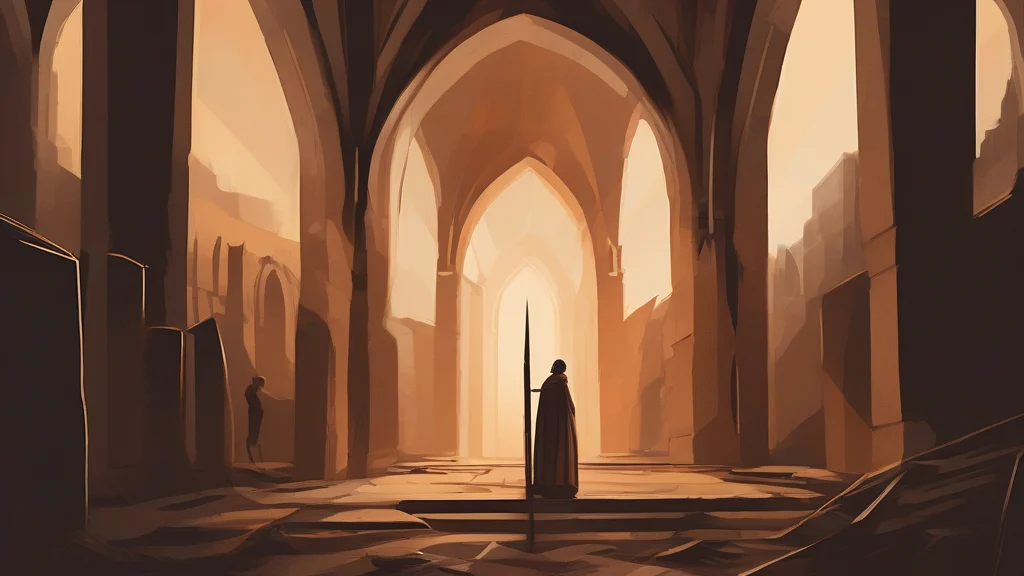
Before it meant moral support, a buttress was literally stone — those great arches that keep medieval cathedrals from collapsing outward under their own weight.
Reviewed by Deb Chak, Editor. AI-assisted content curated by RJS Tech Solutions LLP.
Etymology of buttressed
'Buttressed' derives from 'buttress', which entered English from Anglo-Norman and Old French 'bouter(e)z', a derivative of the verb 'bouter' meaning 'to thrust or push'. That verb traces back to a Germanic root shared with English 'butt' and 'abut', reflecting the way a buttress pushes against a wall to hold it upright. The word has been used in English since the medieval period in its architectural sense, with the figurative sense developing later as writers extended the metaphor of physical support to arguments and institutions.
Related word forms
How buttressed is actually used
'Buttressed' carries a slightly formal, architectural flavor even in figurative use; it suits academic writing, journalism, and legal prose more than casual conversation, where words like 'backed' or 'supported' are more common. The figurative sense implies solid, load-bearing support rather than mere approval.
Easily confused with buttressed
'Buttress' is the base word — a noun meaning a supporting structure or a verb in its plain form — while 'buttressed' is its past tense or participial form describing something that has already been given such support.
'Butted' means collided with or joined end-to-end, whereas 'buttressed' means supported or reinforced.