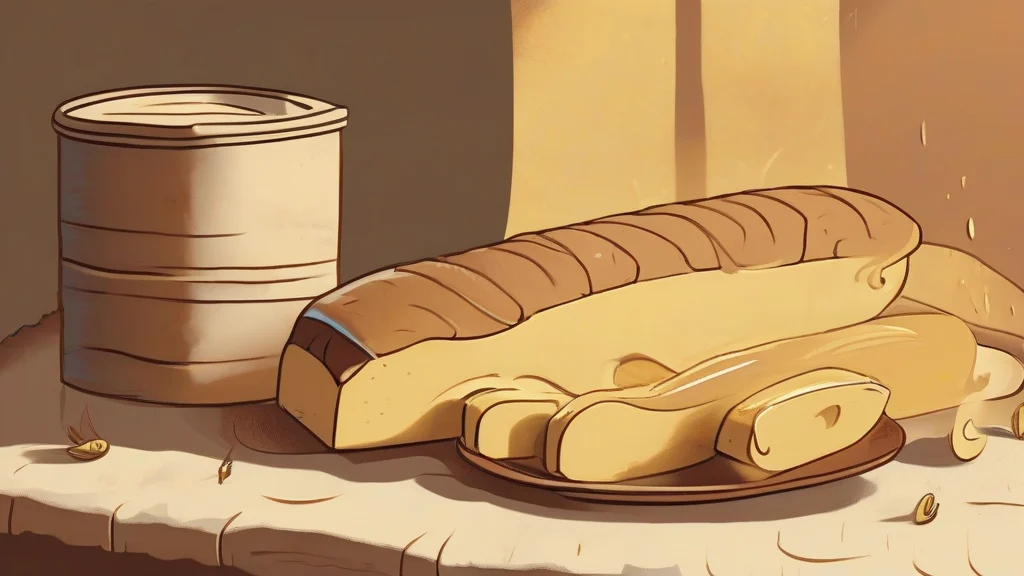
What does butyraceous mean?
Butyraceous is an adjective meaning 'of the nature of butter' — describing something that resembles, contains, or feels like butter: soft, greasy, and unctuous. The word derives from Latin butyrum ('butter'), which itself traces back through Greek boutyron, likely a compound of boux ('cow') combined with an element related to cheese, so the word's very ancestry evokes dairy origins. Though rarely encountered in casual conversation, butyraceous occupies a firm place in scientific vocabulary: botanists and mycologists use it to describe oily seeds, fatty tissues, and mushrooms whose caps or flesh have a smooth, butter-like consistency. Its register is formal and technical, and it belongs to a small family of Latin-derived adjectives ending in '-aceous' that scientists use to characterize textures, including herbaceous, crustaceous, and cretaceous. For readers, encountering butyraceous is a reminder that English offers remarkably precise words for describing qualities of touch and texture — in this case, the specific richness of butter.
adjectiveOf the nature of, resembling, or containing butter; soft, greasy, and unctuous like butter.
- Resembling or containing butter; having a soft, fatty, unctuous quality — used chiefly in scientific description of plants, fungi, and substances.
"The cheese had a smooth, butyraceous texture that melted on the tongue."
"The mushroom's cap had a distinctly butyraceous surface when fresh."
"Under the microscope, the seed's endosperm appeared pale and butyraceous."
Botanists literally grade plant tissues as 'butyraceous' — some seeds and roots are so richly oily they feel like solid butter under the microscope.
Reviewed by Deb Chak, Editor. AI-assisted content curated by RJS Tech Solutions LLP.
Etymology of butyraceous
Butyraceous comes from Latin butyrum, meaning butter, which was borrowed from Greek boutyron. The Greek term is generally analyzed as combining bous ('cow' or 'ox') with tyros ('cheese'), reflecting an ancient view of butter as 'cow-cheese'. English adopted the adjective form in the early modern period, following the pattern of other '-aceous' descriptors, and it remains most at home in botanical and zoological description.
How butyraceous is actually used
A rare, technical term used mainly in botany, mycology, and descriptive natural history rather than everyday speech; it carries a neutral, observational connotation.
Easily confused with butyraceous
'Butyraceous' means buttery or fatty in character, while 'cretaceous' refers to chalky deposits or the geological period ending about 66 million years ago.