What does byrnie mean?
A byrnie is a shirt of chain mail — a flexible garment made of many small interlinked iron or steel rings — worn as body protection by warriors in early medieval Europe, particularly in Anglo-Saxon England and Scandinavia. Typically reaching to about the thigh and sometimes with short sleeves, it offered substantial defence against slashing blows while allowing freedom of movement, though it was heavy and expensive enough that only wealthier fighting men could own one. The word appears prominently in Old English and Old Norse poetry, including Beowulf, where heroes are described donning their byrnies before battle. Today "byrnie" survives almost exclusively in historical, archaeological, and literary discussion, evoking the martial world of the Viking Age. It is closely related to the more familiar term "hauberk," which denotes a longer mail shirt, and both belong to the broader family of terms for mail armour that dominated European warfare before the rise of plate.
nounA byrnie is a long shirt of chain mail worn as body armour, especially in early medieval Northern Europe.
- A defensive garment of interlinked metal rings, worn over the torso by warriors of the early medieval period.
"The warrior pulled on his byrnie before marching out to meet the raiders."
"Under his cloak he wore a byrnie of finely riveted rings."
"Archaeologists recovered a corroded byrnie fragments among the burial goods."
The plural follows regular English noun inflection.
"The armoury held dozens of byrnies captured in earlier campaigns."
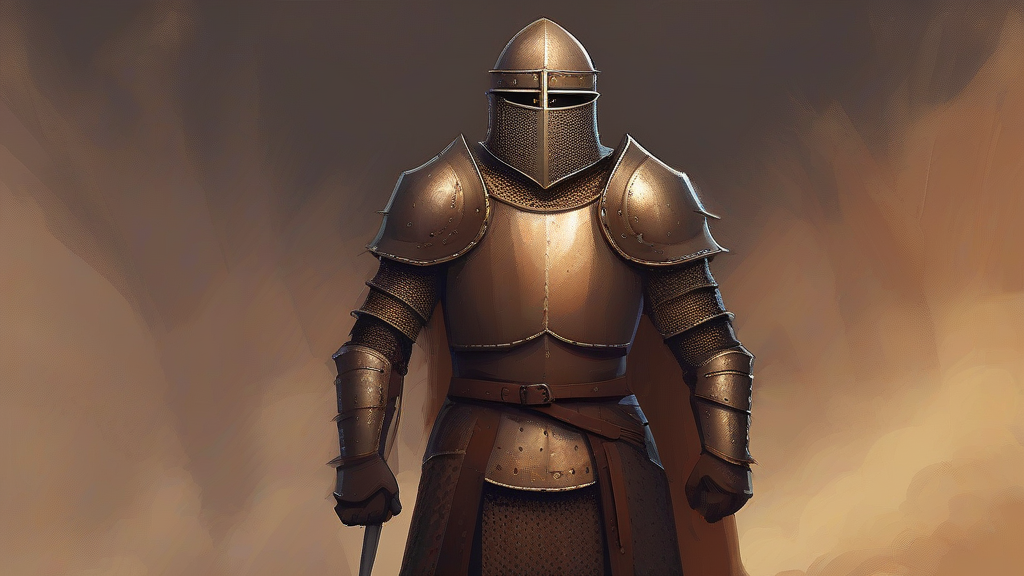
Before knights clanked around in plate armour, Viking-age warriors trusted the byrnie — thousands of interlocking iron rings forged into a single flexible shirt.
Reviewed by Deb Chak, Editor. AI-assisted content curated by RJS Tech Solutions LLP.
Etymology of byrnie
The word "byrnie" derives from Old Norse brynja, meaning a mail coat, and is related to the Old English form byrne with the same meaning. It entered Middle English through contact between Norse speakers and Anglo-Saxons during the Viking Age, reflecting the shared material culture of mail-armoured warriors across northern Europe. Cognate forms appear in other Germanic languages, such as German Brünne, all pointing to a common Germanic root for this type of armour.
How byrnie is actually used
"Byrnie" is an archaic and largely historical term, encountered mainly in literature about the Anglo-Saxon and Viking periods, in translations of Old Norse and Old English texts such as Beowulf, and in museum or reenactment contexts. It carries an evocative, antiquarian tone rather than everyday usage.
Easily confused with byrnie
A hauberk typically extends to the knees and often includes a hood or coif, whereas a byrnie was generally a shorter mail shirt reaching roughly to the thighs.