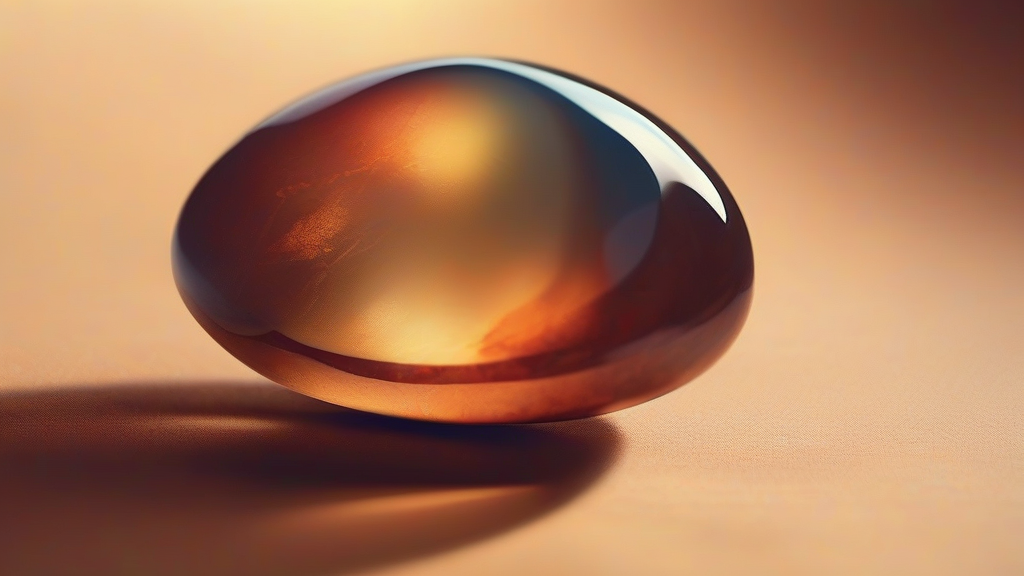
What does cabochon mean?
A cabochon is a gemstone or similar hard material that has been shaped into a smooth, rounded dome and polished to a lustre, rather than cut with facets like a diamond. Typically oval in outline with a flat underside, the cabochon cut is especially suited to opaque or translucent stones — turquoise, onyx, opal, moonstone, star sapphires — where internal optical effects such as asterism or colour banding would be lost through faceting. The style is one of the oldest forms of gem cutting, long predating the development of faceted cuts, and remains popular in artisan jewellery, vintage designs, and pieces featuring organic materials like amber or labradorite. The term derives from the French caboche meaning 'head', a nod to the stone's bald, domed profile. In everyday language it appears mostly among jewellers, collectors, and crafters, usually in phrases such as 'oval cabochon' or 'cabochon cut'.
nounA gemstone or other hard material that has been shaped and polished into a smooth, convex form rather than faceted, typically with an oval outline and a flat base.
- A gemstone or hard material cut and polished into a smooth, rounded, unfaceted shape with a flat base, common for opaque stones such as opal, turquoise, and onyx.
"The ring featured a large turquoise cabochon set in hammered silver."
"She chose an oval moonstone cabochon for the centre of her engagement ring."
"The artisan polished each agate cabochon by hand before setting it into the brooch."
Standard English plural; pronounced identically apart from the final /z/.
"The tray was filled with loose amethyst and garnet cabochons ready for setting."
The word 'cabochon' literally comes from the French for 'head' — because the polished dome of the stone resembles a bald pate.
Reviewed by Deb Chak, Editor. AI-assisted content curated by RJS Tech Solutions LLP.
Etymology of cabochon
Cabochon entered English from French in the 19th century, borrowed from the French word caboche meaning 'head'. This traces back ultimately to the Latin caput, 'head', the same root behind words such as capital, captain, and chief. The name reflects the stone's smooth, head-like dome.
How cabochon is actually used
Primarily used in jewellery-making, gemmology, and antique contexts; largely unfamiliar outside these domains. Often used attributively before 'cut', as in 'cabochon-cut sapphire'.
Easily confused with cabochon
A cabochon is a smooth, uncarved domed stone, whereas a cameo is a gem carved in raised relief.