What does cabriolet mean?
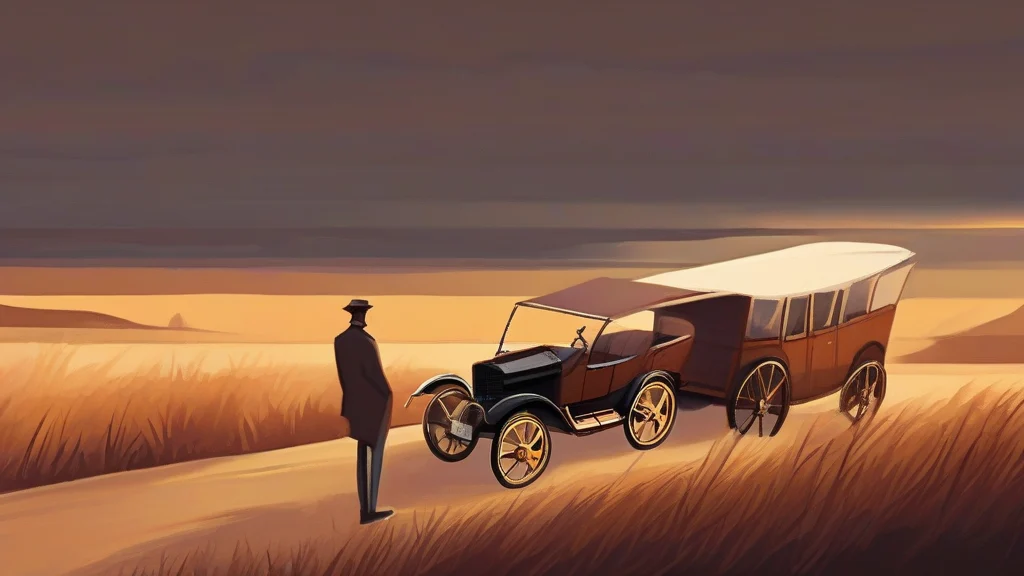
A cabriolet is a passenger vehicle — most commonly a motor car today — whose roof can be folded down or removed entirely, leaving the occupants open to the air. The term is standard in British and European motoring contexts, where manufacturers frequently label their open-top models as cabriolets, while American speakers more often say simply 'convertible'. Before the age of the automobile, a cabriolet was a light, two-wheeled horse-drawn carriage with a folding hood and seats for two passengers, widely used in European cities in the eighteenth and nineteenth centuries. The word carries connotations of leisure, style, and fine weather, evoking images of coastal drives and summer touring. Its origin is charmingly literal: it derives from the French cabriole, meaning a goat's leap, a nod to the carriage's lively, bouncing suspension. Whether applied to vintage carriages or modern sports cars, the word retains a distinctly elegant, continental flavour.
nounA car with a roof that folds down or is removable, leaving the body open at the sides and top; also, historically, a light two-wheeled one-horse carriage with a folding hood.
- A motor car with a foldable or removable roof and open sides (the dominant modern sense, especially in British and European usage).
- A light two-wheeled horse-drawn carriage with a folding hood and a seat for two, popular in the 18th and 19th centuries.
"She drove along the coast road in her new cabriolet with the top down."
"The French automaker unveiled a sleek four-seat cabriolet at the Geneva Motor Show."
"In Dickensian London, hansom cabs gradually replaced the older two-wheeled cabriolets."
Standard plural, used for multiple vehicles or carriages.
"The parade featured a line of gleaming cabriolets from every decade."
A cabriolet literally means 'a little goat's leap' — the original horse-drawn carriage was named for its springy, bouncing ride.
Reviewed by Deb Chak, Editor. AI-assisted content curated by RJS Tech Solutions LLP.
Etymology of cabriolet
Cabriolet comes from the French cabriolet, a diminutive of cabriole, which referred both to a goat's leap and to a graceful dancing step. It entered English in the mid-eighteenth century, when the light, sprung carriage it described seemed to bounce like a leaping kid. The underlying root is Latin caper (or capra), meaning goat, the same source that gave us caprice and the zodiac sign Capricorn. When automobiles replaced horse-drawn transport, the term transferred naturally to open-top cars.
How cabriolet is actually used
In American English, 'convertible' is far more common than 'cabriolet', which survives mainly as a manufacturer's model name or a slightly formal term. In British and European English, 'cabriolet' is standard automotive terminology. The historical carriage sense is now largely confined to historical writing.
Easily confused with cabriolet
A cabaret is a form of live entertainment performed in a club or restaurant, while a cabriolet is an open-top car or carriage.