
What does caecilian mean?
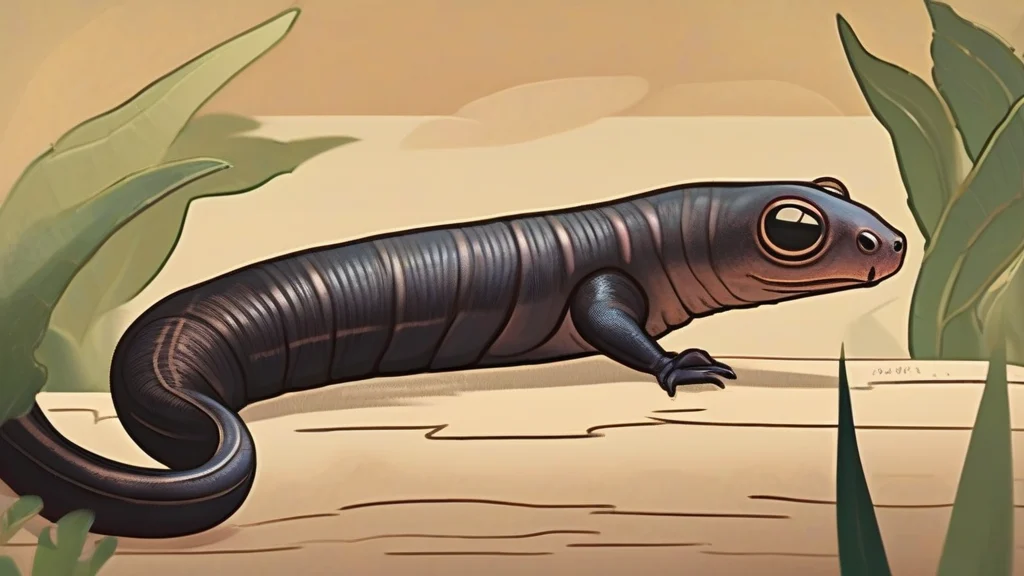
A caecilian is any member of a distinctive group of limbless amphibians known as Apoda or Gymnophiona. Most resemble large worms or elongated snakes, but they differ from snakes and other reptiles in having amphibian rather than reptilian biology. Many species live underground in moist tropical soil, although some are aquatic. Their reduced eyes are usually small and covered by skin, reflecting the group's name, which ultimately derives from a Latin word meaning “blind.” The term is encountered in discussions of biodiversity, tropical ecology, anatomy, and herpetology, where a caecilian may be distinguished from an earthworm or a snake by its amphibian characteristics. Although the name may suggest a particular kind of limbless animal, caecilians comprise a varied order containing numerous species and a wide range of body forms. The word is therefore most useful as a precise biological designation rather than as a general label for any worm-like creature.
A limbless amphibian belonging to the order Apoda, also known as Gymnophiona; most are elongated, burrowing animals with small eyes often hidden beneath the skin.
"Scientists discovered a new caecilian living beneath the leaf litter of a tropical forest."
A specialist zoological term; it should not be used as a general synonym for earthworm or snake.
Relating to or characteristic of caecilians.
"The caecilian population is threatened by habitat loss in parts of its range."
Usually found in taxonomic and natural-history contexts.
The regular plural is formed by adding the suffix -s.
"Several caecilians were found beneath logs after heavy rainfall."
Caecilians may look like snakes, but they are limbless amphibians whose small eyes are usually hidden beneath their skin.
Reviewed by Deb Chak, Editor. AI-assisted content curated by RJS Tech Solutions LLP.
Where does caecilian come from?
The English word comes through New Latin from Latin caecilianus, meaning “blind,” ultimately from caecus, “blind.” The name refers to the small, often skin-covered eyes of these limbless amphibians. The same Latin root also underlies words such as caecum, caecal, and cecal.
How caecilian is actually used
Caecilian is primarily a zoological term rather than everyday vocabulary. The adjective is normally used in taxonomic or natural-history contexts.
Easily confused with caecilian
A caecilian is a limbless amphibian, whereas a caecum is the large first section of the large intestine.