What does caid mean?
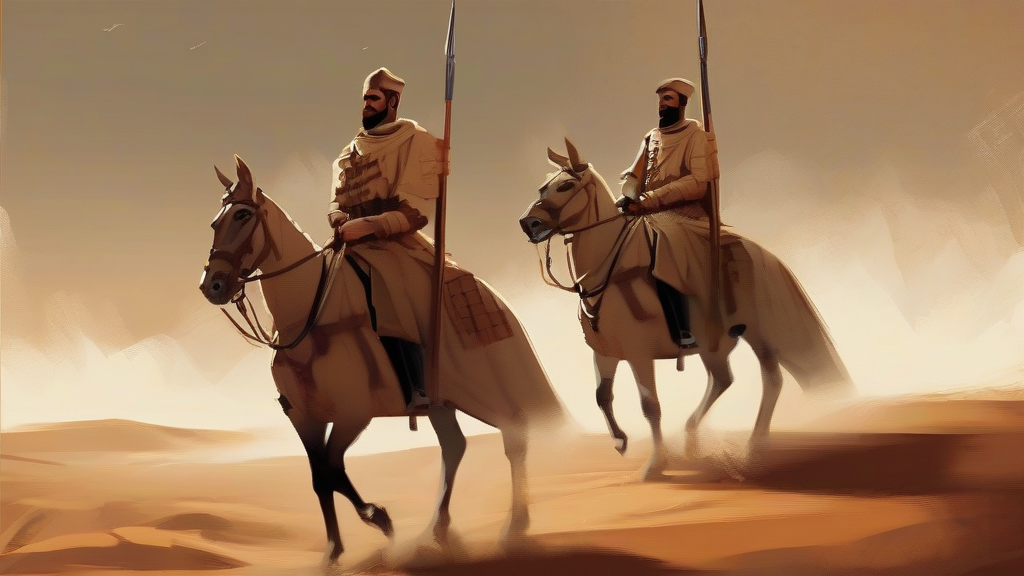
A caid is a chief, commander, or local governor — most familiar from historical accounts of North Africa, where caids ruled tribes or districts under Arab, Berber, and later French colonial authority. Borrowed into English from Arabic (via French), the word carries the flavor of the colonial era and the pre-colonial Maghreb alike: a caid was at once administrator, tax collector, and military leader, answering either to a sultan or to European overlords. In English it appears chiefly in history, travel writing, and ethnography about Morocco, Algeria, and Tunisia, and is occasionally seen in variant spellings such as kaïd. Separately, 'caid' names an old Irish field game played in County Kerry, regarded as a forerunner of modern Gaelic football. Though uncommon in everyday speech, the word is useful shorthand for a distinctive figure of North African history — the strongman whose authority bridged tribe and state.
A chief, leader, or governor, especially a local ruler or tribal chieftain in North Africa.
"Travelers crossing the Atlas Mountains needed the caid's permission before passing through his territory."
Mostly confined to historical and ethnographic contexts; variant spellings include kaïd and qa'id.
An Irish field game resembling football, traditionally played in County Kerry and ancestral to Gaelic football.
"Accounts of caid describe matches between entire parishes with few rules and no fixed pitch."
Rare outside histories of Irish sport.
Standard regular plural; used when referring to multiple regional rulers.
"The protectorate relied on a network of loyal caids to govern the countryside."
The Arabic word behind 'caid' traveled so far that its cousin survives today as 'alcalde' — the Spanish word for mayor.
Reviewed by Deb Chak, Editor. AI-assisted content curated by RJS Tech Solutions LLP.
Etymology of caid
Caid entered English in the nineteenth century from French colonial usage, ultimately deriving from the Arabic qa'id ('leader' or 'commander'). The same Arabic root produced the Spanish alcalde, showing how far the term spread during the Islamic period in Iberia. A distinct, unrelated use of 'caid' arose in Ireland as the name of a traditional ball game in County Kerry.
How caid is actually used
The word appears most often in historical writing about the Maghreb — travel literature, colonial-era histories, and ethnography. It is sometimes spelled 'kaïd' or 'qa'id' in transliteration from Arabic. The sporting sense is rare outside accounts of Irish folk tradition.
Easily confused with caid
A caddy is the person who carries a golfer's clubs, while a caid is a North African chieftain or local ruler — the two share a similar sound but nothing else.