What does cajon mean?
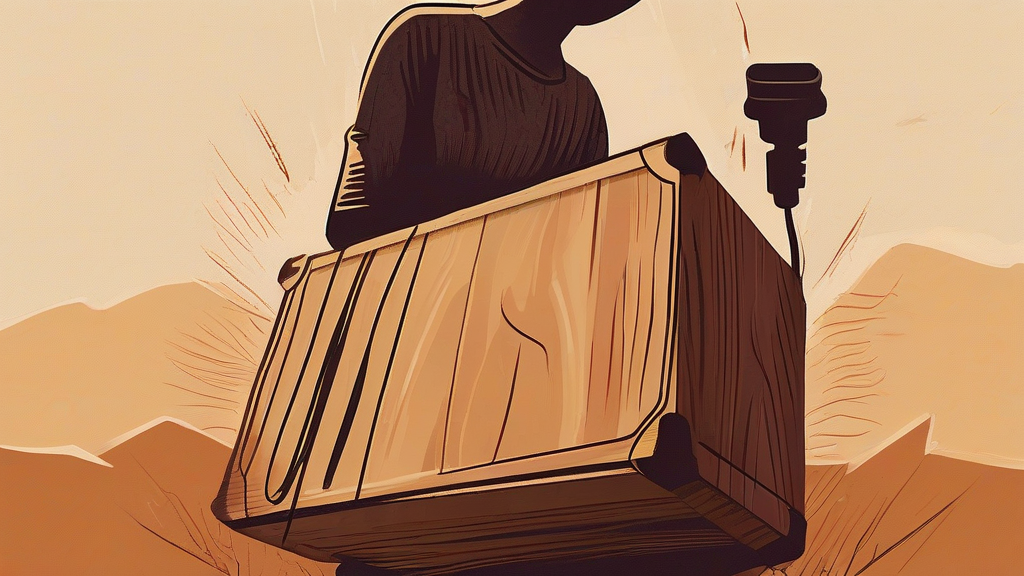
A cajón is a box-shaped percussion instrument that has become one of the most widely used hand drums in modern acoustic music. Of Peruvian origin, it is typically played by sitting on its top edge and striking the thin front panel with the palms and fingers, producing deep bass tones near the center and sharper slaps toward the corners. The name comes from Spanish, where cajón means a large box, crate, or drawer, deriving from caja (box) and ultimately from Latin capsa. Popular accounts link the instrument's invention to enslaved Africans in colonial Peru, who reportedly adapted wooden shipping crates into drums after traditional instruments were suppressed. From Peru the cajón spread through Latin America and was later embraced by flamenco musicians in Spain before entering global pop, folk, and singer-songwriter settings, where it serves as a compact, portable substitute for a full drum kit.
nounA cajón is a box-shaped percussion instrument of Peruvian origin, played by sitting on it and striking its front surface with the hands. The word is also the Spanish term for a crate, box, or drawer.
- A box-shaped hand drum of Peruvian origin, now popular worldwide in acoustic and unplugged music.
- (In Spanish) a box, crate, or drawer.
"The percussionist kept time on a cajón during the acoustic set."
"She set her coffee on the cajón and tapped out a rhythm between songs."
"The band traveled light, carrying only two guitars and a single cajón."
English usage varies: many writers keep the singular form unchanged for plurals, while others pluralize both spellings.
"The studio owned three cajones of different sizes."
The cajón was likely invented by enslaved Peruvians who turned ordinary shipping crates into drums when authorities banned their traditional instruments.
Reviewed by Deb Chak, Editor. AI-assisted content curated by RJS Tech Solutions LLP.
Etymology of cajon
The word cajón comes from Spanish, where it literally means a large box, crate, or drawer. It derives from caja ('box'), which traces back to Latin capsa ('a container or case'), the same root that gives English 'case' and 'capsule'. The musical sense arose in Peru, where wooden crates were repurposed as drums, and the instrument later spread to Spain and then worldwide.
How cajon is actually used
In English-language music contexts the word almost always refers to the drum. In Spanish it retains the everyday meaning of a box or drawer, so the musical sense is a specialized extension. In informal English the anglicized spelling 'cajon' is common, though writers often keep the accented form 'cajón'.
Easily confused with cajon
A canyon is a deep gorge carved by a river, whereas a cajón is either a box-shaped percussion instrument or the Spanish word for a box or drawer; the two share a superficially similar spelling but nothing else.