What does calico mean?
Calico is a cotton cloth with two regional identities: in American English it denotes inexpensive cotton fabric printed with small, colorful repeating patterns, prized for quilts, aprons, dresses, and country-style décor, while in British English it refers to plain, unbleached cotton sheeting of the sort Americans call muslin. The name derives from Calicut, the Indian port city that exported such cloth to Europe beginning in the seventeenth century. In the United States, the word also describes a beloved type of domestic cat whose coat is a patchwork of white, black, and orange — a pattern so genetically tied to the X chromosome that nearly all calico cats are female. Whether describing a homespun quilt or a strikingly mottled feline, calico evokes warmth, thrift, and handcrafted charm, making it both a practical term for sewists and a vivid addition to everyday vocabulary.
A coarse cotton cloth, either plain and unbleached (chiefly British) or printed with a simple pattern (chiefly US).
"The dress was made from red-and-white calico."
British and American meanings differ substantially; context usually clarifies which fabric is meant.
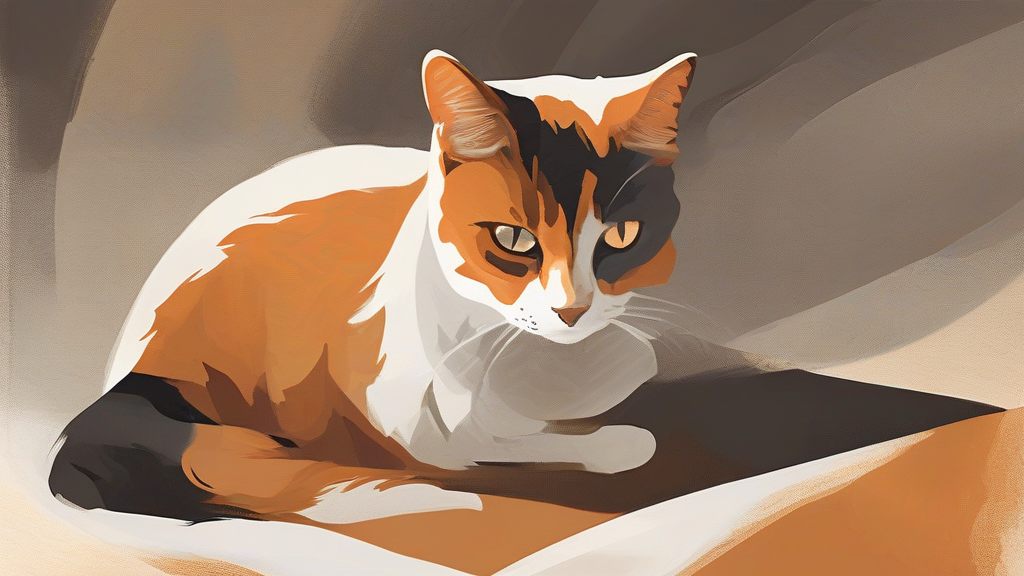
A domestic cat having a coat of white marked with patches of black and orange.
"Their calico sat proudly on the porch rail."
This sense is primarily North American; almost all calico cats are female due to X-linked genetics.
Used mainly when referring to multiple calico cats; the fabric itself is typically treated as an uncountable mass noun.
"The shelter had three calicos available for adoption."
Nearly all calico cats are female — the gene for their patchwork coat sits on the X chromosome, so males are rare genetic flukes and usually sterile.
Reviewed by Deb Chak, Editor. AI-assisted content curated by RJS Tech Solutions LLP.
Etymology of calico
Calico entered English in the early seventeenth century as a shortened form of 'Calico cloth,' named after Calicut (now Kozhikode), the port city on India's southwestern coast famed for exporting finely woven, often printed cotton fabrics. Portuguese traders first brought the cloth to Europe under the name 'Calecut.' Over time, the word shifted in meaning: in Britain it came to signify cheap, unbleached cotton, while in America it settled on the printed variety. The place-name Calicut itself is unrelated to Latin 'calare' (to proclaim), which gave English words like calendar and calends, despite superficial resemblance.
How calico is actually used
Regional meaning differs significantly: in Britain and much of the Commonwealth, 'calico' refers to plain, undyed cotton sheeting (what Americans call 'muslin'), while in the United States it means cotton fabric printed with small repeating patterns. When applied to cats, the sense is chiefly American but widely understood elsewhere. The word is informal-neutral in register and carries cozy, homespun connotations.
Easily confused with calico
A tortoiseshell cat has a mottled blend of black and orange with little or no white, whereas a calico cat has distinct patches of white along with the black and orange.