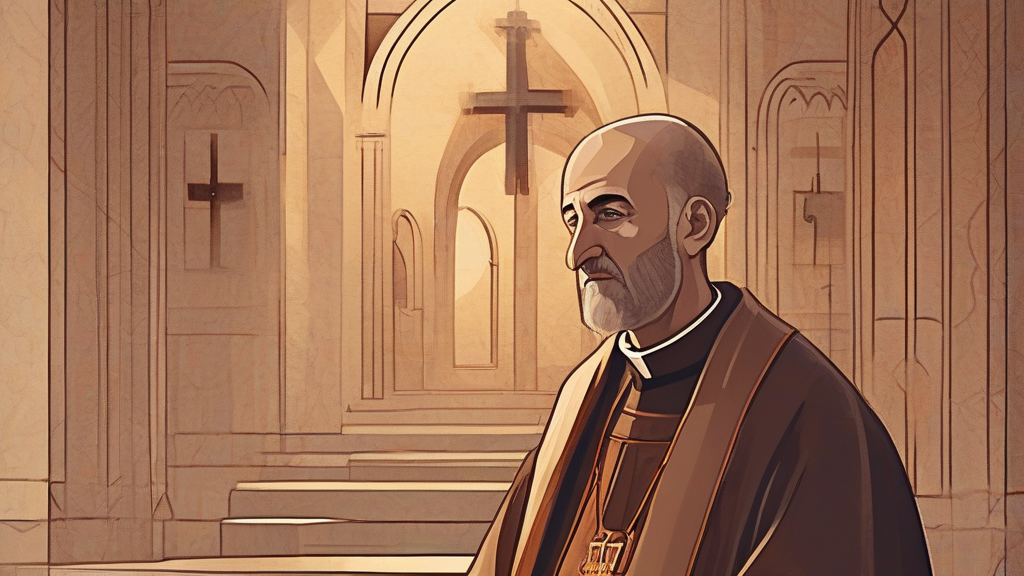
What does caloyer mean?
A caloyer is a monk of the Eastern Orthodox or Eastern Catholic churches — the term is applied particularly to monks of the Greek rite, such as those of Mount Athos and other Aegean monastic communities. Borrowed into English from Modern Greek, it derives from the Greek word for such a monk, whose own roots combine elements meaning 'good' or 'beautiful' and 'old man', so that the name carries an affectionate, honorific sense. The word entered English usage around the seventeenth century through travelers' accounts and ecclesiastical histories of the eastern Mediterranean, and it remains a specialized term found mainly in travel literature, historical writing, and studies of Orthodox monasticism. Though uncommon in everyday speech, it offers writers a precise, evocative alternative to the generic word 'monk' when describing the distinctive world of Eastern Christian monastic life, with its chants, icons, and centuries-old rituals.
nounA monk of the Eastern Orthodox or Eastern Catholic churches, especially one living in a Greek monastery.
- A monk belonging to an Eastern Orthodox or Eastern Catholic religious community, especially of Greek rite.
"The traveler described the bearded caloyers who chanted the evening offices on Mount Athos."
"Visitors to the monastery were welcomed by a calm, white-bearded caloyer who showed them the ancient frescoes."
"In his travel writing, he painted a vivid picture of the caloyers at their midnight vigil, candles flickering against the iconostasis."
The plural follows standard English formation; it is used when referring to monastic communities collectively.
"The caloyers of the Holy Mountain have preserved their liturgical traditions for a thousand years."
The word 'caloyer' literally means 'good old man' in its Greek roots — a fitting name for a monk.
Reviewed by Deb Chak, Editor. AI-assisted content curated by RJS Tech Solutions LLP.
Etymology of caloyer
The word 'caloyer' comes from Modern Greek 'kalogeros' (καλόγερος), the standard Greek term for an Orthodox monk, which combines 'kalos' ('beautiful' or 'good') with 'geros' ('old man'), yielding the sense of a venerable holy man. English adopted the term by the early seventeenth century, largely through travelers' and historians' descriptions of Greek monasteries. Its Greek roots connect it etymologically to other words built on 'kalos', such as 'kaleidoscope' and 'calisthenics'.
How caloyer is actually used
A relatively rare word in modern English, 'caloyer' appears chiefly in historical, travel, and ecclesiastical writing about the Christian East. It carries a neutral-to-reverent connotation and is not used colloquially.
Easily confused with caloyer
Though the two words rhyme and share their final syllable sound, 'lawyer' is a legal professional while 'caloyer' is an Eastern Orthodox monk.