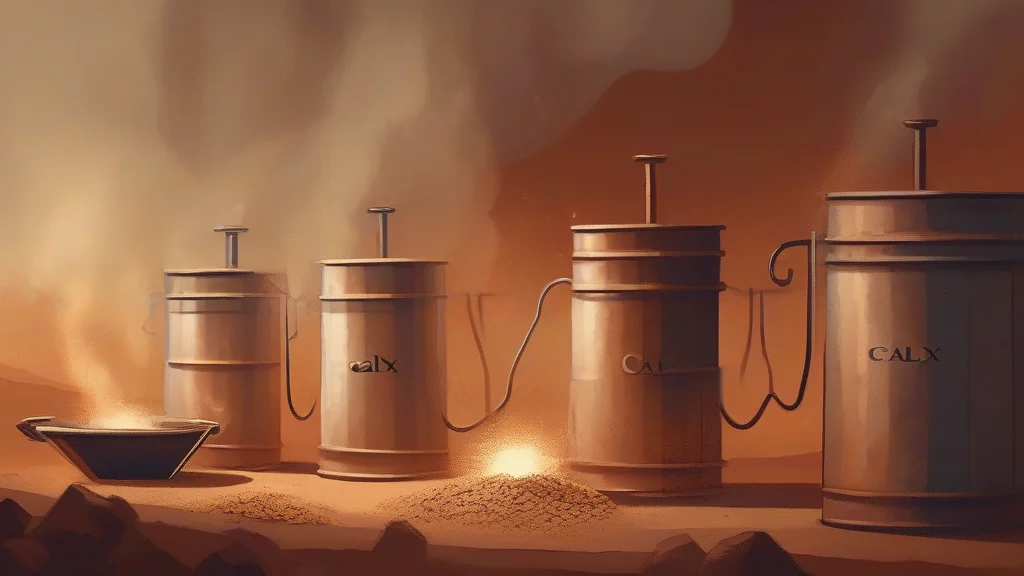
What does calx mean?
Calx denotes the dry, powdery residue left behind when a metal or mineral is strongly heated, or calcined. In the chemistry of earlier centuries, the term was central: when metals were burned in air, they appeared to transform into a crumbly substance — the calx — which early chemists interpreted as evidence that fire had driven off some essential principle of the metal. Only later did scientists such as Lavoisier show that a calx is actually heavier than the original metal because it has combined with oxygen, making the humble calx a landmark in the discovery of oxidation. A familiar example is quicklime, the calx of calcium carbonate, long prized for making mortar and plaster. Though now largely obsolete outside historical and alchemical contexts, the word survives as a reminder of how chemistry's vocabulary preserves the questions of its past.
nounThe powdery residue, typically an oxide of a metal, left after a mineral or metal has been roasted or calcined; in chemistry, especially calcium oxide obtained from limestone.
- The powdery oxide residue remaining after a metal or mineral is roasted or calcined.
- Calcium oxide (quicklime) obtained by heating limestone, used historically in mortar and plaster.
"After hours in the furnace, the ore had been reduced to a fine white calx."
"The alchemist weighed the calx carefully, convinced the missing mass had vanished into the flame."
"Builders once slaked the calx of limestone with water to make the mortar binding their walls."
The learned plural 'calces' is standard in scientific and historical writing; the anglicized 'calxes' also appears. Both are rare in modern usage.
"The assayer's ledger listed the calces of several ores alongside their weights before and after smelting."
Before chemists understood oxygen, they thought burning metal literally destroyed it — leaving behind this dead, powdery 'calx' as proof that fire consumed matter itself.
Reviewed by Deb Chak, Editor. AI-assisted content curated by RJS Tech Solutions LLP.
Etymology of calx
Calx comes directly from Latin calx, meaning limestone or quicklime, a word the Romans used both for the stone and for the burnt lime derived from it. English adopted it in the seventeenth century as chemists needed a precise term for the residue left by roasting ores. The same Latin root gave rise to a wide family of words, including calcium, calcite, chalk (via Greek chalix), and calculate, which originally referred to counting with small pebbles made of limestone.
How calx is actually used
A technical term now largely confined to historical chemistry and metallurgy; modern usage is rare outside discussions of pre-modern science and alchemy. The plural is usually 'calces' in learned contexts, though 'calxes' also occurs.
Easily confused with calx
Chalk is a soft white limestone used for writing and drawing, whereas calx is the oxide residue produced by roasting a mineral or metal.
Calk refers to stopping leaks with oakum or fitting horseshoe cleats, while calx is a chemical term for a calcined metallic oxide.