What does camper mean?
A camper is, most fundamentally, a person who camps — someone who temporarily lives outdoors in a tent, cabin, or other shelter, usually for recreation rather than survival. In both British and American usage, the word also denotes a vehicle outfitted for living on the road: the camper van beloved of British holidaymakers, or the truck-mounted camper popular in North America. Which sense dominates depends largely on region; a Brit saying they hired 'a camper' likely means a van, while an American referring to 'the campers next door' probably means fellow holidaymakers. The word carries warm, leisurely connotations — campfires, hiking boots, family holidays — though it can occasionally describe people living involuntarily in temporary accommodation. Its lineage is surprisingly martial: camper derives ultimately from the Latin campus, the open field where Roman soldiers pitched their tents, making every modern camper an heir to two millennia of field encampments.
A person who camps, especially one who stays overnight in a tent, camper van, or similar temporary shelter for recreation.
"The ranger reminded each camper to store food securely away from bears."
In American English this is the dominant sense.
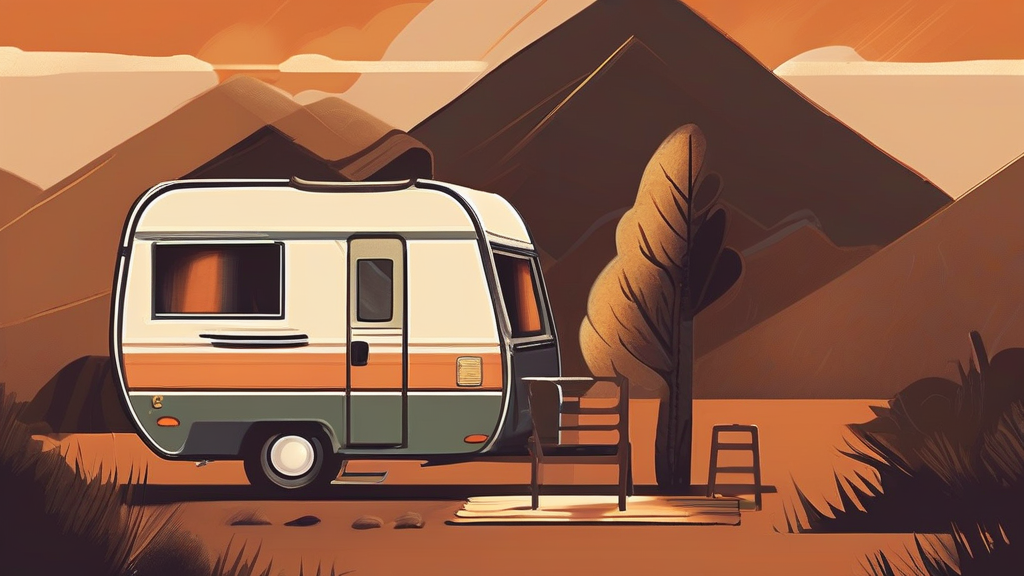
A motor vehicle equipped for sleeping and cooking in, used for travel and camping holidays.
"They toured New Zealand in a rented camper for three weeks."
Especially common in British English, where 'camper van' is the usual fuller form.
Regular plural; applies to both the person and vehicle senses.
"The campground fills up quickly in July, when hundreds of campers arrive each weekend."
Every camper you've ever pitched a tent with shares a linguistic ancestor with Julius Caesar's legions — the word traces back to the Latin 'campus', the open field where Roman soldiers made camp.
Reviewed by Deb Chak, Editor. AI-assisted content curated by RJS Tech Solutions LLP.
Etymology of camper
Camper is formed from the noun 'camp', which entered English around the early 16th century from French 'camp', itself derived from Latin 'campus', meaning an open field or plain. The Romans used 'campus' to describe the ground where legions pitched their tents, giving rise directly to the sense of a military camp. From this root came the agent noun 'camper', denoting one who camps, attested from the early 19th century as recreational camping grew in popularity. Cognates include 'campaign', originally a military operation conducted in open country, and 'champ' and 'champion', which trace back through Late Latin 'campio' (a fighter in the field) to the same Latin source.
Related word forms
How camper is actually used
In British English, 'camper' most often refers to the vehicle (a camper van), while in American English it more commonly refers to the person. When referring to the vehicle, Americans tend to say RV, motorhome, or camper trailer instead.
Easily confused with camper
A champion is a winner of a competition, while a camper is someone who camps outdoors — both derive from the same Latin root 'campus' but have entirely unrelated meanings today.
A campaigner is someone who works actively for a cause or runs a military/political operation, whereas a camper is simply someone who camps for recreation.