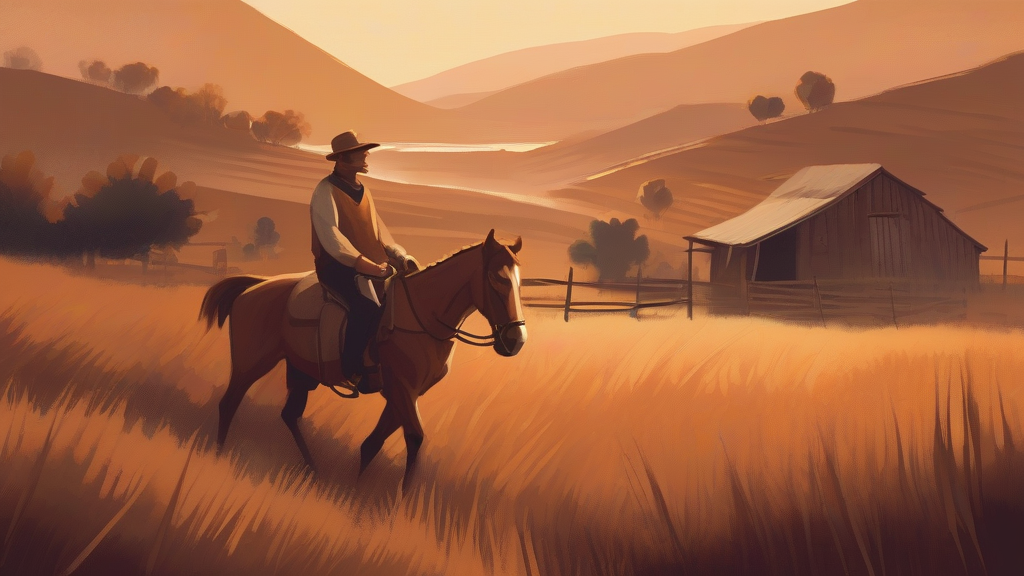
What does campestral mean?
"Campestral" is an adjective describing things connected with open fields, plains, and level countryside. It derives from the Latin campester, meaning "of the fields," which in turn comes from campus, the Latin word for an open expanse of land — the same root that gives us "camp" and "campaign." The word is used both geographically, to characterize flat, open landscapes such as prairies and farmland, and ecologically, to describe plants and animals that inhabit fields and meadows rather than forests, mountains, or towns. A lark, for instance, may be called a campestral bird because it thrives over open grassland. Campestral is a formal, literary term, rarely heard in casual conversation but valued by nature writers and ornithologists for its precision and classical pedigree. Its opposite sense runs to urban or montane settings, making it useful whenever a writer wants to evoke the character of open, unwooded country with a single elegant word.
Relating to or characteristic of open fields, plains, or level, open country.
"They rode across the campestral plain under a wide summer sky."
Chiefly used in literary, geographical, and natural-history contexts.
(Of plants or animals) living in or associated with fields and meadows rather than woodland or mountains.
"The hare is a campestral species, seldom venturing into dense forest."
"Campestral" shares its Latin root with "camp" and "campaign" — it originally described the open ground where Roman soldiers mustered.
Reviewed by Deb Chak, Editor. AI-assisted content curated by RJS Tech Solutions LLP.
Etymology of campestral
Campestral comes from the Latin adjective campester, meaning "of the fields or plain," itself derived from campus, the Latin term for an open field or level expanse of ground. It entered English in the early seventeenth century, borrowed directly from Latin scholarly vocabulary. Because campus also underlies words like "camp," "encamp," and "campaign," campestral belongs to a family of English terms all tracing back to the Romans' notion of open, unenclosed land.
How campestral is actually used
Formal and literary in register; rare in everyday speech. Carries a pleasant, somewhat elevated connotation of open countryside.
Easily confused with campestral
While both can describe things on land, terrestrial means simply of the earth or dry land generally, whereas campestral specifically evokes flat, open fields and plains.