What does canalise mean?
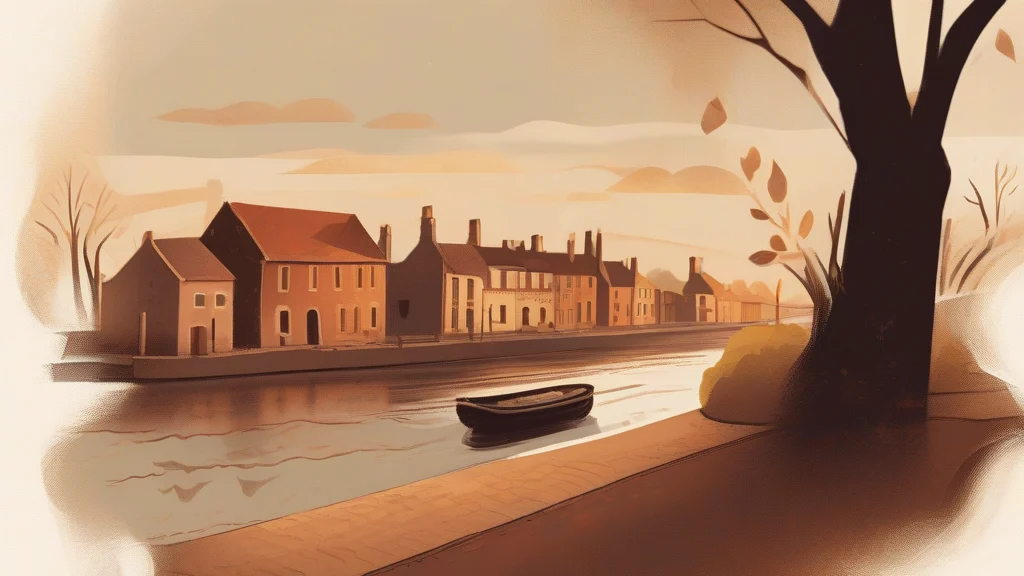
Canalise means, literally, to turn a stretch of water into a canal — to widen, deepen, or embank a river so that it flows in a controlled, navigable channel. Engineers have canalised rivers across the world for navigation, drainage, and flood defence since ancient times, making this the word's oldest and most concrete sense. By extension, the verb has taken on a productive figurative life: to canalise energy, emotion, ambition, or public opinion is to steer those forces into a definite, useful channel rather than let them dissipate or overflow. A government might canalise popular discontent into reform; a teacher might canalise a restless pupil's enthusiasm into study. The word carries a formal, somewhat technical tone, and its imagery is inherently hydraulic — whatever is being canalised is imagined as flowing water that needs banks. It is spelled canalise in British English and canalize in American English, with corresponding nouns canalisation and canalization.
verbTo convert something, especially land or a river, into or through a canal; to give a fixed channel to a river. More broadly (often figurative), to direct or channel something — such as energy, emotion, or activity — along a particular course.
- (Civil engineering / geography) To convert a natural watercourse into a canal, or to widen and deepen a river so it becomes navigable or flood-controlled.
- (Figurative) To direct or confine something abstract — such as energy, emotion, ambition, or public feeling — into a particular outlet or course.
"The engineers canalised the river to prevent seasonal flooding of the valley towns."
"In the nineteenth century, vast sums were spent canalising rivers across Europe to make them navigable for barges."
"Rather than suppressing the crowd's anger, the organisers sought to canalise it into constructive political action."
The word for turning a wild river into a tame waterway also describes how societies try to tame human passions — same verb, whether you're dredging a channel or redirecting a revolution.
Reviewed by Deb Chak, Editor. AI-assisted content curated by RJS Tech Solutions LLP.
Etymology of canalise
Canalise derives from the noun canal, which entered English via French from Latin canalis, meaning a pipe, groove, or channel — itself related to canna, meaning reed or cane. The verb was formed with the suffix -ise (from French -iser), following a pattern common to many technical verbs borrowed into English in the eighteenth and nineteenth centuries. Its Latin root also gives us channel (through Old French chenel) and canyon (via Spanish cañón), making them distant cousins sharing the idea of a hollow conduit or waterway.
Related word forms
How canalise is actually used
Canalise is the British spelling; American English typically uses canalize. In everyday modern use the figurative sense (channelling emotions or effort) is at least as common as the literal engineering sense, and both carry a slightly formal register. The noun form canalisation follows the same spelling split (canalization in the US).
Easily confused with canalise
Canalize is simply the standard American spelling of the same word, while canalise is the British spelling.
Cannibalise means to strip parts from one thing to repair another or to take sales from one's own products — nothing to do with canals or channelling.