What does canasta mean?
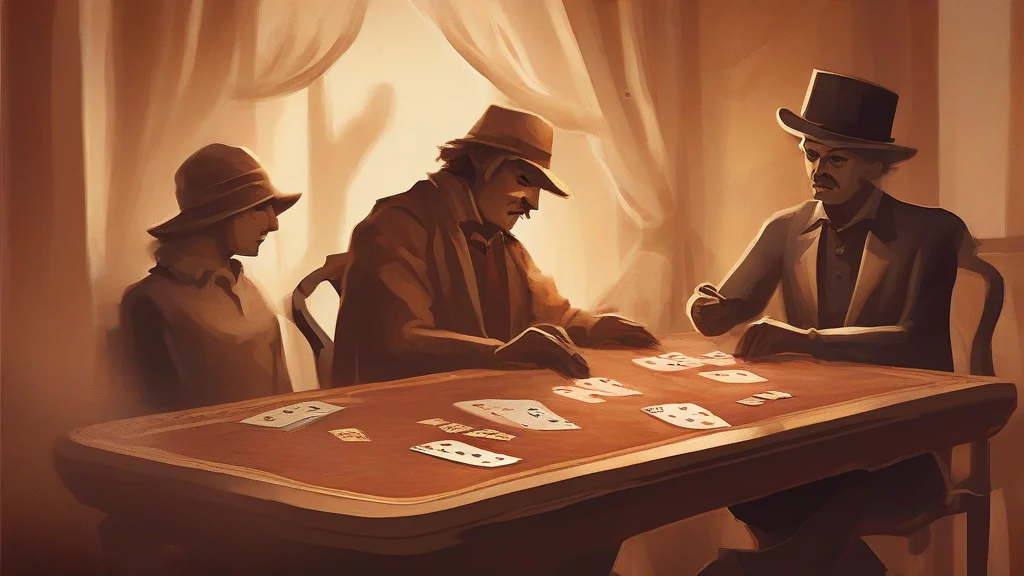
Canasta is a card game belonging to the rummy family, invented in Montevideo, Uruguay, in the late 1930s and popularized worldwide through the 1940s and 1950s. It is usually played by four players in partnerships using two full decks of cards plus jokers. Players draw and discard in turn, aiming to lay down melds — sets of cards of the same rank — and the most valuable meld, called a canasta itself, consists of seven or more such cards. Wildcards add strategy and risk, since uncontrolled wildcards left in a player's hand carry penalties when an opponent goes out. The name comes from the Spanish word for basket, reflecting the idea of collecting cards into a pile. Today canasta evokes mid-century social life and remains popular in clubs, online platforms, and family gatherings, prized for its blend of luck, partnership tactics, and long, absorbing play.
nounA card game for two to six players, typically played with two full decks plus jokers, in which players form melds of seven or more cards of the same rank, called canastas.
- A card game of the rummy family played with two decks plus jokers, in which players score points by forming melds, especially melds of seven cards called canastas.
- (Rare) In Spanish, literally a 'basket'; occasionally used in English contexts as a borrowing meaning basket.
"The grandparents spent every Sunday afternoon playing canasta at the kitchen table."
"They dealt out the cards and settled in for an evening of canasta and gossip."
"She needed one more red three to complete her canasta before the round ended."
The plural refers to multiple instances of the meld (completed seven-card sets) within a game, or metaphorically to more than one game being played.
"By the end of the hand she had laid down two canastas, sealing the win."
Invented in Montevideo around 1939, canasta spread so fast that by the early 1950s it had swept America like a fever — outselling even bridge sets.
Reviewed by Deb Chak, Editor. AI-assisted content curated by RJS Tech Solutions LLP.
Etymology of canasta
The word canasta derives from Spanish canasta, meaning 'basket', which traces back through Latin canistrum ('wicker basket') to Greek kanistron, from kanna ('reed'). The card game was created around 1939 in Montevideo, Uruguay, by Segundo Santos and Alberto Serrato, and its name reflects the notion of gathering cards into a pile like items collected in a basket. Related words sharing this lineage include the everyday English 'basket' via Germanic routes from the same Latin source, and Spanish 'cesta', both ultimately connected to the reed-and-woven-container root.
How canasta is actually used
Canasta is primarily used as the proper name of a specific card game; it is not used figuratively. It is common among older generations in the US and Britain and carries a mildly nostalgic, mid-century connotation. The word is capitalized only when part of the game's official title in some rulebooks, though lowercase is standard in general use.
Easily confused with canasta
Piñata is a decorated container filled with sweets broken open at celebrations, while canasta is a card game.
Samba is a Brazilian dance (and a related but distinct card game), whereas canasta is the meld-based card game originating in Uruguay.