What does cantrip mean?
A cantrip is a minor magical spell or trick, typically one of small or simple effect. The word originated as a Scottish term for a trick, charm, or illusion worked by a witch or conjurer, appearing in Scots literature and folklore from around the early eighteenth century. Its fortunes changed dramatically in the twentieth century when Dungeons & Dragons adopted "cantrip" as the name for a wizard's most basic spells — trivial bits of magic like producing a spark or lighting a candle — and the term spread widely through fantasy novels and games. Today, that gaming sense dominates: a cantrip is a spell so slight it can be cast at will without cost or effort. The word carries a light, whimsical tone, evoking mischief more than menace, though its older folkloric associations gave it an occasionally sinister edge. It remains a favourite among fantasy enthusiasts precisely because it names magic at its smallest, most charming scale.
nounA minor magical spell or trick, especially one of low power or simple effect; historically, a trick or prank performed by a witch or magician.
- In modern fantasy fiction and games (notably Dungeons & Dragons): a minor spell that can be cast repeatedly at will, producing small effects such as creating light or sparks.
- Historical/Scottish usage: a trick, charm, or illusion performed by witches or magicians.
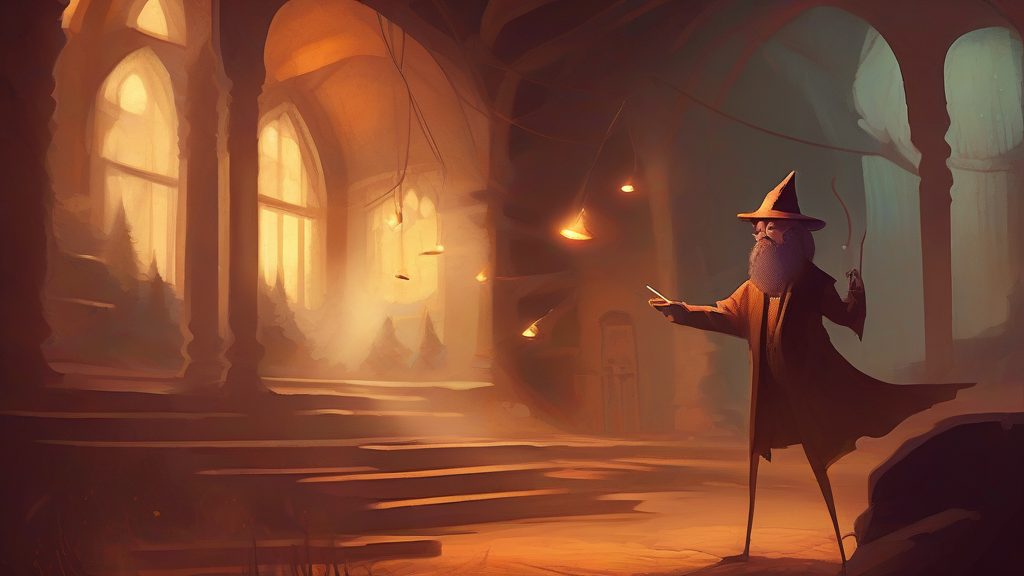
"The young wizard cast a simple cantrip to light the candles without striking a match."
"She used a cantrip to warm her tea on the long journey north."
"Old Scottish ballads warn of hags who could work cantrips on unwary travellers."
Standard pluralization; commonly seen in fantasy gaming contexts where characters have lists of known cantrips.
"Her spellbook listed only two offensive cantrips, but dozens of useful ones besides."
Before it enchanted fantasy gamers worldwide, this odd little word was a Scottish term for a witch's mischievous trick.
Reviewed by Deb Chak, Editor. AI-assisted content curated by RJS Tech Solutions LLP.
Etymology of cantrip
Cantrip derives from Scots, where it denoted a trick or charm wrought by a witch or magician; it appears in Scots writing from around the early eighteenth century. Its further origins are uncertain — it has been suggested to involve a root meaning "to chant" or a link to "trick," but no derivation is firmly established. The word's modern prominence stems from its adoption by Dungeons & Dragons in the twentieth century, which recast it as the name for a minor, freely castable spell and carried it into general fantasy vocabulary.
How cantrip is actually used
The historical sense is chiefly Scottish and archaic, appearing in older literature and folklore. The dominant modern sense comes almost entirely from tabletop role-playing games and fantasy fiction, where it denotes the weakest class of spells; in these contexts it carries playful, whimsical connotations rather than sinister ones.
Easily confused with cantrip
"Cant" is secret jargon or insincere talk, while "cantrip" is a minor spell or magical trick, despite both words being associated with old Scottish usage.