What does capellini mean?
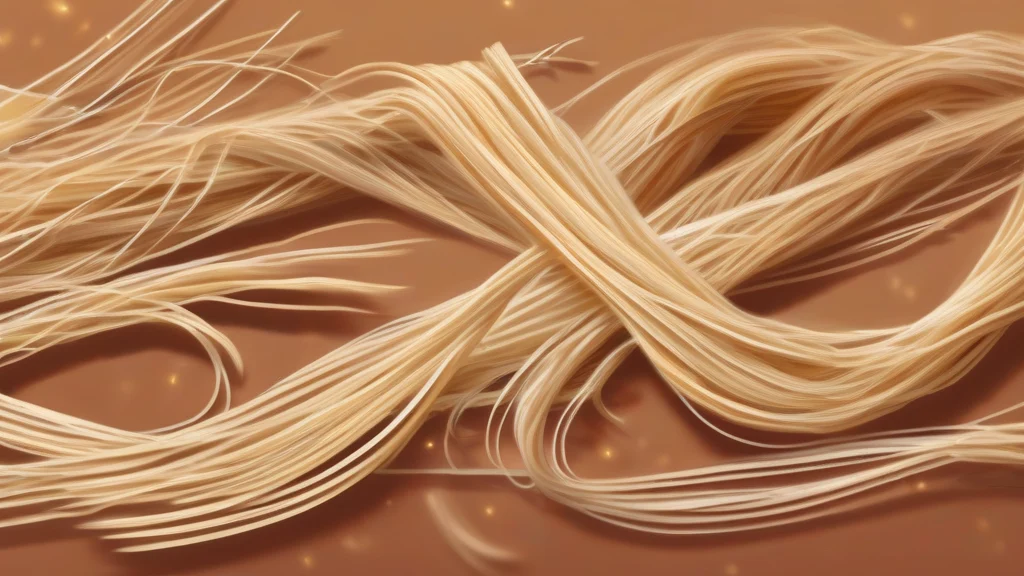
Capellini is a type of Italian pasta consisting of extraordinarily fine, hair-thin strands, so delicate that it is often called 'angel hair' pasta in the United States. The name comes from the Italian word for hair, a fitting description of threads considerably finer than spaghetti or even vermicelli. Because the strands are so slender, capellini cooks in about a minute or two and pairs best with light preparations: olive oil and garlic, fresh tomatoes, lemon and herbs, or simple seafood sauces. Heavy, slow-cooked meat sauces are generally avoided, as they overwhelm the fragile texture. On menus and in cookbooks, the word — technically an Italian plural — behaves as a mass noun, ordered as 'a dish of capellini'. Its combination of elegance, speed of cooking, and refined mouthfeel has made it a fixture of both home kitchens and restaurant cuisine wherever Italian pasta traditions have travelled.
nounA variety of pasta formed into extremely fine, hair-thin strands, thinner than vermicelli; known in American usage as 'angel hair'. It cooks very quickly and is typically served with light sauces.
- Very thin, hair-like strands of pasta, finer than vermicelli, served with light sauces.
"She tossed the capellini with olive oil, garlic, and cherry tomatoes."
"The chef dressed the capellini with lemon zest, olive oil, and shaved parmesan."
"For a quick weeknight dinner, capellini cooks through in barely ninety seconds."
Already an Italian plural, capellini is treated as an uncountable mass noun in English; no further plural ending is added.
"Two portions of capellini arrived at the table."
Its name literally means 'little hairs' — Italians named this pasta after human hair because the strands are that impossibly fine, cooking to tenderness in under two minutes.
Reviewed by Deb Chak, Editor. AI-assisted content curated by RJS Tech Solutions LLP.
Etymology of capellini
Capellini is borrowed directly from Italian, where it is the plural of 'capellino', a diminutive of 'capello', meaning hair — a nod to the pasta's hair-like fineness. The underlying Italian word descends from Latin 'capillus', meaning hair, the same root behind the English adjective 'capillary', which describes tubes as fine as hairs. The term entered English culinary vocabulary in the twentieth century alongside the growing popularity of regional Italian pasta varieties.
How capellini is actually used
The word is an Italian plural form but functions as a singular mass noun in English menus and cookbooks ('a bowl of capellini'). In North America it is often marketed under the name 'angel hair' or 'angel hair pasta'. It suits delicate sauces — oil-, butter-, tomato- or seafood-based — rather than heavy meat sauces, which would overwhelm the fine strands.
Easily confused with capellini
Vermicelli strands are slightly thicker than capellini, whose threads are among the finest pastas made.
Spaghettini is a thinner version of spaghetti but still far thicker than the hair-fine strands of capellini.